

How Many Talukas in India
F
Discover verified facts, data, and insights about India’s states, culture, economy, education, and more — all in one place at FactBharat.
Search for a command to run...
Discover verified facts, data, and insights about India’s states, culture, economy, education, and more — all in one place at FactBharat.
No comments yet. Be the first to comment.
Moving to the USA from India is a dream for many. Whether you want to study, work, or live with family, the process can seem complex. But with the right information, you can plan your move confidently. I’ll guide you through the key steps and options...
Opening a college in India is a dream for many educators and entrepreneurs who want to contribute to the country’s education sector. If you are one of those who want to start a college, you need to understand the process clearly. It involves several ...
Opening a hospital in India is a significant and rewarding venture. If you’ve ever wondered how to start one, you’re in the right place. Whether you’re a healthcare professional, entrepreneur, or investor, understanding the process is crucial. You’ll...
Opening a medical store in India can be a rewarding business opportunity. You get to serve your community by providing essential medicines and healthcare products. If you are thinking about starting a medical store, you might wonder where to begin an...
Opening a restaurant in India can be an exciting and rewarding venture. Whether you dream of serving traditional Indian dishes or international cuisine, the process involves careful planning and understanding of local regulations. If you’re ready to ...
FactBharat | Insights About India
2558 posts
Discover verified facts, data, and insights about India’s states, culture, economy, education, and more — all in one place at FactBharat.
If you’ve ever wondered about the administrative divisions in India, you’re not alone. India’s vast size means it has many layers of governance, and one important unit is the taluka. You might ask, “How many talukas are there in India?” or “What exactly is a taluka?” In this article, I’ll guide you through the concept of talukas, their significance, and the current count across the country.
Understanding talukas helps you grasp how local governance works in India. Whether you’re a student, traveler, or just curious, this article will give you clear and simple insights into talukas and their place in India’s administrative system.
A taluka, also known as tehsil or mandal in some states, is an administrative division in India. It is a sub-district level unit that helps manage local governance and administration. Talukas are smaller than districts but larger than villages or towns.
Here’s what you need to know about talukas:
Talukas play a crucial role in implementing government schemes and maintaining law and order at the local level.
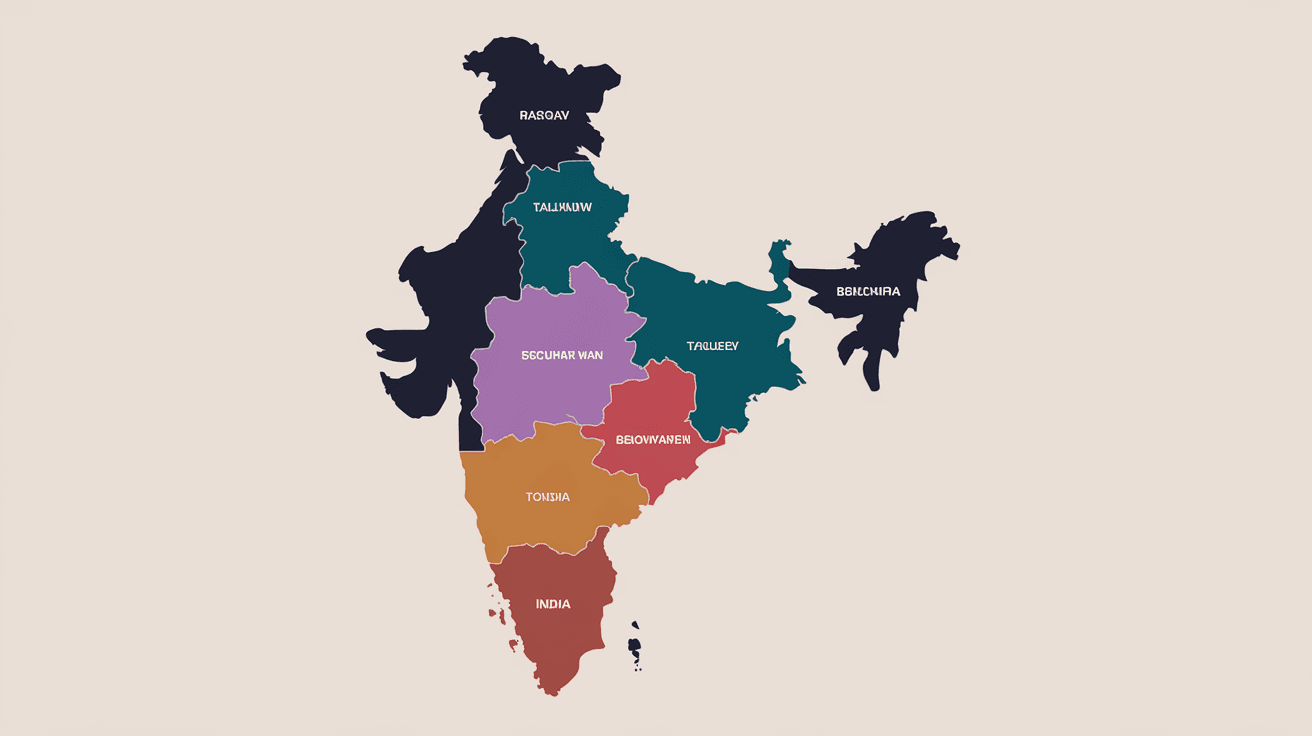
India has a complex administrative structure with thousands of talukas spread across its states and union territories. As of 2025, the total number of talukas in India is approximately 6,000. This number can vary slightly due to administrative changes like the creation of new talukas or reorganization of districts.
Here’s a quick overview by some major states:
| State | Approximate Number of Talukas/Tehsils |
| Maharashtra | 358 |
| Gujarat | 253 |
| Karnataka | 240 |
| Rajasthan | 335 |
| Uttar Pradesh | 821 |
| Madhya Pradesh | 428 |
| Tamil Nadu | 385 (called taluks) |
| Andhra Pradesh | 680 (called mandals) |
These numbers show how talukas vary widely depending on the size and population of each state.
Knowing the number of talukas is important for several reasons:
Understanding the number and distribution of talukas helps you appreciate how India manages its vast population and diverse regions.
Talukas are not fixed forever. State governments can create new talukas or change existing ones based on administrative needs. Here’s how this happens:
For example, Maharashtra recently created new talukas to improve local administration in rapidly growing areas.
You might have noticed different terms like taluka, tehsil, and mandal used across India. While they serve similar purposes, here’s how they differ:
| Term | Common Regions | Meaning/Role |
| Taluka | Maharashtra, Gujarat, Karnataka | Sub-district administrative unit |
| Tehsil | North India (UP, Rajasthan, Punjab) | Same as taluka, revenue division |
| Mandal | Andhra Pradesh, Telangana | Smaller administrative unit, similar to taluka |
All these units perform similar functions but are named differently based on local languages and traditions.
Talukas are vital for grassroots governance. Here’s what they do:
Talukas act as the bridge between district authorities and village councils (Gram Panchayats), ensuring smooth governance.
Despite their importance, talukas face several challenges:
Addressing these challenges is key to improving governance at the taluka level.
If you want to know the exact number of talukas in your state, here are some ways:
Using these sources, you can get updated and reliable information about talukas in your area.
Talukas are a fundamental part of India’s administrative system. With around 6,000 talukas across the country, they help manage local governance, development, and public services. Understanding how many talukas exist and their role gives you a clearer picture of how India functions at the grassroots level.
Whether you’re studying India’s administrative divisions or just curious about local governance, knowing about talukas is essential. They connect the government to the people and ensure that policies reach every corner of the country efficiently.
India has approximately 6,000 talukas spread across its states and union territories.
Taluka and tehsil are similar administrative units but are called differently in various regions. Both serve as sub-district divisions.
Uttar Pradesh has one of the highest numbers of talukas (tehsils), with over 800.
Yes, state governments can create or reorganize talukas based on administrative needs and population growth.
Talukas manage land records, revenue collection, local development, law and order, and public services at the sub-district level.