

How Many Sun Temples Are There in India?
F
Discover verified facts, data, and insights about India’s states, culture, economy, education, and more — all in one place at FactBharat.
Search for a command to run...
Discover verified facts, data, and insights about India’s states, culture, economy, education, and more — all in one place at FactBharat.
No comments yet. Be the first to comment.
Moving to the USA from India is a dream for many. Whether you want to study, work, or live with family, the process can seem complex. But with the right information, you can plan your move confidently. I’ll guide you through the key steps and options...
Opening a college in India is a dream for many educators and entrepreneurs who want to contribute to the country’s education sector. If you are one of those who want to start a college, you need to understand the process clearly. It involves several ...
Opening a hospital in India is a significant and rewarding venture. If you’ve ever wondered how to start one, you’re in the right place. Whether you’re a healthcare professional, entrepreneur, or investor, understanding the process is crucial. You’ll...
Opening a medical store in India can be a rewarding business opportunity. You get to serve your community by providing essential medicines and healthcare products. If you are thinking about starting a medical store, you might wonder where to begin an...
Opening a restaurant in India can be an exciting and rewarding venture. Whether you dream of serving traditional Indian dishes or international cuisine, the process involves careful planning and understanding of local regulations. If you’re ready to ...
FactBharat | Insights About India
2558 posts
Discover verified facts, data, and insights about India’s states, culture, economy, education, and more — all in one place at FactBharat.
India is home to many ancient temples dedicated to the Sun God, Surya. If you’ve ever wondered how many sun temples are there in India, you’re not alone. These temples are not only places of worship but also architectural marvels that showcase India’s rich cultural heritage. In this article, I’ll take you through the number of sun temples in India, their history, and some famous examples you can visit.
You might be surprised to learn that while sun temples are rare compared to other types of temples, they hold a special place in Indian spirituality. We’ll explore why these temples were built, where they are located, and what makes each one unique. So, let’s dive into the world of sun temples and uncover their stories.
Sun temples are Hindu temples dedicated to Surya, the Sun God. Surya is considered the source of life and energy in Hindu mythology. These temples are designed to capture the sunlight in a way that highlights the deity’s importance.
Sun temples are not just religious sites; they also reflect ancient Indian astronomy and architecture. The way sunlight falls on the idol during specific times of the year shows the builders’ advanced knowledge.
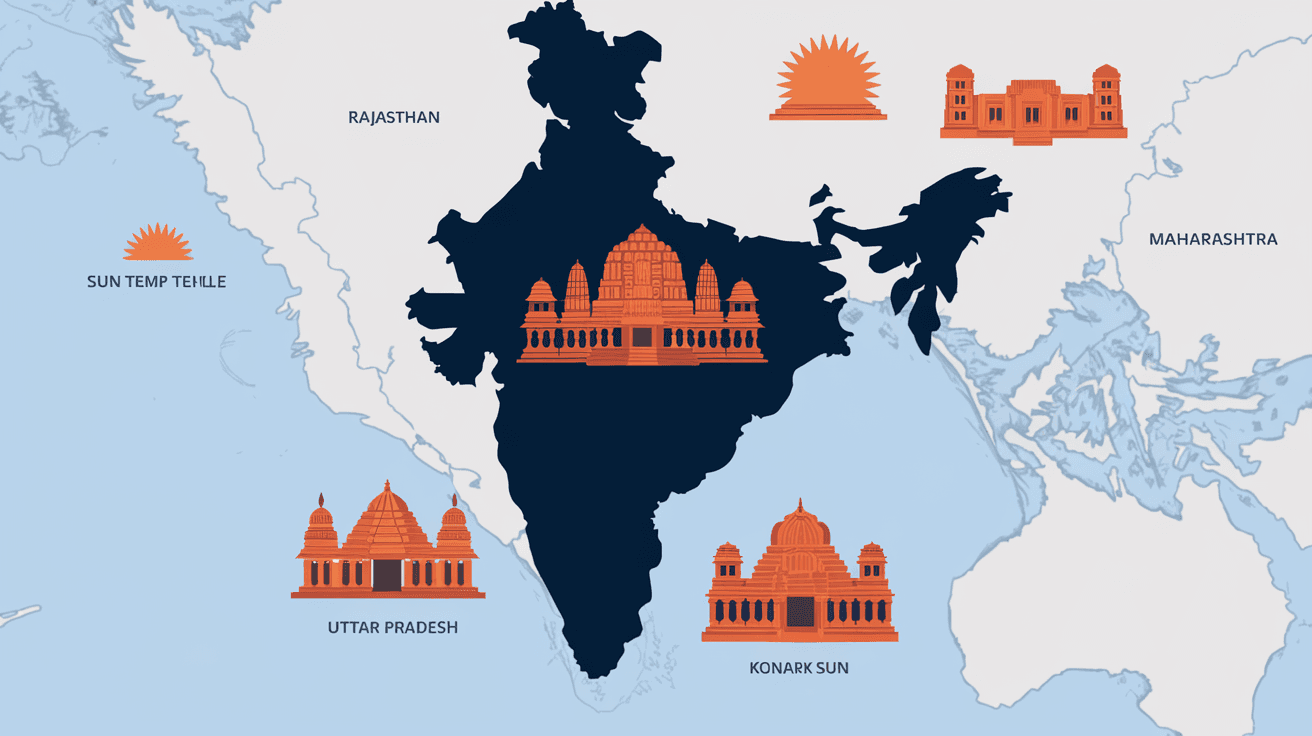
India has around a dozen major sun temples, with many smaller shrines scattered across the country. The exact number can vary depending on how one counts smaller or less-known temples. However, the most famous and historically significant sun temples number about 10 to 15.
Here are some key points:
While sun temples are fewer compared to temples dedicated to Shiva or Vishnu, their unique focus on Surya makes them stand out.
The Konark Sun Temple is the most iconic sun temple in India. Built in the 13th century by King Narasimhadeva I, it is a UNESCO World Heritage Site.
Konark is famous for its detailed stone carvings and architectural brilliance. It attracts thousands of visitors every year.
Located in Gujarat, the Modhera Sun Temple was built in the early 11th century by King Bhima I of the Solanki dynasty.
Modhera is a fine example of Solanki architecture and remains a popular tourist spot.
The Martand Sun Temple is one of the oldest sun temples in India, built in the 8th century by King Lalitaditya Muktapida.
Martand shows the spread of sun worship beyond central India.
Compared to temples dedicated to other deities, sun temples are relatively rare. There are several reasons for this:
Despite their rarity, sun temples have a lasting legacy and continue to inspire devotion and admiration.
Sun temples have unique architectural features that set them apart:
These features show the blend of art, science, and spirituality in ancient India.
If you want to explore sun temples, here are some tips:
Visiting these temples offers a glimpse into India’s ancient culture and religious practices.
Many sun temples face challenges like:
Efforts by the Archaeological Survey of India and local governments aim to preserve these treasures for future generations.
So, how many sun temples are there in India? While the exact number varies, there are about a dozen major sun temples spread across the country. These temples are not only places of worship but also masterpieces of architecture and astronomy. From the grand Konark Sun Temple to the ancient Martand temple, each tells a unique story about India’s spiritual and cultural past.
Exploring sun temples offers you a chance to connect with India’s rich heritage and understand the significance of the Sun God in Hinduism. Whether you visit for spiritual reasons or historical curiosity, these temples are worth your time. Keep in mind their rarity and the care needed to preserve them, so future generations can enjoy their beauty too.
There are about 10 to 15 major sun temples in India, with several smaller shrines. The exact number depends on how one counts lesser-known temples.
The Konark Sun Temple in Odisha is the most famous and is a UNESCO World Heritage Site known for its chariot design and intricate carvings.
Sun temples are rare due to the specific religious focus on Surya, the architectural challenges of aligning with the sun, and historical destruction.
Yes, many sun temples like Modhera and Arasavalli still hold regular rituals and festivals dedicated to Surya.
Yes, but visiting during festivals like Makar Sankranti or equinoxes offers a special experience when sunlight aligns with the temple’s design.