

How Many Stupas Are There in India
F
Discover verified facts, data, and insights about India’s states, culture, economy, education, and more — all in one place at FactBharat.
Search for a command to run...
Discover verified facts, data, and insights about India’s states, culture, economy, education, and more — all in one place at FactBharat.
No comments yet. Be the first to comment.
Moving to the USA from India is a dream for many. Whether you want to study, work, or live with family, the process can seem complex. But with the right information, you can plan your move confidently. I’ll guide you through the key steps and options...
Opening a college in India is a dream for many educators and entrepreneurs who want to contribute to the country’s education sector. If you are one of those who want to start a college, you need to understand the process clearly. It involves several ...
Opening a hospital in India is a significant and rewarding venture. If you’ve ever wondered how to start one, you’re in the right place. Whether you’re a healthcare professional, entrepreneur, or investor, understanding the process is crucial. You’ll...
Opening a medical store in India can be a rewarding business opportunity. You get to serve your community by providing essential medicines and healthcare products. If you are thinking about starting a medical store, you might wonder where to begin an...
Opening a restaurant in India can be an exciting and rewarding venture. Whether you dream of serving traditional Indian dishes or international cuisine, the process involves careful planning and understanding of local regulations. If you’re ready to ...
FactBharat | Insights About India
2558 posts
Discover verified facts, data, and insights about India’s states, culture, economy, education, and more — all in one place at FactBharat.
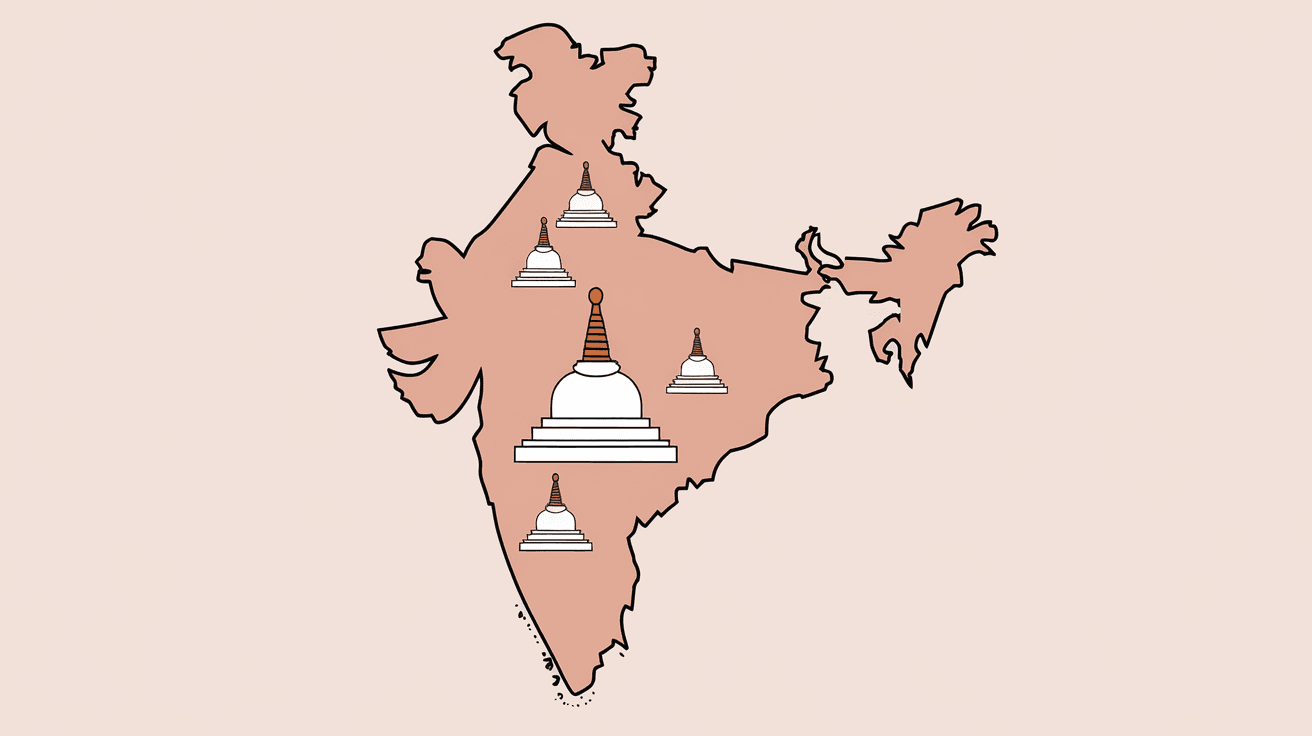
India is home to a rich heritage of Buddhist stupas, monuments that have stood the test of time and tell stories of ancient spirituality. If you’ve ever wondered how many stupas are there in India, you’re not alone. These sacred structures are scattered across the country, each with its own unique history and architectural style.
In this article, I’ll take you through the fascinating world of Indian stupas. We’ll explore their numbers, where they are located, and why they matter. Whether you’re a history buff, a traveler, or just curious, this guide will give you a clear picture of India’s stupas and their cultural importance.
Before diving into numbers, let’s understand what a stupa is. A stupa is a dome-shaped structure built as a Buddhist shrine. It usually contains relics of the Buddha or other important monks. Stupas serve as places for meditation and worship.
Stupas are not just religious monuments; they are architectural marvels that reflect India’s ancient craftsmanship.
Estimating the exact number of stupas in India is challenging. The country has hundreds of stupas, ranging from small village shrines to large, famous monuments. Most of these stupas date back to the Mauryan period (3rd century BCE) and later Buddhist eras.
In total, India likely has several hundred stupas, with many yet to be fully explored or restored.
Here are some of the most important stupas you should know about:
Sanchi Stupa is the most famous and best-preserved stupa in India. Built by Emperor Ashoka in the 3rd century BCE, it is a UNESCO World Heritage Site.
Located where Buddha gave his first sermon, Dhamek Stupa is a massive stone structure.
Though partially ruined, Amaravati Stupa was once one of the largest stupas in India.
Kesariya Stupa is one of the tallest stupas in India, standing about 30 meters high.
Jetavana was one of Buddha’s favorite monasteries.
Stupas are spread across various states, mainly in regions where Buddhism flourished historically.
This distribution reflects the spread of Buddhism from its origins in the Gangetic plains to other parts of India.
Stupas are more than just ancient structures. They hold deep religious, cultural, and historical significance.
Visiting stupas can be a peaceful, enlightening experience that connects you to India’s rich Buddhist heritage.
Preserving stupas is a major focus for archaeologists and the Indian government.
Despite challenges like weathering and urbanization, efforts continue to keep these monuments intact for future generations.
If you want to explore stupas, here are some tips:
Visiting stupas can be a rewarding journey into India’s spiritual and cultural landscape.
With growing interest in heritage tourism and Buddhist studies, stupas in India are gaining renewed attention.
The future looks promising for preserving and celebrating India’s stupas.
India’s stupas are remarkable monuments that tell the story of Buddhism’s deep roots in the country. While it’s hard to pinpoint an exact number, there are hundreds of stupas spread across India, from famous sites like Sanchi and Sarnath to lesser-known gems. These stupas are not just relics of the past; they continue to inspire spirituality, art, and culture today.
If you’re curious about India’s ancient heritage, visiting stupas offers a unique window into history and faith. Whether you explore the grand stupas or discover smaller ones in remote areas, you’ll find a rich tapestry of stories waiting to be uncovered.
India has several hundred stupas, including major well-known ones and many smaller or less-explored stupas across the country.
The Great Stupa at Sanchi is one of the largest and most famous stupas, but Kesariya Stupa is also among the tallest.
No, stupas are found across Asia, but India has some of the oldest and most historically significant stupas.
Yes, many stupas like Sanchi and Sarnath are open to tourists and pilgrims year-round.
Many stupas were built during Emperor Ashoka’s reign in the 3rd century BCE, along with later Buddhist rulers and communities.