

How Many States of India Share Border with Bangladesh
F
Discover verified facts, data, and insights about India’s states, culture, economy, education, and more — all in one place at FactBharat.
Search for a command to run...
Discover verified facts, data, and insights about India’s states, culture, economy, education, and more — all in one place at FactBharat.
No comments yet. Be the first to comment.
Moving to the USA from India is a dream for many. Whether you want to study, work, or live with family, the process can seem complex. But with the right information, you can plan your move confidently. I’ll guide you through the key steps and options...
Opening a college in India is a dream for many educators and entrepreneurs who want to contribute to the country’s education sector. If you are one of those who want to start a college, you need to understand the process clearly. It involves several ...
Opening a hospital in India is a significant and rewarding venture. If you’ve ever wondered how to start one, you’re in the right place. Whether you’re a healthcare professional, entrepreneur, or investor, understanding the process is crucial. You’ll...
Opening a medical store in India can be a rewarding business opportunity. You get to serve your community by providing essential medicines and healthcare products. If you are thinking about starting a medical store, you might wonder where to begin an...
Opening a restaurant in India can be an exciting and rewarding venture. Whether you dream of serving traditional Indian dishes or international cuisine, the process involves careful planning and understanding of local regulations. If you’re ready to ...
FactBharat | Insights About India
2558 posts
Discover verified facts, data, and insights about India’s states, culture, economy, education, and more — all in one place at FactBharat.
India shares a long and complex border with Bangladesh, a neighboring country in South Asia. If you have ever wondered how many Indian states touch this border, you’re not alone. Understanding this helps you appreciate the geography, culture, and even the challenges faced by these regions. In this article, I’ll walk you through the exact number of Indian states that share a border with Bangladesh and what makes these border areas unique.
We will explore the states involved, their geographical features, and the importance of this border in terms of trade, security, and cultural exchange. Whether you are a student, traveler, or just curious, this guide will give you clear and detailed insights into India’s border with Bangladesh.
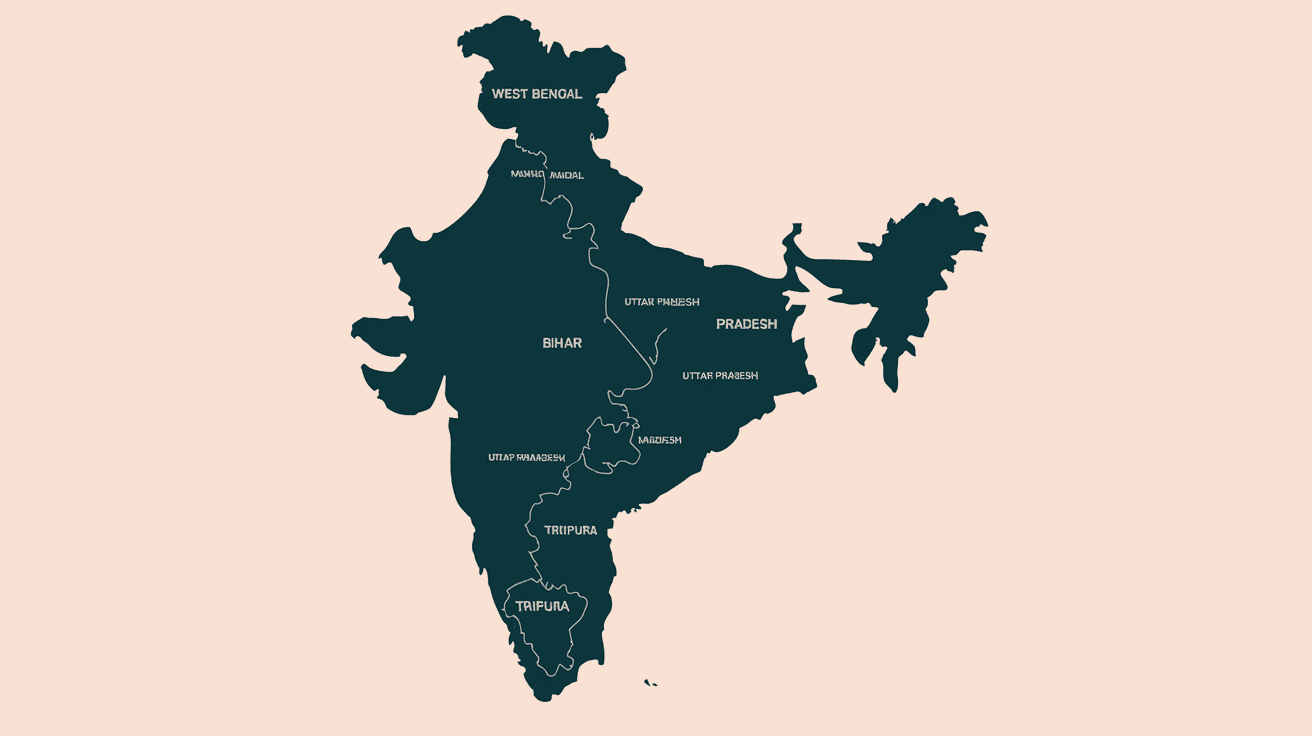
India shares its border with Bangladesh across five states. These states are:
Together, these states cover the entire 4,096 kilometers (2,545 miles) of the India-Bangladesh border, which is one of the longest international borders in the world.
The border runs mostly along the eastern and northeastern parts of India. Bangladesh is almost entirely surrounded by Indian territory on three sides, except for its southern coast along the Bay of Bengal. This geographical layout means only these five states have direct land borders with Bangladesh.
West Bengal shares the longest stretch of the border with Bangladesh, approximately 2,217 kilometers. This state has a rich cultural and historical connection with Bangladesh, as both regions were part of the Bengal Presidency during British rule.
Assam shares about 263 kilometers of the border with Bangladesh. It is the northeastern state with the second-longest border after West Bengal.
Meghalaya shares approximately 443 kilometers of the border with Bangladesh. Known for its hills and heavy rainfall, Meghalaya’s border is unique compared to the plains of West Bengal and Assam.
Tripura shares about 856 kilometers of the border with Bangladesh. Despite being one of the smaller states in India, Tripura has a significant border length relative to its size.
Mizoram shares a smaller border of about 318 kilometers with Bangladesh. It is the southernmost state among the five that share the border.
The border between India and Bangladesh is not just a line on the map; it plays a vital role in the lives of millions of people. Here are some reasons why this border is important:
The states sharing the border with Bangladesh face unique challenges, including:
India has taken several steps to manage and secure the border:
The border states share deep cultural and social ties with Bangladesh:
So, how many states of India share a border with Bangladesh? The answer is five: West Bengal, Assam, Meghalaya, Tripura, and Mizoram. Each state brings its unique geography, culture, and challenges to this international boundary.
Understanding these states and their connection with Bangladesh helps you appreciate the complexity and importance of this border. It is not just a line dividing two countries but a vibrant region full of life, culture, and ongoing cooperation. Whether you are interested in geography, politics, or culture, knowing about these five states gives you a clearer picture of India’s eastern frontier.
The India-Bangladesh border is approximately 4,096 kilometers long, making it one of the longest international borders in the world.
West Bengal shares the longest border with Bangladesh, covering around 2,217 kilometers.
There have been minor disputes over enclaves and river boundaries, but both countries work through diplomatic channels to resolve them.
The Border Security Force (BSF) patrols and secures the India-Bangladesh border to prevent illegal crossings and smuggling.
Yes, many border states share language, festivals, and traditions with Bangladesh, reflecting deep cultural ties across the border.