

How Many States Are There in India?
F
Discover verified facts, data, and insights about India’s states, culture, economy, education, and more — all in one place at FactBharat.
Search for a command to run...
Discover verified facts, data, and insights about India’s states, culture, economy, education, and more — all in one place at FactBharat.
No comments yet. Be the first to comment.
Moving to the USA from India is a dream for many. Whether you want to study, work, or live with family, the process can seem complex. But with the right information, you can plan your move confidently. I’ll guide you through the key steps and options...
Opening a college in India is a dream for many educators and entrepreneurs who want to contribute to the country’s education sector. If you are one of those who want to start a college, you need to understand the process clearly. It involves several ...
Opening a hospital in India is a significant and rewarding venture. If you’ve ever wondered how to start one, you’re in the right place. Whether you’re a healthcare professional, entrepreneur, or investor, understanding the process is crucial. You’ll...
Opening a medical store in India can be a rewarding business opportunity. You get to serve your community by providing essential medicines and healthcare products. If you are thinking about starting a medical store, you might wonder where to begin an...
Opening a restaurant in India can be an exciting and rewarding venture. Whether you dream of serving traditional Indian dishes or international cuisine, the process involves careful planning and understanding of local regulations. If you’re ready to ...
FactBharat | Insights About India
2558 posts
Discover verified facts, data, and insights about India’s states, culture, economy, education, and more — all in one place at FactBharat.
India is a vast and diverse country with a rich cultural heritage. If you’ve ever wondered how many states India has, you’re not alone. Understanding the number of states helps you grasp the country’s administrative structure and regional diversity. In this article, I’ll guide you through the current number of states in India and explain why this matters.
We’ll also explore how these states came into existence, their roles, and what makes each one unique. Whether you’re a student, traveler, or just curious, this article will give you clear and simple answers about India’s states.
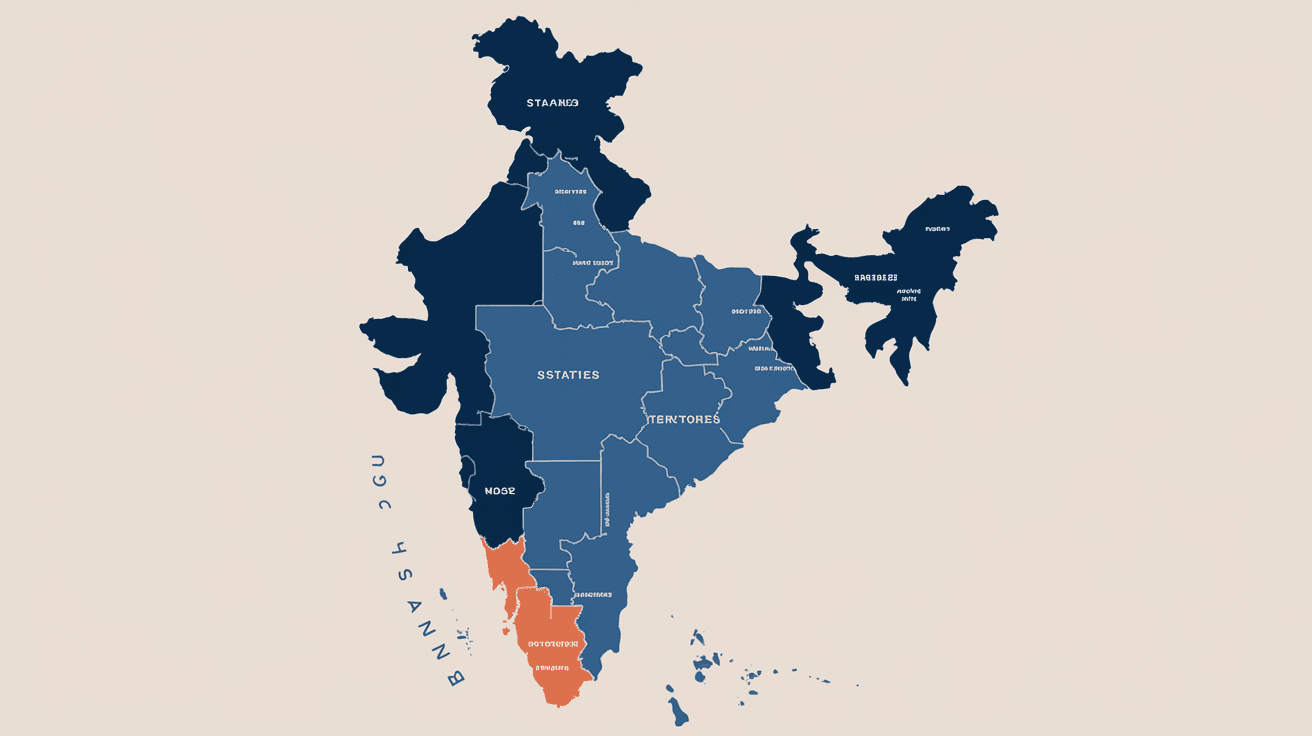
India currently has 28 states. These states are the primary administrative divisions of the country. Each state has its own government, laws, and cultural identity. Along with the states, India also has 8 Union Territories, which are regions governed directly by the Central Government.
The number of states has changed over time due to political, cultural, and administrative reasons. For example, Telangana was created as the 29th state in 2014 but later, Jammu and Kashmir was reorganized into Union Territories, adjusting the total count.
India is a large country with many languages, cultures, and traditions. States help manage this diversity by allowing local governments to make decisions that suit their people. This system is called federalism.
This setup helps India stay united while respecting its diversity.
India’s states have evolved over many years. When India became independent in 1947, it had fewer states. Most were based on historical regions or princely states.
In 1956, the States Reorganisation Act reorganized states mainly on linguistic lines. This means states were created so that people speaking the same language lived in the same state. This was a major change and shaped the current map of India.
Since then, new states have been created for better governance or to address regional demands. For example:
These changes show how India’s states continue to evolve.
Here is a list of all the states in India, along with their capitals:
| State | Capital |
| Andhra Pradesh | Amaravati |
| Arunachal Pradesh | Itanagar |
| Assam | Dispur |
| Bihar | Patna |
| Chhattisgarh | Raipur |
| Goa | Panaji |
| Gujarat | Gandhinagar |
| Haryana | Chandigarh |
| Himachal Pradesh | Shimla |
| Jharkhand | Ranchi |
| Karnataka | Bengaluru |
| Kerala | Thiruvananthapuram |
| Madhya Pradesh | Bhopal |
| Maharashtra | Mumbai |
| Manipur | Imphal |
| Meghalaya | Shillong |
| Mizoram | Aizawl |
| Nagaland | Kohima |
| Odisha | Bhubaneswar |
| Punjab | Chandigarh |
| Rajasthan | Jaipur |
| Sikkim | Gangtok |
| Tamil Nadu | Chennai |
| Telangana | Hyderabad |
| Tripura | Agartala |
| Uttar Pradesh | Lucknow |
| Uttarakhand | Dehradun |
| West Bengal | Kolkata |
Each state has its own unique culture, language, and traditions, making India a colorful mosaic of diversity.
Besides states, India has 8 Union Territories (UTs). These are regions governed directly by the Central Government, unlike states which have their own governments.
The Union Territories are:
Some Union Territories like Delhi and Puducherry have their own legislatures, but the Central Government holds more power.
Union Territories usually have smaller populations or special strategic importance. For example, Delhi is the national capital, and Jammu and Kashmir has a unique political status.
Each state in India has a government similar to the Central Government but with powers limited to the state level. The main parts of state government are:
States have powers over areas like education, health, agriculture, and local police. This allows them to address local needs effectively.
Understanding how many states India has is important for several reasons:
India’s states are more than just lines on a map; they represent the country’s rich heritage and democratic spirit.
Here are some cool facts about India’s states that you might find interesting:
These facts show how diverse and dynamic India’s states are.
Each state contributes uniquely to India’s culture and economy. For example:
States also have different economic strengths like agriculture, manufacturing, IT, or tourism. This diversity helps India’s overall growth.
Now you know that India has 28 states and 8 Union Territories. These states are essential for managing the country’s vast diversity and ensuring local governance. Each state has its own identity, culture, and government, making India a truly unique nation.
Understanding the number of states helps you appreciate India’s complexity and unity. Whether you’re learning, traveling, or doing business, knowing about India’s states gives you a clearer picture of this incredible country.
India has 28 states. These states have their own governments and manage local affairs.
States have their own governments, while Union Territories are governed directly by the Central Government.
Telangana was the last state created in 2014, carved out of Andhra Pradesh.
Rajasthan is the largest state by area in India.
States have a Governor, Chief Minister, legislature, and judiciary to manage state affairs.