

How Many Stadiums Are There in India
F
Discover verified facts, data, and insights about India’s states, culture, economy, education, and more — all in one place at FactBharat.
Search for a command to run...
Discover verified facts, data, and insights about India’s states, culture, economy, education, and more — all in one place at FactBharat.
No comments yet. Be the first to comment.
Moving to the USA from India is a dream for many. Whether you want to study, work, or live with family, the process can seem complex. But with the right information, you can plan your move confidently. I’ll guide you through the key steps and options...
Opening a college in India is a dream for many educators and entrepreneurs who want to contribute to the country’s education sector. If you are one of those who want to start a college, you need to understand the process clearly. It involves several ...
Opening a hospital in India is a significant and rewarding venture. If you’ve ever wondered how to start one, you’re in the right place. Whether you’re a healthcare professional, entrepreneur, or investor, understanding the process is crucial. You’ll...
Opening a medical store in India can be a rewarding business opportunity. You get to serve your community by providing essential medicines and healthcare products. If you are thinking about starting a medical store, you might wonder where to begin an...
Opening a restaurant in India can be an exciting and rewarding venture. Whether you dream of serving traditional Indian dishes or international cuisine, the process involves careful planning and understanding of local regulations. If you’re ready to ...
FactBharat | Insights About India
2558 posts
Discover verified facts, data, and insights about India’s states, culture, economy, education, and more — all in one place at FactBharat.
India is a country passionate about sports, and stadiums play a huge role in nurturing this love. If you’ve ever wondered how many stadiums there are in India, you’re not alone. From cricket grounds to football arenas and multi-purpose stadiums, India has a vast and diverse sports infrastructure. Understanding the number and types of stadiums can give you a clearer picture of how sports thrive here.
In this article, I’ll walk you through the current landscape of stadiums in India. We’ll explore the total count, the different kinds of stadiums, and some notable examples. Whether you’re a sports fan, a student, or just curious, this guide will help you grasp the scale and variety of stadiums across the country.
India has a large number of stadiums spread across its states and union territories. While there isn’t a single official count updated daily, estimates from sports authorities and government reports suggest there are over 500 stadiums in India. These include stadiums dedicated to cricket, football, hockey, athletics, and other sports.
The number varies because:
The Ministry of Youth Affairs and Sports, along with state sports departments, manages many of these venues. Cricket stadiums are the most prominent, but football and hockey stadiums are growing in number due to increasing interest.
India’s stadiums can be broadly categorized based on the sports they host and their design. Here are the main types:
Cricket is the most popular sport in India, so cricket stadiums are the most numerous and well-known. India has around 50 international and domestic cricket stadiums. Some famous ones include:
These stadiums often host international matches, IPL games, and domestic tournaments.
Football is gaining popularity, especially with the Indian Super League (ISL) and I-League. India has about 100 football stadiums, ranging from small local grounds to large arenas. Key stadiums include:
Football stadiums are often multi-purpose and host other events too.
India has a rich history in field hockey, and there are around 50 dedicated hockey stadiums. Some notable ones are:
Hockey stadiums usually have synthetic turf and seating for thousands of fans.
Many stadiums in India serve multiple sports and events. These venues can host athletics, cricket, football, concerts, and cultural programs. Examples include:
Multi-purpose stadiums help maximize the use of infrastructure and serve diverse communities.
Stadiums are unevenly distributed across India. States with strong sports cultures and better infrastructure have more stadiums. Here’s a quick look:
Smaller states and northeastern regions are developing their sports infrastructure, with new stadiums being built to promote local talent.
Here’s a table highlighting some of India’s largest and most famous stadiums:
| Stadium Name | Location | Sport(s) | Seating Capacity |
| Salt Lake Stadium | Kolkata | Football | 85,000 |
| Eden Gardens | Kolkata | Cricket | 66,000 |
| Jawaharlal Nehru Stadium | Delhi | Football, Athletics | 60,000 |
| Wankhede Stadium | Mumbai | Cricket | 33,000 |
| M. Chinnaswamy Stadium | Bengaluru | Cricket | 40,000 |
| Kalinga Stadium | Bhubaneswar | Hockey | 15,000 |
| Fatorda Stadium | Goa | Football | 19,000 |
These stadiums are landmarks in their cities and often host international events.
India is investing heavily in sports infrastructure to support its growing sports culture. Some recent trends include:
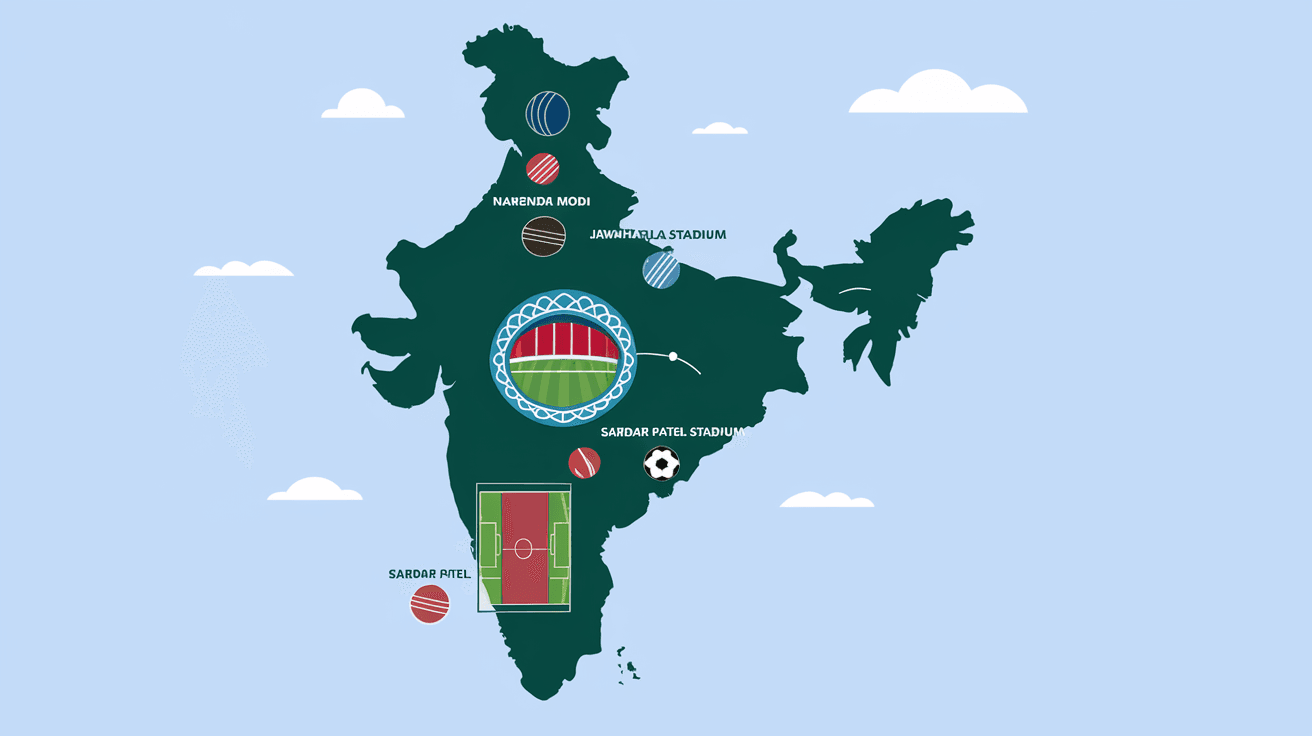
For example, the Narendra Modi Stadium in Ahmedabad, the world’s largest cricket stadium with a capacity of 132,000, was recently renovated and reopened with state-of-the-art facilities.
Stadiums are more than just venues; they influence sports culture and local communities in many ways:
Investing in stadiums helps India nurture talent and build a stronger sports ecosystem.
Despite growth, Indian stadiums face some challenges:
Addressing these challenges is key to sustaining India’s sports infrastructure.
India has over 500 stadiums spread across the country, covering cricket, football, hockey, and multi-purpose venues. The number is growing as sports gain popularity and infrastructure improves. From iconic stadiums like Eden Gardens and Salt Lake Stadium to new smart stadiums, India’s sports venues are vital to its sporting success.
Understanding the variety and distribution of stadiums helps you appreciate how sports thrive in India. Whether you’re a fan or a player, these stadiums are the heart of India’s sports culture, shaping the future of athletes and communities alike.
India has around 50 international and domestic cricket stadiums, with many hosting international matches regularly.
The Narendra Modi Stadium in Ahmedabad is the largest, seating about 132,000 spectators.
Yes, India has many football, hockey, and multi-purpose stadiums across the country.
States like Maharashtra, West Bengal, Delhi, and Karnataka have the most stadiums, while smaller states are developing infrastructure.
Recent upgrades include modernization, new stadium construction, smart technology integration, and eco-friendly designs.