

How Many Space Centres Are There in India
F
Discover verified facts, data, and insights about India’s states, culture, economy, education, and more — all in one place at FactBharat.
Search for a command to run...
Discover verified facts, data, and insights about India’s states, culture, economy, education, and more — all in one place at FactBharat.
No comments yet. Be the first to comment.
Moving to the USA from India is a dream for many. Whether you want to study, work, or live with family, the process can seem complex. But with the right information, you can plan your move confidently. I’ll guide you through the key steps and options...
Opening a college in India is a dream for many educators and entrepreneurs who want to contribute to the country’s education sector. If you are one of those who want to start a college, you need to understand the process clearly. It involves several ...
Opening a hospital in India is a significant and rewarding venture. If you’ve ever wondered how to start one, you’re in the right place. Whether you’re a healthcare professional, entrepreneur, or investor, understanding the process is crucial. You’ll...
Opening a medical store in India can be a rewarding business opportunity. You get to serve your community by providing essential medicines and healthcare products. If you are thinking about starting a medical store, you might wonder where to begin an...
Opening a restaurant in India can be an exciting and rewarding venture. Whether you dream of serving traditional Indian dishes or international cuisine, the process involves careful planning and understanding of local regulations. If you’re ready to ...
FactBharat | Insights About India
2558 posts
Discover verified facts, data, and insights about India’s states, culture, economy, education, and more — all in one place at FactBharat.
India's space program has grown impressively over the years, making it one of the leading space-faring nations. If you are curious about how many space centres India has and what roles they play, you are in the right place. We will explore the major space centres, their functions, and how they contribute to India's space missions.
You might be surprised to learn that India has multiple space centres spread across the country, each specializing in different aspects of space technology and exploration. These centres work together to support satellite launches, research, and development, making India a key player in global space activities.
India's space programme is managed by the Indian Space Research Organisation (ISRO), which operates several space centres across the country. These centres are responsible for satellite development, launch vehicle assembly, testing, and mission control. Currently, India has six main space centres that play vital roles in the country's space missions.
Each centre focuses on specific tasks, such as satellite manufacturing, rocket launching, or tracking space missions. Together, they form a robust network that supports India's ambitions in space exploration, satellite communication, and scientific research.
Let's dive deeper into each of these centres to understand their unique roles.
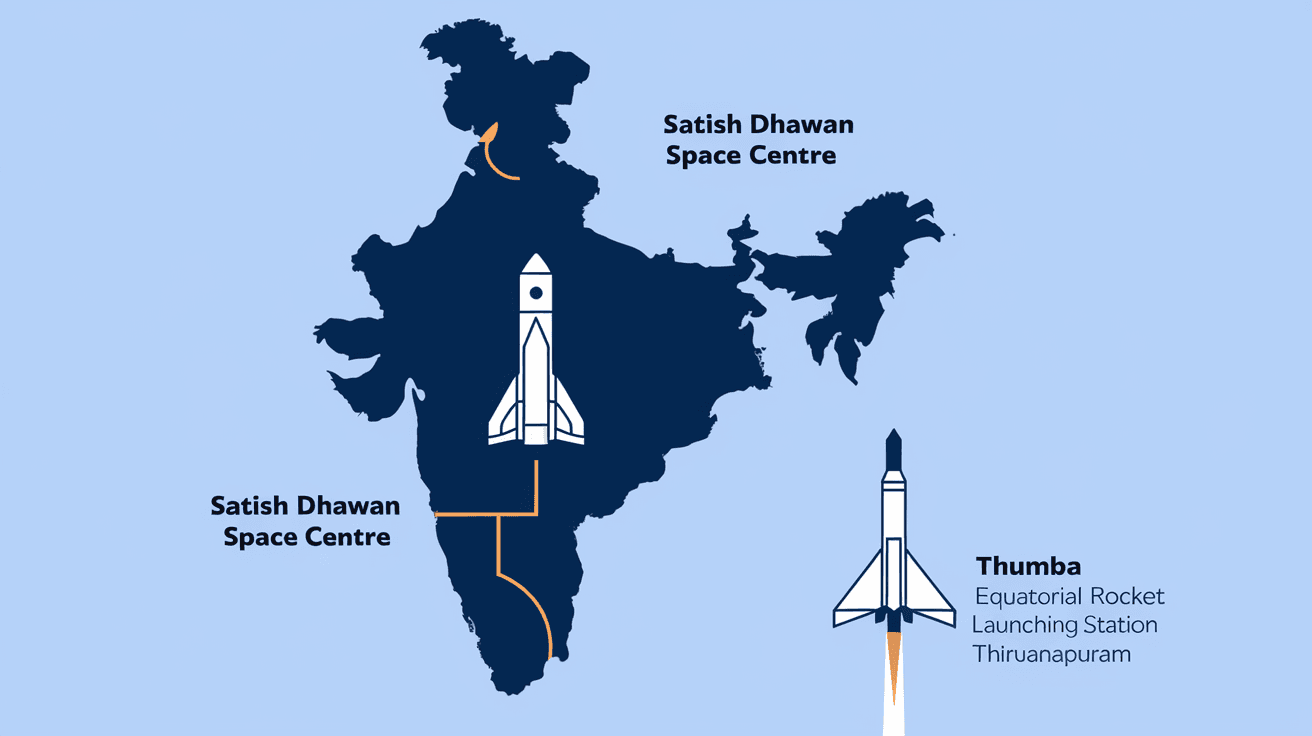
The Satish Dhawan Space Centre, located in Sriharikota, Andhra Pradesh, is India's primary launch site. It is often called the "spaceport of India." This centre handles the assembly, integration, and launching of satellites into orbit.
SDSC is equipped with multiple launch pads and advanced tracking systems. It has been the site for many historic launches, including the Mars Orbiter Mission (Mangalyaan) and Chandrayaan lunar missions. The centre ensures that rockets are safely launched and monitored throughout their flight.
The ISRO Satellite Centre, also known as the U R Rao Satellite Centre, is located in Bengaluru. This centre is the hub for satellite design, development, and integration.
ISAC has been instrumental in creating satellites like INSAT, GSAT, and Cartosat series. The centre focuses on innovation and improving satellite technology to meet India's growing needs in communication, weather forecasting, and earth observation.
Named after the father of the Indian space program, Vikram Sarabhai Space Centre in Kerala is the main centre for rocket and launch vehicle development.
VSSC plays a crucial role in advancing India's launch capabilities. It works closely with other centres to ensure rockets are reliable and efficient for various missions, including satellite launches and interplanetary exploration.
The Space Applications Centre in Ahmedabad focuses on using space technology for practical applications that benefit society.
SAC bridges the gap between space technology and everyday life. It helps convert satellite data into actionable information for farmers, urban planners, and disaster response teams.
The Liquid Propulsion Systems Centre has multiple facilities across India, including in Thiruvananthapuram, Bengaluru, and Mahendragiri.
LPSC's work is critical for powering rockets and spacecraft. Its innovations have enabled India to develop indigenous cryogenic engines, reducing dependence on foreign technology.
Besides the six main centres, India has other facilities that support space activities:
These centres and facilities work together to ensure India's space program runs smoothly and achieves its goals.
India's space centres are interconnected, each contributing its expertise to the overall mission. For example:
This collaboration allows India to carry out complex missions, from launching communication satellites to exploring Mars and the Moon.
With these centres, India has launched over 300 satellites, including its own and foreign satellites. The country is also planning ambitious missions like:
These projects rely heavily on the expertise and infrastructure of India's space centres.
India has six major space centres, each playing a unique and vital role in the country's space program. From satellite design to rocket launches and propulsion development, these centres work together to make India a global space power. Understanding how many space centres India has helps you appreciate the scale and complexity of its space missions.
As India continues to expand its space capabilities, these centres will remain at the heart of innovation and exploration. Whether you are a space enthusiast or just curious, knowing about these centres gives you insight into how India reaches for the stars.
India has six main space centres, including the Satish Dhawan Space Centre, ISRO Satellite Centre, Vikram Sarabhai Space Centre, Space Applications Centre, and Liquid Propulsion Systems Centre.
The Satish Dhawan Space Centre in Sriharikota is India's primary launch site for rockets and satellite missions.
The ISRO Satellite Centre (also called U R Rao Satellite Centre) in Bengaluru is responsible for designing and building Indian satellites.
VSSC focuses on developing launch vehicles and rocket technology for India's space missions.
Yes, the Liquid Propulsion Systems Centre develops and tests liquid and cryogenic engines for rockets and spacecraft.