

How Many Shatabdi Express Trains Are There in India?
F
Discover verified facts, data, and insights about India’s states, culture, economy, education, and more — all in one place at FactBharat.
Search for a command to run...
Discover verified facts, data, and insights about India’s states, culture, economy, education, and more — all in one place at FactBharat.
No comments yet. Be the first to comment.
Moving to the USA from India is a dream for many. Whether you want to study, work, or live with family, the process can seem complex. But with the right information, you can plan your move confidently. I’ll guide you through the key steps and options...
Opening a college in India is a dream for many educators and entrepreneurs who want to contribute to the country’s education sector. If you are one of those who want to start a college, you need to understand the process clearly. It involves several ...
Opening a hospital in India is a significant and rewarding venture. If you’ve ever wondered how to start one, you’re in the right place. Whether you’re a healthcare professional, entrepreneur, or investor, understanding the process is crucial. You’ll...
Opening a medical store in India can be a rewarding business opportunity. You get to serve your community by providing essential medicines and healthcare products. If you are thinking about starting a medical store, you might wonder where to begin an...
Opening a restaurant in India can be an exciting and rewarding venture. Whether you dream of serving traditional Indian dishes or international cuisine, the process involves careful planning and understanding of local regulations. If you’re ready to ...
FactBharat | Insights About India
2558 posts
Discover verified facts, data, and insights about India’s states, culture, economy, education, and more — all in one place at FactBharat.
When you think about fast and comfortable train travel in India, the Shatabdi Express trains often come to mind. These trains are known for their speed, punctuality, and excellent onboard services. If you’ve ever wondered how many Shatabdi Express trains run across India, you’re in the right place. I’ll walk you through the current number of Shatabdi trains, their key features, and why they remain a favorite for many travelers.
We’ll explore the routes these trains cover, what makes them special, and how they fit into India’s vast railway network. Whether you’re planning a trip or just curious about Indian Railways, this article will give you a clear picture of the Shatabdi Express trains and their role in connecting major cities quickly and comfortably.
The Shatabdi Express trains are a series of fast passenger trains operated by Indian Railways. Introduced in 1988, they were designed to provide quick daytime travel between important cities. The name "Shatabdi" means "century" in Hindi, marking the 100th birth anniversary of India’s first Prime Minister, Jawaharlal Nehru.
These trains are known for:
Shatabdi Express trains usually cover distances that can be traveled within a day, making them ideal for business travelers and tourists who want to avoid overnight journeys.
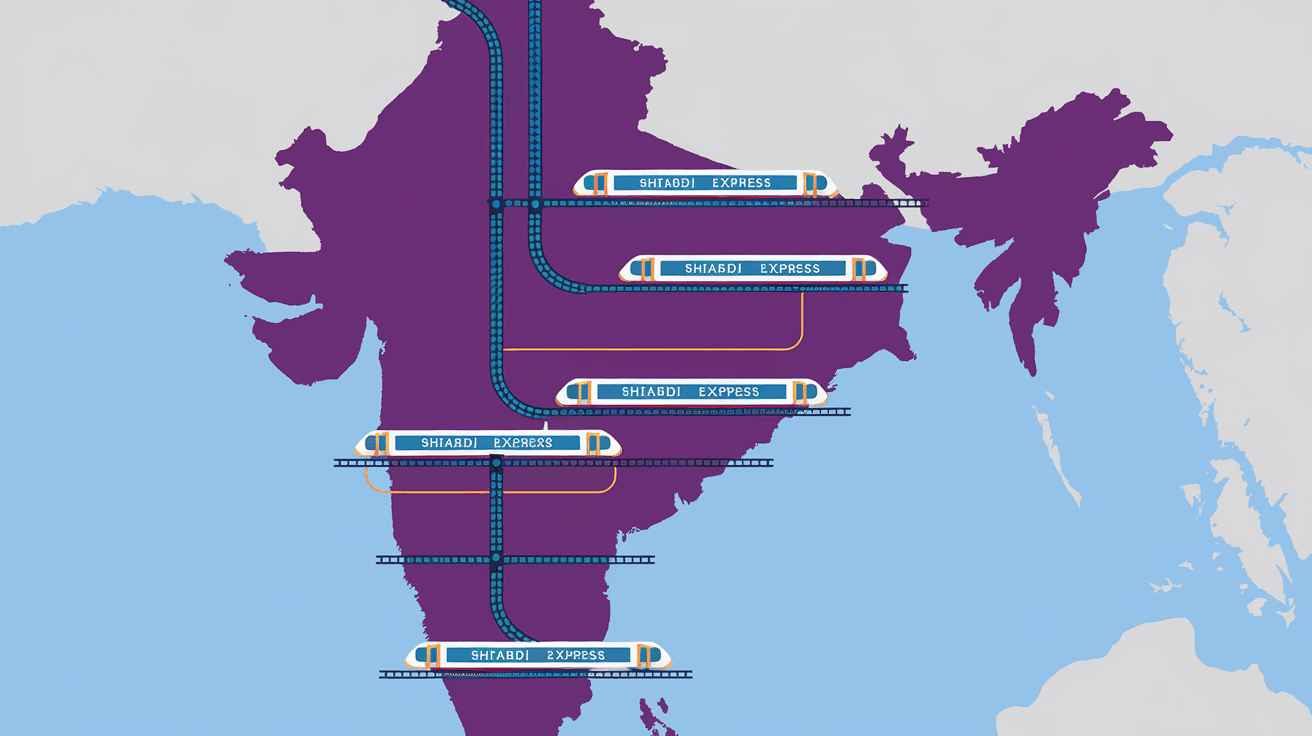
As of 2025, India operates around 27 Shatabdi Express trains across various routes. These trains connect major metropolitan cities and important regional centers, primarily in the northern, western, and southern parts of the country.
Here’s a quick overview:
| Region | Number of Shatabdi Trains | Key Routes |
| Northern India | 10 | New Delhi–Amritsar, New Delhi–Chandigarh |
| Western India | 7 | Mumbai–Pune, Mumbai–Ahmedabad |
| Southern India | 8 | Chennai–Bangalore, Chennai–Coimbatore |
| Eastern India | 2 | Kolkata–Durgapur, Howrah–Puri |
These trains are spread strategically to serve busy corridors where fast daytime travel is in high demand.
Some Shatabdi Express trains have gained iconic status due to their routes and service quality. Here are a few popular ones:
New Delhi to Amritsar Shatabdi Express: This train connects the national capital with the historic city of Amritsar. It covers approximately 450 km in about 6 hours, making it a preferred choice for tourists visiting the Golden Temple.
Mumbai to Pune Shatabdi Express: Linking two major cities in Maharashtra, this train is popular among business travelers. It covers the distance in roughly 3 hours.
Chennai to Bangalore Shatabdi Express: Connecting two IT hubs, this train is vital for professionals traveling between Tamil Nadu and Karnataka.
Howrah to Puri Shatabdi Express: This route is popular among tourists heading to the famous Jagannath Temple in Puri.
Each of these trains offers a blend of speed, comfort, and convenience, making them stand out in the Indian Railways network.
What sets Shatabdi Express trains apart from other trains? Here are some key features:
Daytime Travel: Shatabdi trains are designed for daytime journeys, usually starting in the morning and reaching the destination by evening.
Air-Conditioned Coaches: All coaches are fully air-conditioned, providing a comfortable environment regardless of the weather outside.
Catering Included: Meals and refreshments are included in the ticket price. Passengers receive freshly prepared food served at their seats.
Priority on Tracks: Shatabdi trains get high priority on the railway network, which helps maintain punctuality.
Modern Coaches: Many Shatabdi trains now use LHB (Linke Hofmann Busch) coaches, which are safer and more comfortable.
Onboard Services: Some trains offer Wi-Fi, charging points, and clean washrooms, enhancing passenger experience.
These features make Shatabdi Express trains a preferred choice for travelers who want a hassle-free and speedy journey.
Indian Railways offers various train categories, such as Rajdhani Express, Duronto Express, and Garib Rath. Here’s how Shatabdi Express stands out:
| Feature | Shatabdi Express | Rajdhani Express | Duronto Express | Garib Rath |
| Travel Time | Daytime, short to medium distances | Overnight, long distances | Non-stop, long distances | Budget, long distances |
| Air Conditioning | Yes | Yes | Yes | Yes |
| Catering Included | Yes | Yes | Yes | No |
| Speed | Up to 150 km/h | Up to 130-150 km/h | Up to 130-150 km/h | Up to 110 km/h |
| Priority on Network | High | Very High | High | Medium |
| Coach Type | LHB coaches | LHB coaches | LHB coaches | ICF coaches |
Shatabdi Express trains are ideal for daytime travel on busy routes, while Rajdhani and Duronto focus on overnight long-distance journeys. Garib Rath offers affordable AC travel but with fewer amenities.
Booking a ticket on a Shatabdi Express train is straightforward. You can use:
Tickets for Shatabdi trains are usually in high demand, especially during holidays and weekends. It’s best to book early to secure your seat. The trains offer two main classes:
Both classes include meals and refreshments, making your journey pleasant.
You might wonder why Shatabdi Express trains remain a favorite despite the rise of low-cost airlines and highways. Here’s why:
For many travelers, Shatabdi Express trains offer the perfect balance of speed, comfort, and value.
Indian Railways continues to invest in upgrading Shatabdi Express trains. Some future developments include:
These improvements aim to keep Shatabdi Express trains relevant and competitive in India’s evolving transport landscape.
Now you know that there are about 27 Shatabdi Express trains running across India, connecting major cities with speed and comfort. These trains have become a symbol of efficient daytime travel, offering air-conditioned coaches, onboard meals, and punctual service. Whether you’re traveling for business or leisure, Shatabdi Express trains provide a reliable and enjoyable option.
As Indian Railways modernizes its fleet and introduces new trains like the Vande Bharat, the legacy of Shatabdi Express trains continues. They remain a vital part of India’s railway network, helping millions travel quickly and comfortably every year.
There are around 27 Shatabdi Express trains running across India, connecting major cities primarily in northern, western, and southern regions.
Shatabdi Express trains typically run at speeds up to 150 km/h on certain routes, making them some of the fastest trains in India.
Yes, meals and refreshments are included in the ticket price for all Shatabdi Express trains, served onboard during the journey.
Absolutely! You can book tickets online through the IRCTC website, mobile apps, or authorized travel agents.
Shatabdi trains are daytime trains covering short to medium distances with onboard meals, while Rajdhani trains are overnight, long-distance trains connecting the capital with major cities.