

How Many Shakti Peeths Are in India and Where
F
Discover verified facts, data, and insights about India’s states, culture, economy, education, and more — all in one place at FactBharat.
Search for a command to run...
Discover verified facts, data, and insights about India’s states, culture, economy, education, and more — all in one place at FactBharat.
No comments yet. Be the first to comment.
Moving to the USA from India is a dream for many. Whether you want to study, work, or live with family, the process can seem complex. But with the right information, you can plan your move confidently. I’ll guide you through the key steps and options...
Opening a college in India is a dream for many educators and entrepreneurs who want to contribute to the country’s education sector. If you are one of those who want to start a college, you need to understand the process clearly. It involves several ...
Opening a hospital in India is a significant and rewarding venture. If you’ve ever wondered how to start one, you’re in the right place. Whether you’re a healthcare professional, entrepreneur, or investor, understanding the process is crucial. You’ll...
Opening a medical store in India can be a rewarding business opportunity. You get to serve your community by providing essential medicines and healthcare products. If you are thinking about starting a medical store, you might wonder where to begin an...
Opening a restaurant in India can be an exciting and rewarding venture. Whether you dream of serving traditional Indian dishes or international cuisine, the process involves careful planning and understanding of local regulations. If you’re ready to ...
FactBharat | Insights About India
2558 posts
Discover verified facts, data, and insights about India’s states, culture, economy, education, and more — all in one place at FactBharat.
India is home to many sacred places, but Shakti Peeths hold a special place in the hearts of devotees. These temples are dedicated to Goddess Shakti, the divine feminine energy. If you have ever wondered how many Shakti Peeths are in India and where they are located, you are in the right place. I will guide you through the number of these holy sites and their significance.
Understanding Shakti Peeths helps you appreciate the rich spiritual heritage of India. These temples are spread across the country, each with its own unique story and importance. Let’s explore the number of Shakti Peeths in India and where you can find them.
Shakti Peeths are sacred shrines dedicated to Goddess Shakti or Durga. According to Hindu mythology, these sites mark the places where parts of the goddess Sati’s body fell after her self-immolation and Lord Shiva’s grief-driven dance. Each Peeth represents a body part of Sati and is worshipped as a powerful center of divine feminine energy.
These temples are not only religious centers but also cultural landmarks that showcase India’s ancient traditions and architecture.
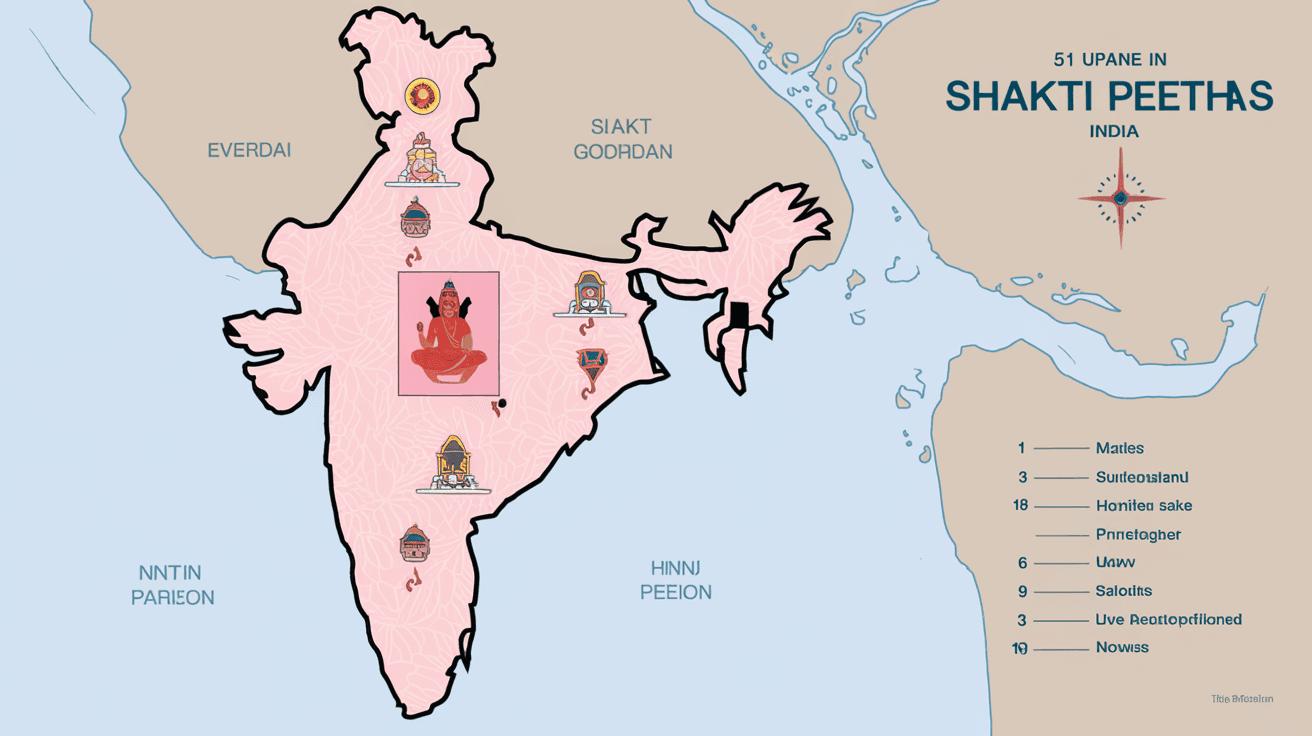
The total number of Shakti Peeths varies in different texts, but traditionally, there are 51 Shakti Peeths mentioned in Hindu scriptures. Out of these, about 18 to 20 are located within India’s borders. The rest are spread across neighboring countries like Bangladesh, Pakistan, Nepal, and Sri Lanka.
The most widely accepted list includes 18 major Shakti Peeths in India, each revered for its unique spiritual energy and history.
Here is a list of some of the most important Shakti Peeths in India, along with their locations and the body parts of Sati associated with them:
| Shakti Peeth | Location | Body Part of Sati | Notable Deity Name |
| Kamakhya Temple | Guwahati, Assam | Yoni (Womb) | Kamakhya Devi |
| Kalighat Temple | Kolkata, West Bengal | Feet | Kali |
| Dakshineswar Kali Temple | Kolkata, West Bengal | Face | Kali |
| Jwalamukhi Temple | Himachal Pradesh | Tongue | Jwalamukhi Devi |
| Hinglaj Mata Temple | Balochistan (near India border) | Navel | Hinglaj Mata |
| Vaishno Devi Temple | Jammu & Kashmir | Hair | Vaishno Devi |
| Mahakali Temple | Ujjain, Madhya Pradesh | Teeth | Mahakali |
| Chhinnamasta Temple | Rajrappa, Jharkhand | Head | Chhinnamasta Devi |
| Tara Tarini Temple | Odisha | Breast | Tara Tarini |
| Kamakshi Temple | Kanchipuram, Tamil Nadu | Eyes | Kamakshi Devi |
These temples attract millions of devotees every year, especially during festivals like Navratri and Durga Puja.
Shakti Peeths are more than just temples; they are centers of spiritual power and cultural identity. They represent the divine feminine energy that sustains the universe. Here’s why they are so important:
Visiting these Peeths offers a chance to connect with India’s spiritual roots and experience the divine energy firsthand.
If you want to visit Shakti Peeths, planning is essential. Here are some tips to help you organize your pilgrimage:
A well-planned trip will make your pilgrimage meaningful and smooth.
Shakti Peeths come alive during festivals, attracting devotees from all over. Some key festivals include:
These festivals feature vibrant rituals, music, dance, and community gatherings, making them spiritually uplifting.
Besides the famous ones, India has many lesser-known Shakti Peeths that are equally sacred. Some examples include:
Exploring these lesser-known Peeths can offer a more intimate and peaceful spiritual experience.
In today’s India, Shakti Peeths continue to inspire millions. They are centers for spiritual learning, cultural preservation, and social gatherings. Many temples have adapted to modern times by:
These efforts keep the tradition of Shakti worship alive and relevant in the 21st century.
Now you know that India has around 18 to 20 major Shakti Peeths, each with its own sacred story and location. These temples are spread across the country, from Assam in the northeast to Tamil Nadu in the south. Visiting them offers a deep connection to the divine feminine energy and India’s spiritual heritage.
Whether you are a devotee or a curious traveler, exploring Shakti Peeths can be a life-changing experience. They remind us of the power of Shakti and the importance of faith, culture, and tradition in our lives. So, plan your visit and immerse yourself in the divine energy of these holy places.
There are about 18 to 20 major Shakti Peeths in India, though the total number of Shakti Peeths mentioned in scriptures is 51, including those outside India.
The Kamakhya Temple is located in Guwahati, Assam. It is one of the most important Shakti Peeths and is associated with the goddess’s womb.
Shakti Peeths represent the divine feminine energy and are believed to be places where parts of Goddess Sati’s body fell. They are centers of spiritual power and devotion.
Navratri is the most widely celebrated festival at Shakti Peeths, honoring Goddess Durga with nine nights of worship and festivities.
Yes, you can visit Shakti Peeths any time, but festivals like Navratri offer a more vibrant and spiritually charged experience.