

How Many SC ST Population in India
F
Discover verified facts, data, and insights about India’s states, culture, economy, education, and more — all in one place at FactBharat.
Search for a command to run...
Discover verified facts, data, and insights about India’s states, culture, economy, education, and more — all in one place at FactBharat.
No comments yet. Be the first to comment.
Moving to the USA from India is a dream for many. Whether you want to study, work, or live with family, the process can seem complex. But with the right information, you can plan your move confidently. I’ll guide you through the key steps and options...
Opening a college in India is a dream for many educators and entrepreneurs who want to contribute to the country’s education sector. If you are one of those who want to start a college, you need to understand the process clearly. It involves several ...
Opening a hospital in India is a significant and rewarding venture. If you’ve ever wondered how to start one, you’re in the right place. Whether you’re a healthcare professional, entrepreneur, or investor, understanding the process is crucial. You’ll...
Opening a medical store in India can be a rewarding business opportunity. You get to serve your community by providing essential medicines and healthcare products. If you are thinking about starting a medical store, you might wonder where to begin an...
Opening a restaurant in India can be an exciting and rewarding venture. Whether you dream of serving traditional Indian dishes or international cuisine, the process involves careful planning and understanding of local regulations. If you’re ready to ...
FactBharat | Insights About India
2558 posts
Discover verified facts, data, and insights about India’s states, culture, economy, education, and more — all in one place at FactBharat.
You might be curious about the size and significance of the Scheduled Castes (SC) and Scheduled Tribes (ST) population in India. These communities play a vital role in the country's social fabric, and understanding their numbers helps us appreciate India's diversity better.
In this article, I will guide you through the latest data on SC and ST populations, their distribution, and why these figures matter for social policies and development programs. Let’s dive into the details together.
Before we look at the numbers, it’s important to understand who SC and ST communities are.
Both groups are officially listed in schedules of the Constitution, which helps the government provide special protections and benefits.
According to the latest census data and government reports, here’s the current picture:
Given India’s population of about 1.5 billion in 2025, this means:
| Community | Percentage of Population | Approximate Number (in millions) |
| Scheduled Castes | 16.6% | 249 |
| Scheduled Tribes | 8.6% | 129 |
These figures highlight that nearly a quarter of India’s population belongs to SC and ST communities combined.
The SC and ST populations are not evenly spread across India. Some states have higher concentrations due to historical and geographical factors.
This uneven distribution affects how policies and resources are allocated at the state level.
Understanding the size and distribution of SC and ST populations is crucial for several reasons:
Despite constitutional protections, many SC and ST communities still face challenges:
Addressing these challenges requires accurate population data to target interventions effectively.
The Indian government has launched various programs to support SC and ST communities:
These initiatives rely heavily on population data to ensure they reach the intended beneficiaries.
Population data for SC and ST communities primarily comes from the national census, conducted every ten years. The last census was in 2021, with results released recently.
Accurate data collection is essential for effective policy implementation.
Population trends among SC and ST communities influence future planning:
Monitoring these trends helps policymakers adapt to evolving needs.
Now you have a clear picture of how many people belong to the Scheduled Castes and Scheduled Tribes in India. Together, they make up nearly a quarter of the population, with distinct distributions across states. This data is vital for shaping social justice policies and ensuring inclusive growth.
Understanding these numbers helps us appreciate the diversity and challenges of SC and ST communities. It also highlights the importance of continued efforts to improve their living conditions and opportunities. By staying informed, you can better grasp the social landscape of India and the role these communities play in its progress.
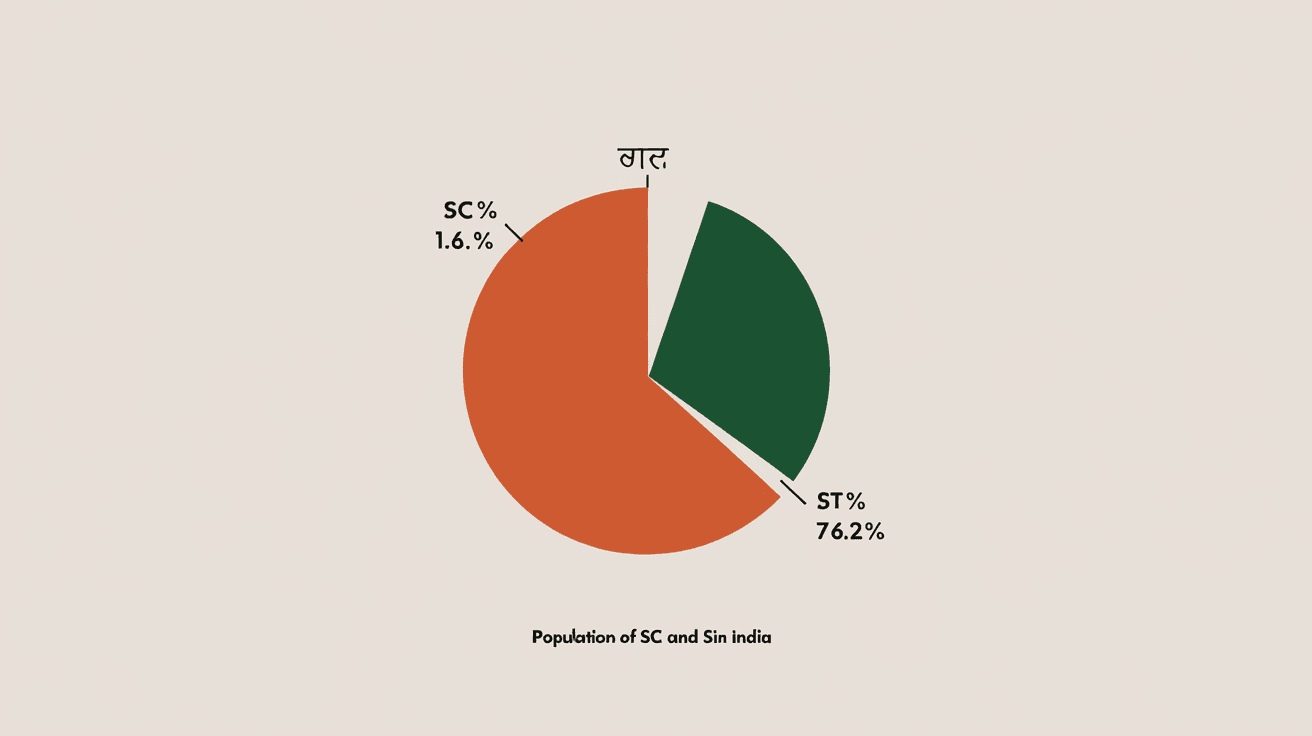
There are approximately 249 million people belonging to Scheduled Castes, making up about 16.6% of India's total population.
Scheduled Tribes constitute around 8.6% of India’s population, which is roughly 129 million people.
Punjab, Uttar Pradesh, Bihar, and Tamil Nadu have some of the highest percentages of Scheduled Caste populations.
Most Scheduled Tribes live in central and northeastern states like Madhya Pradesh, Chhattisgarh, Jharkhand, Odisha, and the northeastern region.
This data helps the government design welfare programs, allocate resources, and ensure social justice through policies like reservations in education and employment.