

How Many Rocket Launching Stations in India
F
Discover verified facts, data, and insights about India’s states, culture, economy, education, and more — all in one place at FactBharat.
Search for a command to run...
Discover verified facts, data, and insights about India’s states, culture, economy, education, and more — all in one place at FactBharat.
No comments yet. Be the first to comment.
Moving to the USA from India is a dream for many. Whether you want to study, work, or live with family, the process can seem complex. But with the right information, you can plan your move confidently. I’ll guide you through the key steps and options...
Opening a college in India is a dream for many educators and entrepreneurs who want to contribute to the country’s education sector. If you are one of those who want to start a college, you need to understand the process clearly. It involves several ...
Opening a hospital in India is a significant and rewarding venture. If you’ve ever wondered how to start one, you’re in the right place. Whether you’re a healthcare professional, entrepreneur, or investor, understanding the process is crucial. You’ll...
Opening a medical store in India can be a rewarding business opportunity. You get to serve your community by providing essential medicines and healthcare products. If you are thinking about starting a medical store, you might wonder where to begin an...
Opening a restaurant in India can be an exciting and rewarding venture. Whether you dream of serving traditional Indian dishes or international cuisine, the process involves careful planning and understanding of local regulations. If you’re ready to ...
FactBharat | Insights About India
2558 posts
Discover verified facts, data, and insights about India’s states, culture, economy, education, and more — all in one place at FactBharat.
India has made remarkable progress in space technology over the years. If you’re curious about how many rocket launching stations India has, you’re in the right place. Understanding these launch sites gives you insight into the country’s space capabilities and ambitions.
In this article, I’ll walk you through the main rocket launching stations in India, their roles, and why they matter. Whether you’re a space enthusiast or just curious, this guide will clear up your questions about India’s space launch infrastructure.
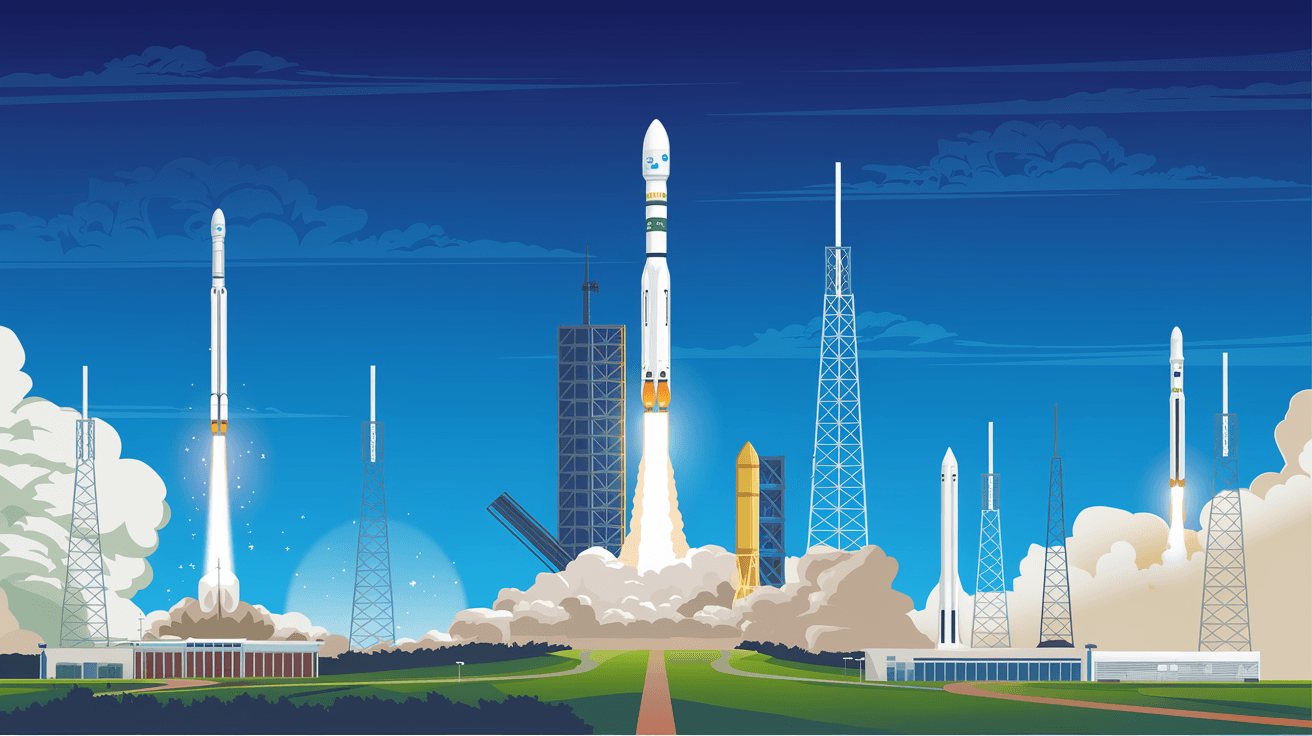
India currently operates three main rocket launching stations. These stations are critical for launching satellites, scientific missions, and interplanetary probes. Each site has unique features suited for different types of launches.
The three primary rocket launching stations are:
Each of these stations plays a vital role in India’s space program, managed by the Indian Space Research Organisation (ISRO).
Satish Dhawan Space Centre, located on Sriharikota Island in Andhra Pradesh, is India’s main and largest rocket launching station. It is often called the primary launch site for all major satellite launches.
Sriharikota’s location near the equator allows rockets to take advantage of Earth’s rotational speed, making launches more efficient. The island’s isolation also ensures safety during launches.
SDSC is the heart of India’s space ambitions, handling everything from small satellite launches to interplanetary missions.
TERLS is India’s first rocket launching station, established in 1963 near Thiruvananthapuram, Kerala. It is located close to the Earth’s magnetic equator, making it ideal for atmospheric and ionospheric research.
TERLS was the starting point of India’s space journey. It mainly supports scientific research by launching sounding rockets that study the upper atmosphere, weather, and ionosphere.
Though it no longer handles large satellite launches, TERLS remains active for research and development. It supports experiments related to atmospheric science and helps train scientists and engineers.
Balasore Rocket Launching Station, also known as the Integrated Test Range (ITR), is located in Odisha. It is primarily used for testing missiles and launching sounding rockets.
Balasore’s coastal location allows safe missile testing over the Bay of Bengal. It is equipped with advanced tracking and telemetry systems to monitor missile flights.
BRLS supports India’s missile development programs and also launches sounding rockets for scientific purposes. It is a key site for both defense and space research.
| Station Name | Location | Established | Primary Use | Managed By |
| Satish Dhawan Space Centre (SDSC) | Sriharikota, Andhra Pradesh | 1971 | Satellite launches, interplanetary missions | ISRO |
| Thumba Equatorial Rocket Launching Station (TERLS) | Thiruvananthapuram, Kerala | 1963 | Sounding rockets, atmospheric research | ISRO |
| Balasore Rocket Launching Station (BRLS) | Balasore, Odisha | 1982 | Missile testing, sounding rockets | DRDO & ISRO |
Having multiple rocket launching stations helps India in several ways:
This diversity strengthens India’s space program and defense capabilities.
India is expanding its space infrastructure to keep pace with growing ambitions. Some future developments include:
These plans show India’s commitment to becoming a major space power.
The rocket launching stations are the backbone of India’s space missions. Here’s how they contribute:
Without these stations, India’s space program wouldn’t be as successful or versatile.
Now you know that India has three main rocket launching stations: Satish Dhawan Space Centre in Sriharikota, Thumba Equatorial Rocket Launching Station in Kerala, and Balasore Rocket Launching Station in Odisha. Each station serves a unique purpose, from launching satellites to conducting atmospheric research and missile testing.
These stations are vital for India’s space exploration, scientific research, and defense. With ongoing upgrades and new projects, India’s rocket launching infrastructure is set to grow, supporting ambitious missions like human spaceflight and interplanetary exploration. Understanding these stations gives you a clearer picture of how India reaches for the stars.
India has three main rocket launching stations: Satish Dhawan Space Centre (Sriharikota), Thumba Equatorial Rocket Launching Station (Thiruvananthapuram), and Balasore Rocket Launching Station (Odisha).
The Satish Dhawan Space Centre in Sriharikota is India’s primary and largest rocket launching station for satellite and interplanetary missions.
TERLS mainly launches sounding rockets for atmospheric and ionospheric research, supporting scientific studies rather than satellite launches.
Yes, India plans to expand its launch infrastructure with new pads and potential spaceports in other states to support future missions like Gaganyaan.
Balasore Rocket Launching Station is managed jointly by the Defence Research and Development Organisation (DRDO) and ISRO, focusing on missile testing and sounding rockets.