

How Many Reserved Forests Are There in India?
F
Discover verified facts, data, and insights about India’s states, culture, economy, education, and more — all in one place at FactBharat.
Search for a command to run...
Discover verified facts, data, and insights about India’s states, culture, economy, education, and more — all in one place at FactBharat.
No comments yet. Be the first to comment.
Moving to the USA from India is a dream for many. Whether you want to study, work, or live with family, the process can seem complex. But with the right information, you can plan your move confidently. I’ll guide you through the key steps and options...
Opening a college in India is a dream for many educators and entrepreneurs who want to contribute to the country’s education sector. If you are one of those who want to start a college, you need to understand the process clearly. It involves several ...
Opening a hospital in India is a significant and rewarding venture. If you’ve ever wondered how to start one, you’re in the right place. Whether you’re a healthcare professional, entrepreneur, or investor, understanding the process is crucial. You’ll...
Opening a medical store in India can be a rewarding business opportunity. You get to serve your community by providing essential medicines and healthcare products. If you are thinking about starting a medical store, you might wonder where to begin an...
Opening a restaurant in India can be an exciting and rewarding venture. Whether you dream of serving traditional Indian dishes or international cuisine, the process involves careful planning and understanding of local regulations. If you’re ready to ...
FactBharat | Insights About India
2558 posts
Discover verified facts, data, and insights about India’s states, culture, economy, education, and more — all in one place at FactBharat.
If you’re curious about India’s forests, you might wonder, how many reserved forests are there in India? Reserved forests play a crucial role in protecting wildlife and natural resources. They are areas legally protected by the government to conserve biodiversity and prevent deforestation.
In this article, I’ll walk you through the current number of reserved forests in India, why they matter, and how they differ from other forest types. You’ll also learn about their role in environmental conservation and the challenges they face today.
Reserved forests are specific forest areas declared by the government under the Indian Forest Act. These forests have the highest level of protection compared to other forest categories. Activities like hunting, grazing, or logging are mostly prohibited unless the government permits them.
Here’s what makes reserved forests unique:
Reserved forests differ from protected forests and village forests, which have less strict regulations. This classification helps the government manage forests effectively and maintain ecological balance.
India has a vast network of forests, but the exact number of reserved forests is not a fixed figure because forest boundaries and classifications can change over time. However, based on the latest data from the Forest Survey of India and Ministry of Environment, Forest and Climate Change, here are some key points:
The number of reserved forests varies because some forests get reclassified, merged, or expanded based on conservation needs and government policies.
Reserved forests are vital for India’s environment and people. They help maintain ecological balance and support biodiversity. Here’s why they matter:
By protecting these forests, India safeguards its natural heritage and supports sustainable development.
India classifies forests into three main types: reserved forests, protected forests, and village forests. Understanding these differences helps clarify forest management:
| Forest Type | Protection Level | Human Activity Allowed | Purpose |
| Reserved Forests | Highest | Restricted; requires government permission | Conservation and strict protection |
| Protected Forests | Moderate | Some regulated activities allowed | Sustainable use and protection |
| Village Forests | Lowest | Community use and management | Local resource use |
Reserved forests have the strictest rules to prevent exploitation, while village forests allow local communities to use resources sustainably.
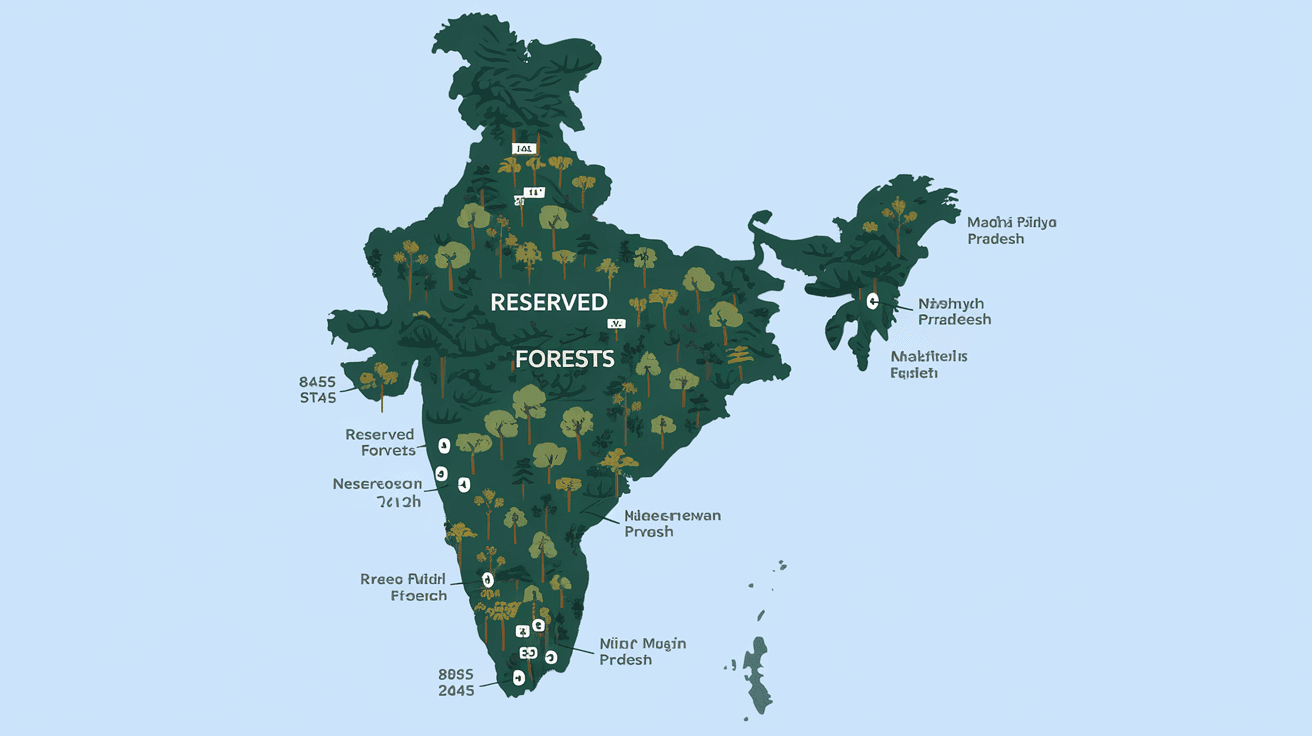
India’s reserved forests are spread across the country, with some well-known examples including:
These forests are critical for wildlife conservation and attract researchers and tourists alike.
Despite their protected status, reserved forests face several challenges:
Addressing these challenges requires strong enforcement, community involvement, and sustainable policies.
The Indian government has launched various programs to protect reserved forests and promote conservation:
These efforts aim to strengthen forest protection and ensure sustainable use.
You might wonder how you can contribute to preserving India’s reserved forests. Here are some simple ways:
Every small action helps maintain these vital ecosystems for future generations.
India’s reserved forests are a treasure trove of biodiversity and natural beauty. With over 700 reserved forests covering a significant part of the country, they play a key role in conserving wildlife and regulating the environment. Understanding their importance helps us appreciate the need to protect these areas.
While challenges like illegal logging and climate change threaten these forests, government initiatives and community efforts are making a difference. By staying informed and involved, you can help ensure that India’s reserved forests continue to thrive and support life for years to come.
India has over 700 reserved forests spread across various states. These forests cover about 16% of the country’s total forest area.
Reserved forests have the highest protection with restricted human activity, while protected forests allow some regulated use. Reserved forests focus more on strict conservation.
Madhya Pradesh, Arunachal Pradesh, and Chhattisgarh are among the states with the largest reserved forest areas in India.
Generally, human activities in reserved forests are restricted, but some rights are recognized under laws like the Forest Rights Act, balancing conservation and community needs.
Illegal logging, encroachment, poaching, climate change, and human-wildlife conflicts are major challenges facing reserved forests today.