

How Many Refineries Are There in India
F
Discover verified facts, data, and insights about India’s states, culture, economy, education, and more — all in one place at FactBharat.
Search for a command to run...
Discover verified facts, data, and insights about India’s states, culture, economy, education, and more — all in one place at FactBharat.
No comments yet. Be the first to comment.
Moving to the USA from India is a dream for many. Whether you want to study, work, or live with family, the process can seem complex. But with the right information, you can plan your move confidently. I’ll guide you through the key steps and options...
Opening a college in India is a dream for many educators and entrepreneurs who want to contribute to the country’s education sector. If you are one of those who want to start a college, you need to understand the process clearly. It involves several ...
Opening a hospital in India is a significant and rewarding venture. If you’ve ever wondered how to start one, you’re in the right place. Whether you’re a healthcare professional, entrepreneur, or investor, understanding the process is crucial. You’ll...
Opening a medical store in India can be a rewarding business opportunity. You get to serve your community by providing essential medicines and healthcare products. If you are thinking about starting a medical store, you might wonder where to begin an...
Opening a restaurant in India can be an exciting and rewarding venture. Whether you dream of serving traditional Indian dishes or international cuisine, the process involves careful planning and understanding of local regulations. If you’re ready to ...
FactBharat | Insights About India
2558 posts
Discover verified facts, data, and insights about India’s states, culture, economy, education, and more — all in one place at FactBharat.
India's energy needs are growing rapidly, and understanding the country's refining capacity is key to grasping its energy security. If you've ever wondered how many refineries India has and what role they play, you're in the right place. I'll walk you through the current landscape of India's oil refineries, their capacities, and why they matter to you and the economy.
We rely heavily on refined petroleum products for transportation, industry, and daily life. Knowing about India's refineries helps you see how the country meets this demand. Let's explore the number of refineries, their locations, and how they contribute to India's energy independence.
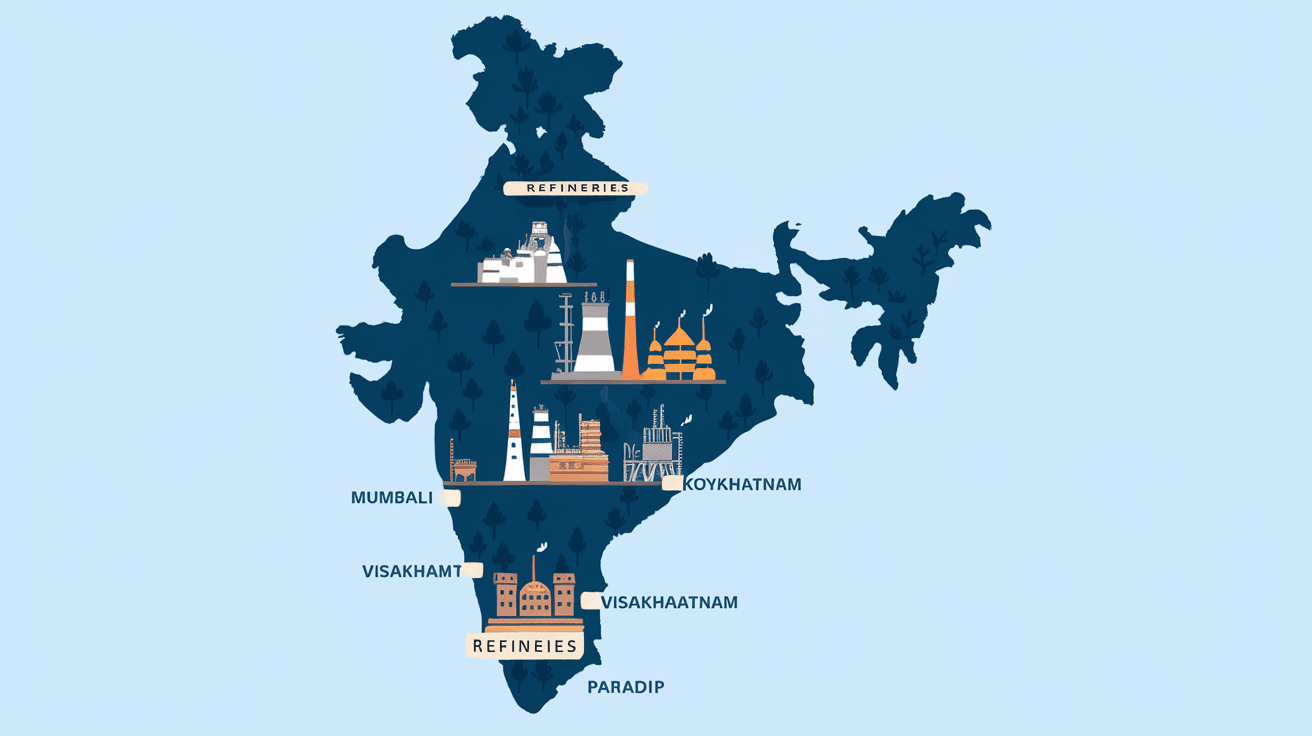
India is one of the largest refining hubs in Asia. The country has developed a strong refining infrastructure to meet its domestic demand and export refined products. As of 2025, India has 23 major oil refineries spread across the country.
These refineries are operated by both public sector companies and private firms. The public sector dominates, with companies like Indian Oil Corporation (IOC), Bharat Petroleum Corporation Limited (BPCL), and Hindustan Petroleum Corporation Limited (HPCL) running most of the refineries.
This network allows India to process crude oil into various products like petrol, diesel, jet fuel, and petrochemicals.
India's refining industry is led by a few major players. Understanding who runs these refineries gives insight into the sector's structure.
These companies together ensure India's refining capacity is robust and diversified.
Refinery capacity is measured in million metric tonnes per annum (MMTPA). It indicates how much crude oil a refinery can process yearly.
India's refining capacity has grown steadily to keep pace with rising fuel demand. This growth also supports the country's goal of becoming a refining hub for Asia.
India's refineries are strategically located near ports or industrial hubs to facilitate crude oil import and product distribution.
This spread ensures balanced supply across the country and easy access to crude oil imports via ports.
Refineries are crucial for India's energy security. They convert imported crude oil into usable fuels and chemicals.
India's refining sector also invests in upgrading technology to produce cleaner fuels meeting global environmental standards.
India continues to expand and modernize its refining capacity to meet future needs.
These efforts align with India's commitment to sustainable energy and climate goals.
Despite growth, the refinery sector faces some challenges.
Addressing these challenges is essential for the sector's long-term sustainability.
You might wonder how these refineries affect your daily life. Here’s how:
Understanding refineries helps you appreciate the complex process behind the fuel you use every day.
India has 23 major oil refineries operated by public and private companies, with a combined capacity exceeding 250 million metric tonnes per year. These refineries are spread across the country, strategically located near ports and industrial centers. The sector plays a vital role in meeting India's growing energy demand, supporting economic growth, and enhancing energy security.
Recent expansions and modernization efforts show India's commitment to refining capacity growth and sustainability. While challenges like supply volatility and environmental regulations exist, India's refinery industry remains a cornerstone of its energy infrastructure. Knowing about these refineries helps you understand how India powers its economy and daily life.
India has 23 major oil refineries across the country, operated by both public and private companies.
The Jamnagar refinery in Gujarat, operated by Reliance Industries, is the largest single-site refinery globally with a capacity of 68 MMTPA.
India's total refining capacity exceeds 250 million metric tonnes per annum, making it one of the top refining countries in Asia.
Most refineries in India are owned by public sector companies like IOC, BPCL, and HPCL, with some large private refineries like Reliance's Jamnagar.
Refineries influence fuel prices through processing costs and efficiency. Changes in crude oil prices and refinery operations impact the prices you pay at the pump.