

How Many Ramsar Sites Are There in India?
F
Discover verified facts, data, and insights about India’s states, culture, economy, education, and more — all in one place at FactBharat.
Search for a command to run...
Discover verified facts, data, and insights about India’s states, culture, economy, education, and more — all in one place at FactBharat.
No comments yet. Be the first to comment.
Moving to the USA from India is a dream for many. Whether you want to study, work, or live with family, the process can seem complex. But with the right information, you can plan your move confidently. I’ll guide you through the key steps and options...
Opening a college in India is a dream for many educators and entrepreneurs who want to contribute to the country’s education sector. If you are one of those who want to start a college, you need to understand the process clearly. It involves several ...
Opening a hospital in India is a significant and rewarding venture. If you’ve ever wondered how to start one, you’re in the right place. Whether you’re a healthcare professional, entrepreneur, or investor, understanding the process is crucial. You’ll...
Opening a medical store in India can be a rewarding business opportunity. You get to serve your community by providing essential medicines and healthcare products. If you are thinking about starting a medical store, you might wonder where to begin an...
Opening a restaurant in India can be an exciting and rewarding venture. Whether you dream of serving traditional Indian dishes or international cuisine, the process involves careful planning and understanding of local regulations. If you’re ready to ...
FactBharat | Insights About India
2558 posts
Discover verified facts, data, and insights about India’s states, culture, economy, education, and more — all in one place at FactBharat.
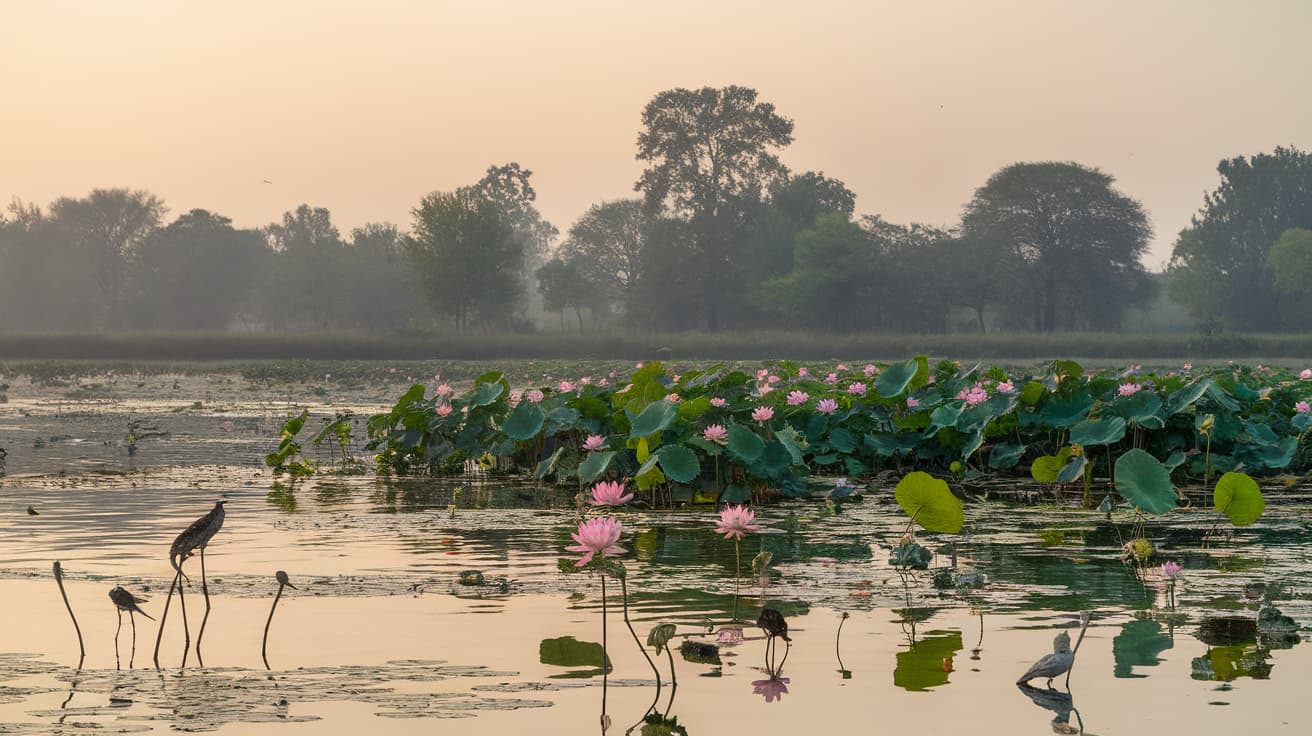
Wetlands are among the most productive ecosystems on Earth — they provide water, support wildlife, and help control floods. To protect such valuable ecosystems, the Ramsar Convention was established in 1971, encouraging countries to conserve wetlands of global importance.
India, known for its rich biodiversity, is one of the leading countries actively working to preserve wetlands. If you’re wondering, “How many Ramsar sites are there in India?”, the answer is — India has 91 Ramsar sites as of 2025, covering a total area of around 4.3 million hectares.
Let’s understand what Ramsar sites are, why they matter, and where these sites are located across India.
Ramsar sites are wetlands that are recognized internationally under the Ramsar Convention, an intergovernmental treaty signed in Ramsar, Iran, in 1971.
The main goal of this treaty is to promote the conservation and sustainable use of wetlands and ensure that their ecological character is maintained.
In simple terms, a Ramsar site is a wetland of international importance that supports:
Rare or endangered species of plants and animals
Migratory birds and fish
Flood control and groundwater recharge
Livelihoods for local communities
India joined the Ramsar Convention on 1 February 1982, and since then, it has continued to expand its list of protected wetlands.
As of 2025, India has 91 Ramsar Sites, spread across 18 states and two union territories, covering about 4.3 million hectares of area.
This makes India one of the top five countries in the world with the largest number of Ramsar sites.
When India joined the Ramsar Convention in 1982, it had only 6 wetlands recognized as Ramsar sites. Over time, more wetlands were added to the list as India ramped up conservation efforts.
Here’s how the numbers grew over the years:
| Year | Number of Ramsar Sites |
| 1982 | 6 |
| 2014 | 26 |
| 2019 | 37 |
| 2022 | 75 |
| 2023 | 80 |
| 2025 | 91 |
This rapid increase highlights India’s strong commitment to protecting its wetlands and biodiversity.
Ramsar sites are spread across almost all regions of the country — from the cold deserts of Ladakh to the mangroves of the Sundarbans and the lakes of Tamil Nadu.
| State/UT | Number of Ramsar Sites |
| Tamil Nadu | 16 |
| Uttar Pradesh | 10 |
| Madhya Pradesh | 8 |
| Maharashtra | 6 |
| Gujarat | 6 |
| Punjab | 6 |
| Odisha | 5 |
| Jammu & Kashmir | 5 |
| Kerala | 4 |
| Himachal Pradesh | 3 |
| Rajasthan | 2 |
| West Bengal | 2 |
| Assam | 2 |
| Others (Ladakh, Manipur, Tripura, Meghalaya, Andhra Pradesh, UTs) | Remaining 14 |
This shows that Tamil Nadu has the highest number of Ramsar sites in India.
Here are some of the most well-known Ramsar sites you should know about:
Asia’s largest brackish water lagoon.
Home to migratory birds and the endangered Irrawaddy dolphin.
UNESCO World Heritage Site.
Known for birdwatching; over 370 species of birds recorded.
Famous for its floating islands (phumdis).
The only floating national park in the world — Keibul Lamjao National Park.
Largest mangrove forest in the world.
Home to the Royal Bengal Tiger.
One of Asia’s largest freshwater lakes.
Plays a key role in flood control in the Kashmir Valley.
Man-made freshwater wetland on the Sutlej River.
Important for fish and migratory birds.
Largest wetland system in Kerala.
Supports paddy cultivation and inland fisheries.
Major stormwater reservoir for Guwahati.
Important stopover site for migratory birds.
High-altitude lake at 4,522 meters.
Breeding ground for the black-necked crane and bar-headed goose.
Ramsar sites play a vital role in India’s environment and economy.
They protect rare species like the Sarus crane, Gangetic dolphin, and Siberian crane.
Wetlands act as carbon sinks, absorbing greenhouse gases and reducing climate impacts.
Wetlands store excess rainwater and recharge groundwater during dry seasons.
Many wetlands support local fishing, farming, and eco-tourism.
They naturally filter pollutants, improving water quality for nearby communities.
India’s inclusion of 91 Ramsar sites shows its strong commitment to the UN Sustainable Development Goals (SDGs), especially:
SDG 13: Climate Action
SDG 14: Life Below Water
SDG 15: Life on Land
Through national programs like the National Plan for Conservation of Aquatic Ecosystems (NPCA) and the Wetlands (Conservation and Management) Rules, 2017, India continues to strengthen its wetland management system.
Despite progress, wetlands in India face several threats:
Urbanization and encroachment
Pollution from industries and agriculture
Siltation and invasive species
Unregulated tourism and sand mining
Climate change and rising temperatures
These factors make it vital to enforce stricter conservation laws and promote community-based wetland management.
India continues to expand its Ramsar network. Some of the recent additions (2023–2025) include:
Yashwant Sagar (Madhya Pradesh)
Chitrangudi Bird Sanctuary (Tamil Nadu)
Suchindram-Theroor Wetland (Tamil Nadu)
Satkosia Gorge (Odisha)
Sirpur Lake (Madhya Pradesh)
Each of these sites adds to India’s growing list of internationally recognized wetlands.
To sum up, as of 2025, India has 91 Ramsar sites spread across 18 states and 2 union territories, covering about 4.3 million hectares. From the Chilika Lagoon in the east to the Vembanad Wetlands in the south, these sites are vital for biodiversity, climate balance, and human livelihood.
India’s growing number of Ramsar sites reflects its commitment to sustainable development and ecological preservation, making it one of the global leaders in wetland conservation.
There are 91 Ramsar sites in India as of 2025, covering around 4.3 million hectares.
Tamil Nadu has the highest number of Ramsar sites, with a total of 16.
The Chilika Lake (Odisha) and Keoladeo National Park (Rajasthan) were the first two Ramsar sites designated in 1981.
The Sundarbans Wetland (West Bengal) is the largest Ramsar site in India, covering about 423,000 hectares.
The Ramsar Convention is an international treaty signed in 1971 in Ramsar, Iran, aimed at conserving and wisely using wetlands worldwide.