

How Many Railway Junctions in India
F
Discover verified facts, data, and insights about India’s states, culture, economy, education, and more — all in one place at FactBharat.
Search for a command to run...
Discover verified facts, data, and insights about India’s states, culture, economy, education, and more — all in one place at FactBharat.
No comments yet. Be the first to comment.
Moving to the USA from India is a dream for many. Whether you want to study, work, or live with family, the process can seem complex. But with the right information, you can plan your move confidently. I’ll guide you through the key steps and options...
Opening a college in India is a dream for many educators and entrepreneurs who want to contribute to the country’s education sector. If you are one of those who want to start a college, you need to understand the process clearly. It involves several ...
Opening a hospital in India is a significant and rewarding venture. If you’ve ever wondered how to start one, you’re in the right place. Whether you’re a healthcare professional, entrepreneur, or investor, understanding the process is crucial. You’ll...
Opening a medical store in India can be a rewarding business opportunity. You get to serve your community by providing essential medicines and healthcare products. If you are thinking about starting a medical store, you might wonder where to begin an...
Opening a restaurant in India can be an exciting and rewarding venture. Whether you dream of serving traditional Indian dishes or international cuisine, the process involves careful planning and understanding of local regulations. If you’re ready to ...
FactBharat | Insights About India
2558 posts
Discover verified facts, data, and insights about India’s states, culture, economy, education, and more — all in one place at FactBharat.
India’s railway network is one of the largest and busiest in the world. If you’ve ever traveled by train in India, you might have noticed the many railway junctions where different routes meet. These junctions are crucial for managing the flow of trains and connecting various parts of the country. But have you ever wondered exactly how many railway junctions India has?
In this article, I’ll take you through the number of railway junctions in India, why they matter, and how they help keep the trains running smoothly. Whether you’re a train enthusiast or just curious about India’s transport system, this guide will give you clear and useful insights.
A railway junction is a place where two or more railway lines meet or cross. It acts like a road intersection but for trains. At these points, trains can switch tracks, change directions, or continue on different routes.
Railway junctions are important because:
In India, with its vast rail network, junctions are especially vital to keep everything running efficiently.
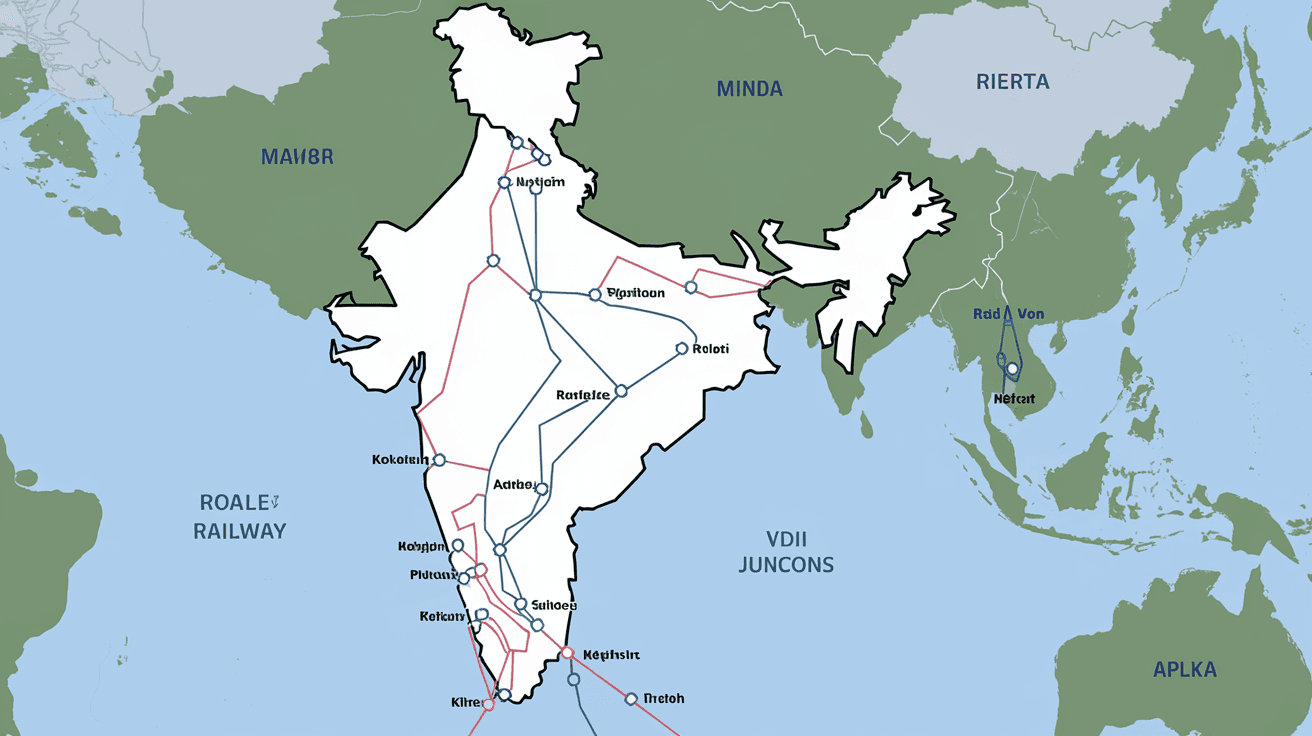
India has a massive railway network with over 70,000 kilometers of track. According to the latest data from Indian Railways, there are approximately 600 major railway junctions across the country. These junctions vary in size and importance.
Some of the busiest and most well-known junctions include:
These junctions handle hundreds of trains daily and connect multiple railway zones.
Railway junctions in India can be classified based on their size and the number of routes they connect:
Each type plays a role in the overall network, ensuring trains can move efficiently across the country.
India’s geography and population make railway junctions essential. Here’s why:
Without these junctions, India’s rail system would struggle to handle the millions of passengers and tons of cargo it moves every day.
Managing a railway junction involves coordinating train arrivals, departures, and track changes. Indian Railways uses advanced signaling systems and control centers to monitor junctions in real-time.
Key management features include:
This complex coordination ensures trains run on time and passengers travel safely.
Here are some notable railway junctions and what makes them special:
| Junction Name | Location | Routes Connected | Daily Train Traffic |
| Howrah Junction | West Bengal | 7+ | 400+ |
| Mumbai CST | Maharashtra | 5+ | 350+ |
| New Delhi Railway Station | Delhi | 6+ | 300+ |
| Chennai Central | Tamil Nadu | 5+ | 250+ |
| Secunderabad Junction | Telangana | 4+ | 200+ |
These junctions are critical hubs in India’s rail network, handling thousands of passengers daily.
Despite their importance, railway junctions face several challenges:
Indian Railways is investing in modernization projects to address these issues, including digital signaling and track renewal.
The future looks promising for India’s railway junctions. Plans include:
These improvements will help Indian Railways meet the demands of a growing population and economy.
Understanding railway junctions can help you:
Whether you’re a daily commuter or a traveler, knowing about junctions adds value to your railway experience.
India has around 600 major railway junctions that play a vital role in connecting the country’s vast rail network. These junctions manage train traffic, support passenger transfers, and help move goods efficiently. Despite challenges like congestion and aging infrastructure, ongoing modernization efforts are making junctions safer and more efficient.
By understanding how many railway junctions exist and their importance, you can better appreciate the complexity and scale of India’s railways. Next time you travel by train, you’ll know the crucial role these junctions play in keeping the trains running smoothly across the nation.
India has about 600 major railway junctions that connect multiple routes and manage high volumes of train traffic.
Howrah Junction in West Bengal is one of the busiest, handling over 400 trains daily.
They connect different routes, manage train traffic, and allow passengers to transfer between trains easily.
No, junctions vary from major ones connecting many routes to minor ones connecting fewer lines.
Plans include electrification, digital signaling, capacity expansion, and smart technology integration.