

How Many Rail Coach Factories Are There in India?
F
Discover verified facts, data, and insights about India’s states, culture, economy, education, and more — all in one place at FactBharat.
Search for a command to run...
Discover verified facts, data, and insights about India’s states, culture, economy, education, and more — all in one place at FactBharat.
No comments yet. Be the first to comment.
Moving to the USA from India is a dream for many. Whether you want to study, work, or live with family, the process can seem complex. But with the right information, you can plan your move confidently. I’ll guide you through the key steps and options...
Opening a college in India is a dream for many educators and entrepreneurs who want to contribute to the country’s education sector. If you are one of those who want to start a college, you need to understand the process clearly. It involves several ...
Opening a hospital in India is a significant and rewarding venture. If you’ve ever wondered how to start one, you’re in the right place. Whether you’re a healthcare professional, entrepreneur, or investor, understanding the process is crucial. You’ll...
Opening a medical store in India can be a rewarding business opportunity. You get to serve your community by providing essential medicines and healthcare products. If you are thinking about starting a medical store, you might wonder where to begin an...
Opening a restaurant in India can be an exciting and rewarding venture. Whether you dream of serving traditional Indian dishes or international cuisine, the process involves careful planning and understanding of local regulations. If you’re ready to ...
FactBharat | Insights About India
2558 posts
Discover verified facts, data, and insights about India’s states, culture, economy, education, and more — all in one place at FactBharat.
India's railway network is one of the largest in the world, and rail coaches are the backbone of this vast system. If you've ever wondered how many rail coach factories India has, you're not alone. Understanding the number and locations of these factories helps you appreciate the scale and complexity of India's railway manufacturing capabilities.
In this article, I will walk you through the current number of rail coach factories in India, where they are located, and what role they play in supporting the Indian Railways. Whether you're a railway enthusiast or just curious, this guide will give you a clear picture of India's rail coach production landscape.
India has a well-established network of rail coach factories that manufacture a wide range of coaches for passenger and freight trains. These factories are crucial for meeting the growing demand for modern, safe, and comfortable rail travel.
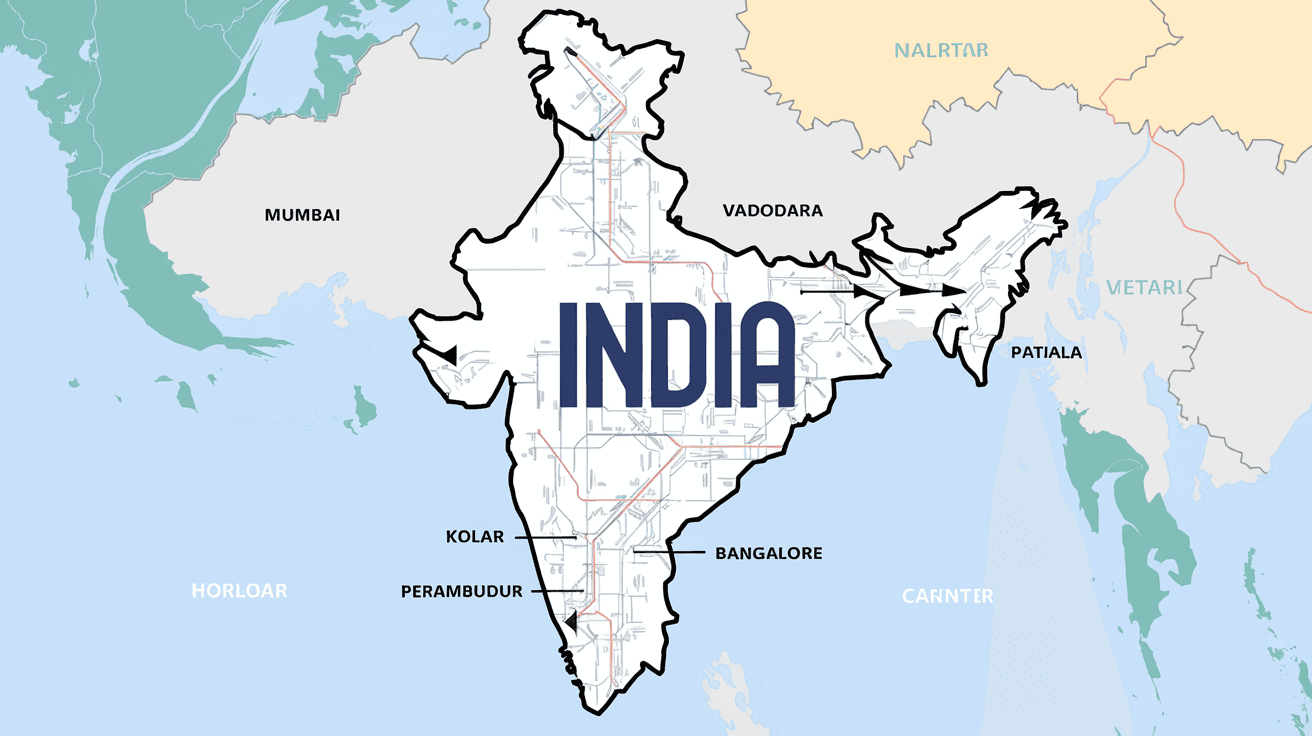
Currently, India has five major rail coach factories. These factories are strategically located across the country to serve different railway zones efficiently. Each factory specializes in producing various types of coaches, including sleeper, general, air-conditioned, and specialized coaches like those for metro and high-speed trains.
Here’s a quick list of the five main rail coach factories in India:
Each of these factories plays a unique role in the Indian Railways' manufacturing ecosystem.
The Integral Coach Factory in Chennai is the oldest and one of the largest rail coach factories in India. Established in 1955, ICF has been a pioneer in coach manufacturing for decades.
ICF’s long history and large production capacity make it a cornerstone of India’s rail coach manufacturing.
Located in Punjab, the Rail Coach Factory in Kapurthala was established in 1985. It is known for its modern manufacturing techniques and high-quality output.
RCF Kapurthala is a vital factory that supports India’s push towards safer and more efficient rail travel.
The Modern Coach Factory in Raebareli, Uttar Pradesh, is one of the newest additions to India’s rail coach manufacturing sector. It started operations in 2012 and has quickly ramped up production.
MCF Raebareli represents India’s commitment to modernizing its railway infrastructure.
Palakkad’s Rail Coach Factory is a newer facility aimed at boosting coach production in southern India. It complements the Integral Coach Factory in Chennai.
The Palakkad factory strengthens India’s rail coach manufacturing in the southern region.
The Rail Coach Factory in Sonipat, Haryana, is the latest addition to India’s rail coach manufacturing network. It was established to meet the increasing demand for modern coaches in northern India.
Sonipat’s factory is a key part of India’s plan to expand and modernize its railway fleet.
Rail coach factories in India are not just manufacturing units; they are vital for the country’s transportation infrastructure. Here’s why they matter:
The factories ensure that Indian Railways can keep up with modern standards and passenger expectations.
Despite their importance, these factories face some challenges:
Addressing these challenges is crucial for sustaining growth and quality.
India is investing heavily in expanding and modernizing its rail coach factories. Here’s what to expect:
These developments will help India maintain its position as a major rail coach manufacturer globally.
| Factory Name | Location | Year Established | Annual Production Capacity | Specialization |
| Integral Coach Factory | Chennai | 1955 | ~3,500 coaches | Conventional & LHB coaches |
| Rail Coach Factory | Kapurthala | 1985 | ~1,500 coaches | LHB coaches |
| Modern Coach Factory | Raebareli | 2012 | ~1,000 coaches | LHB & semi-high-speed coaches |
| Rail Coach Factory | Palakkad | Recent | ~1,000 coaches | LHB & regional coaches |
| Rail Coach Factory | Sonipat | Recent | ~1,000 coaches | LHB & metro/suburban coaches |
This table gives you a quick glance at the key rail coach factories in India.
Now you know that India has five major rail coach factories spread across the country. Each factory plays a unique role in producing a variety of coaches to meet the needs of Indian Railways. From the historic Integral Coach Factory in Chennai to the modern facilities in Sonipat and Palakkad, these factories are essential for the country’s rail infrastructure.
As India continues to grow and modernize its railway network, these factories will keep evolving with new technologies and increased production capacities. Whether you travel by train regularly or just have an interest in railways, understanding these factories gives you insight into how India keeps its trains running smoothly and safely.
India currently has five major rail coach factories located in Chennai, Kapurthala, Raebareli, Palakkad, and Sonipat.
The Integral Coach Factory (ICF) in Chennai is the oldest, established in 1955.
They produce a variety of coaches including sleeper, general, air-conditioned, LHB, semi-high-speed, and metro coaches.
Yes, factories like ICF export coaches to neighboring countries such as Sri Lanka and Bangladesh.
LHB coaches are lighter, safer, and more comfortable compared to older designs, and are increasingly produced by Indian factories.