

How Many Private Schools Are There in India?
F
Discover verified facts, data, and insights about India’s states, culture, economy, education, and more — all in one place at FactBharat.
Search for a command to run...
Discover verified facts, data, and insights about India’s states, culture, economy, education, and more — all in one place at FactBharat.
No comments yet. Be the first to comment.
Moving to the USA from India is a dream for many. Whether you want to study, work, or live with family, the process can seem complex. But with the right information, you can plan your move confidently. I’ll guide you through the key steps and options...
Opening a college in India is a dream for many educators and entrepreneurs who want to contribute to the country’s education sector. If you are one of those who want to start a college, you need to understand the process clearly. It involves several ...
Opening a hospital in India is a significant and rewarding venture. If you’ve ever wondered how to start one, you’re in the right place. Whether you’re a healthcare professional, entrepreneur, or investor, understanding the process is crucial. You’ll...
Opening a medical store in India can be a rewarding business opportunity. You get to serve your community by providing essential medicines and healthcare products. If you are thinking about starting a medical store, you might wonder where to begin an...
Opening a restaurant in India can be an exciting and rewarding venture. Whether you dream of serving traditional Indian dishes or international cuisine, the process involves careful planning and understanding of local regulations. If you’re ready to ...
FactBharat | Insights About India
2558 posts
Discover verified facts, data, and insights about India’s states, culture, economy, education, and more — all in one place at FactBharat.
If you’ve ever wondered how many private schools exist in India, you’re not alone. The private education sector in India has grown rapidly over the past few decades. Many parents prefer private schools for their perceived quality of education and better facilities.
In this article, I’ll take you through the current landscape of private schools in India. We’ll explore their numbers, growth trends, and why they matter in the country’s education system. By the end, you’ll have a clear picture of private schooling in India today.
India has one of the largest education systems in the world. According to recent data, there are over 2.5 million private schools across the country. This number includes schools from primary to higher secondary levels.
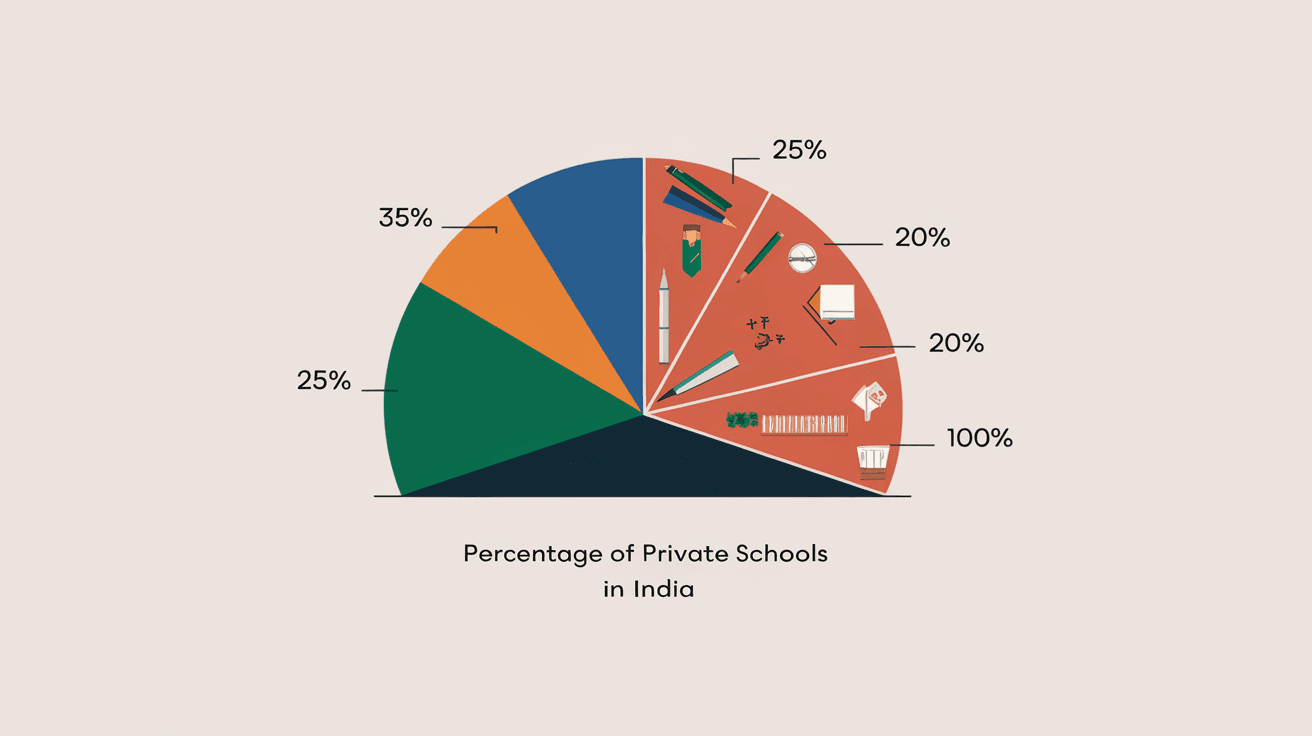
Private schools make up a significant portion of the total schools in India. They account for nearly 30-40% of all schools, depending on the state and region. This shows how important private education has become for millions of Indian families.
The rapid growth of private schools in India is driven by several factors. Here’s why more families are choosing private education:
The Indian government has also influenced private school growth through policies. For example:
Private school numbers vary widely across India’s states and regions. Here’s a quick look:
| Region | Percentage of Private Schools | Notes |
| North India | 35-40% | High concentration in urban areas |
| South India | 30-35% | Strong presence in Tamil Nadu, Karnataka |
| East India | 20-25% | Lower private school density |
| West India | 30-40% | Maharashtra and Gujarat lead growth |
| Northeast India | 15-20% | Fewer private schools due to geography |
Urban centers like Delhi, Mumbai, Bangalore, and Chennai have the highest number of private schools. Rural areas still rely heavily on government schools, but private schools are slowly expanding there too.
Private schools in India are diverse. They range from small neighborhood schools to large international institutions. Here are the main types:
Despite their growth, private schools face several challenges:
Private schools play a crucial role in India’s education landscape. They help:
Looking ahead, private schools in India are expected to keep growing. Here are some trends to watch:
If you’re considering a private school for your child, here are some tips:
Private schools in India have become a vital part of the education system. With over 2.5 million schools, they serve millions of students across the country. Their growth is driven by demand for quality education, English instruction, and better facilities.
While challenges remain, private schools continue to innovate and expand, especially in urban areas. Whether you’re a parent or educator, understanding the private school landscape helps you make informed decisions. The future looks promising as private education adapts to new trends and reaches more children.
There are over 2.5 million private schools in India, making up about 30-40% of all schools nationwide.
Parents often choose private schools for better teaching quality, English medium instruction, and improved facilities.
Private schools vary widely; some are budget-friendly, while premium schools charge high fees.
Yes, private schools must comply with laws like the Right to Education Act and state fee regulations.
Yes, private schools are gradually expanding into rural areas, though government schools still dominate there.