

How Many Power Plants in India
F
Discover verified facts, data, and insights about India’s states, culture, economy, education, and more — all in one place at FactBharat.
Search for a command to run...
Discover verified facts, data, and insights about India’s states, culture, economy, education, and more — all in one place at FactBharat.
No comments yet. Be the first to comment.
Moving to the USA from India is a dream for many. Whether you want to study, work, or live with family, the process can seem complex. But with the right information, you can plan your move confidently. I’ll guide you through the key steps and options...
Opening a college in India is a dream for many educators and entrepreneurs who want to contribute to the country’s education sector. If you are one of those who want to start a college, you need to understand the process clearly. It involves several ...
Opening a hospital in India is a significant and rewarding venture. If you’ve ever wondered how to start one, you’re in the right place. Whether you’re a healthcare professional, entrepreneur, or investor, understanding the process is crucial. You’ll...
Opening a medical store in India can be a rewarding business opportunity. You get to serve your community by providing essential medicines and healthcare products. If you are thinking about starting a medical store, you might wonder where to begin an...
Opening a restaurant in India can be an exciting and rewarding venture. Whether you dream of serving traditional Indian dishes or international cuisine, the process involves careful planning and understanding of local regulations. If you’re ready to ...
FactBharat | Insights About India
2558 posts
Discover verified facts, data, and insights about India’s states, culture, economy, education, and more — all in one place at FactBharat.
India's energy sector is vast and complex, powering one of the world's fastest-growing economies. If you've ever wondered how many power plants India has, you're not alone. Understanding the number and types of power plants helps you grasp how India meets its massive electricity demand.
In this article, we'll explore the total number of power plants in India, the different types of power plants, and their capacities. You'll also learn about India's energy mix and how it is evolving with renewable sources. Let's dive into the details to give you a clear picture of India's power infrastructure.
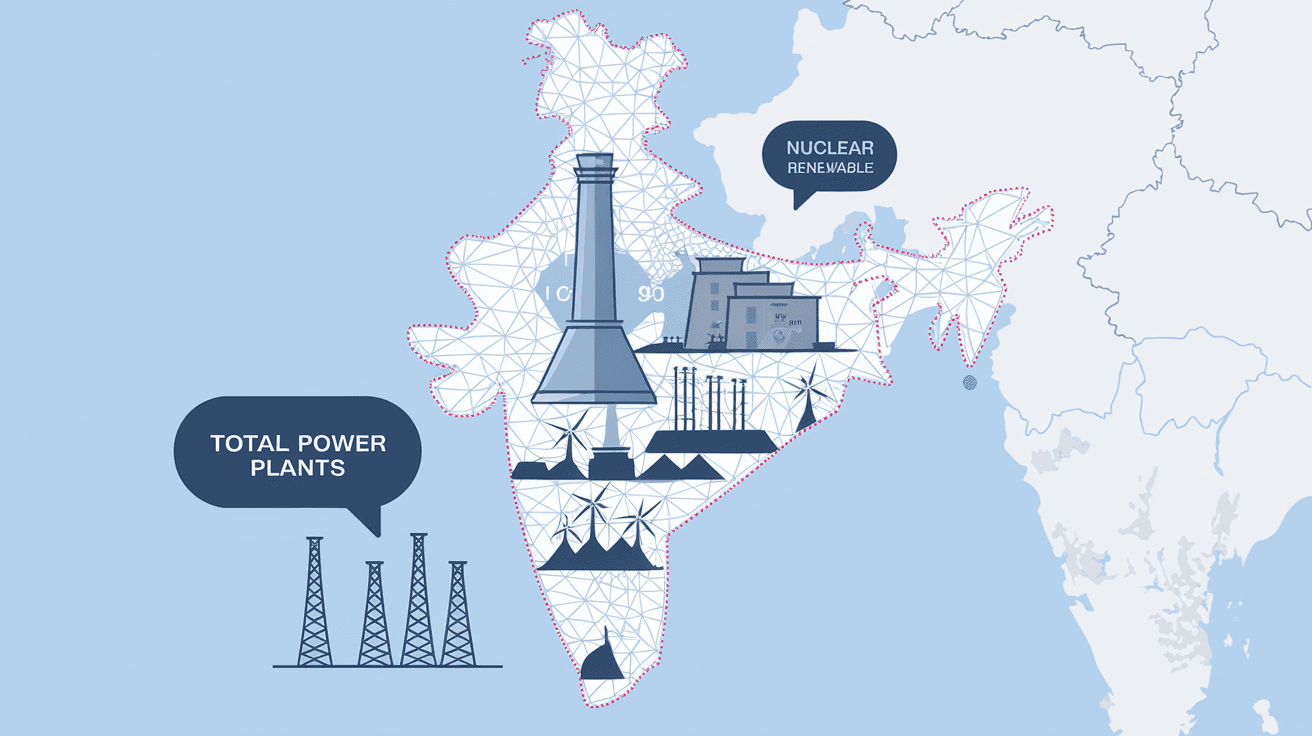
India has a diverse range of power plants spread across the country. These plants generate electricity using various sources like coal, natural gas, hydro, nuclear, and renewables such as solar and wind. The total number of power plants reflects India's efforts to meet growing energy needs while transitioning to cleaner energy.
As of 2025, India operates over 1,000 power plants. This includes:
Each type plays a unique role in India's energy mix, contributing to the overall installed capacity of more than 400 gigawatts (GW).
Thermal power plants are the largest contributors to India's electricity generation. These plants primarily use coal, which accounts for about 70% of the country's total electricity production.
Thermal plants are favored for their ability to provide continuous and reliable power. However, they also face challenges like pollution and fuel supply issues. India is working to improve efficiency and reduce emissions from these plants.
Hydropower is a significant renewable energy source in India. It uses flowing water to generate electricity, making it clean and sustainable.
Hydropower plants help balance the grid by providing peak load power and storage through pumped storage systems. They also support flood control and irrigation in many regions.
Nuclear power is a smaller but important part of India's energy mix. It offers a low-carbon option for steady electricity generation.
Nuclear energy provides reliable base-load power and helps reduce dependence on fossil fuels. Safety and waste management remain priorities for the nuclear sector.
India is rapidly expanding its renewable energy capacity to meet climate goals and reduce pollution. Solar and wind power are the fastest-growing segments.
Renewables are supported by government policies, subsidies, and international investments. They are crucial for India’s goal of reaching 500 GW of renewable capacity by 2030.
Power plants are distributed based on resource availability and demand centers. Here's a quick look at how power plants are spread:
| State/Region | Dominant Power Plant Type | Installed Capacity (GW) |
| Maharashtra | Thermal, Wind | 40+ |
| Tamil Nadu | Thermal, Nuclear, Wind | 35+ |
| Gujarat | Thermal, Solar, Wind | 45+ |
| Himachal Pradesh | Hydroelectric | 10+ |
| Rajasthan | Solar, Thermal | 30+ |
| West Bengal | Thermal | 20+ |
This distribution reflects India's diverse geography and energy needs.
Despite the large number of power plants, India faces several challenges:
Addressing these challenges is key to ensuring reliable and sustainable power for all.
India’s power sector is evolving rapidly. The government aims to:
These steps will reshape the power plant landscape, making it cleaner and more resilient.
You now have a clear understanding of how many power plants India has and the types that power the nation. With over 1,000 plants across thermal, hydro, nuclear, and renewable sources, India’s energy sector is vast and diverse. This mix helps meet the growing electricity demand while moving towards cleaner energy.
As India continues to invest in renewables and modernize its infrastructure, the number and capacity of power plants will keep evolving. Staying informed about these changes helps you appreciate the complexity and progress of India’s power system.
India has over 1,000 power plants, including thermal, hydroelectric, nuclear, and renewable energy plants.
Coal-based thermal power plants are the largest, contributing about 70% of India’s electricity.
States like Maharashtra, Gujarat, and Tamil Nadu have the highest installed power capacity with many power plants.
India has over 130 GW of renewable energy capacity, mainly from solar and wind.
Yes, India is expanding its nuclear power program with new reactors planned to increase capacity.