

How Many Political Parties Are There in India
F
Discover verified facts, data, and insights about India’s states, culture, economy, education, and more — all in one place at FactBharat.
Search for a command to run...
Discover verified facts, data, and insights about India’s states, culture, economy, education, and more — all in one place at FactBharat.
No comments yet. Be the first to comment.
Moving to the USA from India is a dream for many. Whether you want to study, work, or live with family, the process can seem complex. But with the right information, you can plan your move confidently. I’ll guide you through the key steps and options...
Opening a college in India is a dream for many educators and entrepreneurs who want to contribute to the country’s education sector. If you are one of those who want to start a college, you need to understand the process clearly. It involves several ...
Opening a hospital in India is a significant and rewarding venture. If you’ve ever wondered how to start one, you’re in the right place. Whether you’re a healthcare professional, entrepreneur, or investor, understanding the process is crucial. You’ll...
Opening a medical store in India can be a rewarding business opportunity. You get to serve your community by providing essential medicines and healthcare products. If you are thinking about starting a medical store, you might wonder where to begin an...
Opening a restaurant in India can be an exciting and rewarding venture. Whether you dream of serving traditional Indian dishes or international cuisine, the process involves careful planning and understanding of local regulations. If you’re ready to ...
FactBharat | Insights About India
2558 posts
Discover verified facts, data, and insights about India’s states, culture, economy, education, and more — all in one place at FactBharat.
India is known for its vibrant democracy and diverse political landscape. If you’ve ever wondered how many political parties are there in India, you’re not alone. The country has a complex system with numerous parties at national, state, and regional levels. Understanding this diversity helps you grasp how Indian democracy functions and how different voices find representation.
In this article, I’ll walk you through the current number of political parties in India, explain the different types, and highlight their roles. Whether you’re a student, a voter, or just curious, this guide will give you clear insights into India’s political party system.
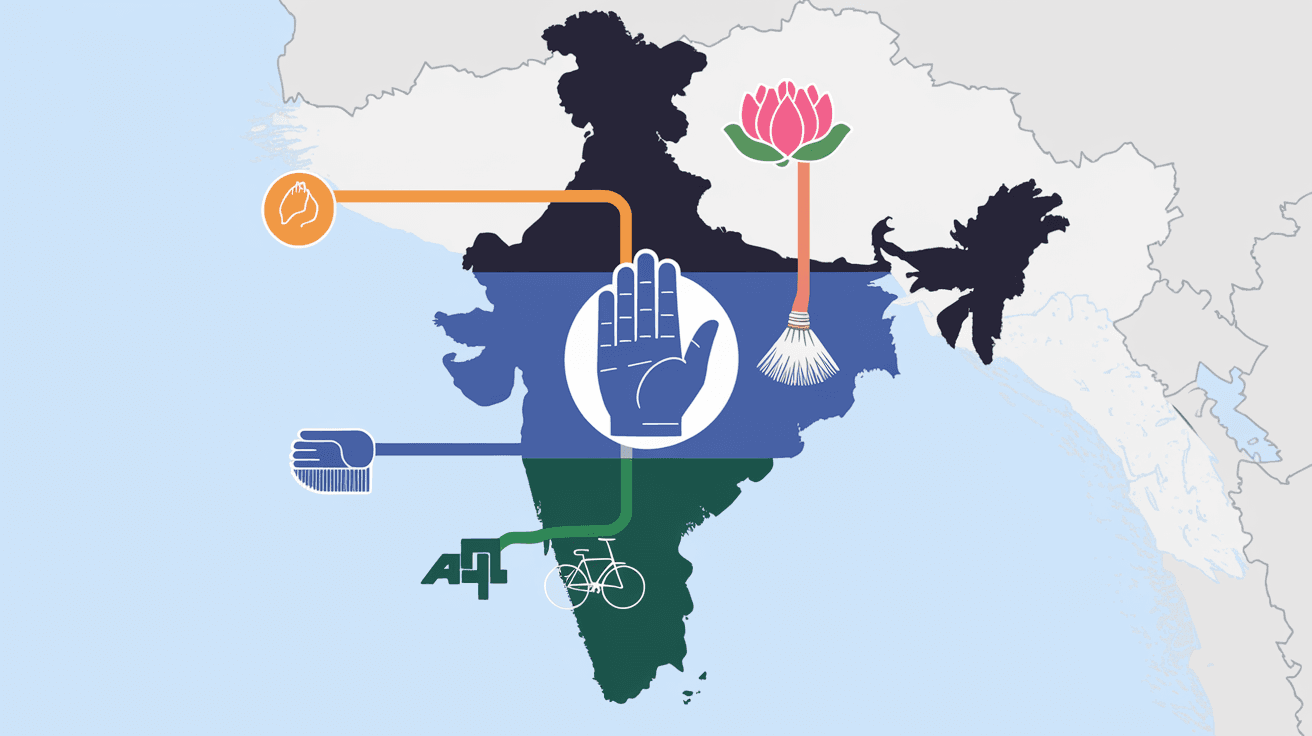
India has one of the largest numbers of political parties in the world. This is because of its vast population, cultural diversity, and federal structure. Political parties in India are broadly classified into three categories:
Each category plays a unique role in the political process.
National parties have a presence across multiple states and influence national policies. As of 2025, there are 8 recognized national parties in India. These parties meet criteria set by the Election Commission of India (ECI), such as winning a certain percentage of votes or seats in multiple states.
Some of the prominent national parties include:
These parties contest elections across the country and often form the government at the center or in several states.
State parties are recognized by the ECI based on their performance in a particular state. They have significant influence within their states but limited or no presence nationally. As of now, there are over 50 recognized state parties in India.
Examples include:
State parties often focus on regional issues and identity politics. They can also play kingmaker roles in coalition governments.
Apart from national and state parties, there are many smaller parties registered with the Election Commission but not recognized as either national or state parties. These parties contest elections but have not met the criteria for recognition.
Currently, there are over 2,000 registered unrecognized parties in India. Many of these are local or issue-based parties with limited reach.
The Election Commission of India (ECI) is responsible for registering and recognizing political parties. The classification depends on election performance and other criteria:
National Party Criteria:
State Party Criteria:
Parties that do not meet these criteria remain registered but unrecognized.
India’s political diversity is shaped by several factors:
This diversity ensures that many voices are heard but also leads to a fragmented political landscape.
Having many political parties has both advantages and challenges:
Despite challenges, India’s multi-party system remains a key feature of its democracy.
Let’s look at some major parties and their roles:
| Party Name | Type | Stronghold States | Key Focus Areas |
| Bharatiya Janata Party | National | Across India | Nationalism, economic development |
| Indian National Congress | National | Pan-India | Social justice, secularism |
| Aam Aadmi Party | National | Delhi, Punjab | Anti-corruption, governance |
| Dravida Munnetra Kazhagam | State | Tamil Nadu | Tamil identity, social welfare |
| Shiv Sena | State | Maharashtra | Marathi pride, regional issues |
| Bahujan Samaj Party | National | Uttar Pradesh | Dalit rights, social equality |
These parties shape policies and governance at different levels.
In general elections, hundreds of parties contest, but only a few win seats. For example:
This shows the sheer scale of political participation in India.
Because of many parties, alliances are common. Coalitions help parties combine strengths to form governments. Examples include:
Coalitions reflect India’s political complexity and the need for cooperation.
If you want to stay updated on political parties:
This helps you understand evolving political trends.
India’s political party system is vast and diverse, reflecting the country’s rich social fabric. There are currently 8 national parties, over 50 state parties, and more than 2,000 registered unrecognized parties. This multi-party setup allows many voices to be heard but also creates challenges like political fragmentation.
Understanding how many political parties are there in India helps you appreciate the complexity of its democracy. Whether it’s national giants or small regional players, each party contributes to shaping India’s future. Staying informed about these parties empowers you to make better voting decisions and engage more deeply with the democratic process.
There are 8 recognized national political parties in India. These parties have a presence in multiple states and meet criteria set by the Election Commission of India.
National parties have influence across several states, while state parties operate mainly within one state and focus on regional issues.
Over 2,000 political parties are registered with the Election Commission of India, including national, state, and unrecognized parties.
India’s diversity in language, culture, and social groups encourages the formation of many political parties to represent different interests.
Political parties often form alliances to combine their strengths and form governments, especially when no single party wins a majority.