

How Many Plains Are There in India
F
Discover verified facts, data, and insights about India’s states, culture, economy, education, and more — all in one place at FactBharat.
Search for a command to run...
Discover verified facts, data, and insights about India’s states, culture, economy, education, and more — all in one place at FactBharat.
No comments yet. Be the first to comment.
Moving to the USA from India is a dream for many. Whether you want to study, work, or live with family, the process can seem complex. But with the right information, you can plan your move confidently. I’ll guide you through the key steps and options...
Opening a college in India is a dream for many educators and entrepreneurs who want to contribute to the country’s education sector. If you are one of those who want to start a college, you need to understand the process clearly. It involves several ...
Opening a hospital in India is a significant and rewarding venture. If you’ve ever wondered how to start one, you’re in the right place. Whether you’re a healthcare professional, entrepreneur, or investor, understanding the process is crucial. You’ll...
Opening a medical store in India can be a rewarding business opportunity. You get to serve your community by providing essential medicines and healthcare products. If you are thinking about starting a medical store, you might wonder where to begin an...
Opening a restaurant in India can be an exciting and rewarding venture. Whether you dream of serving traditional Indian dishes or international cuisine, the process involves careful planning and understanding of local regulations. If you’re ready to ...
FactBharat | Insights About India
2558 posts
Discover verified facts, data, and insights about India’s states, culture, economy, education, and more — all in one place at FactBharat.
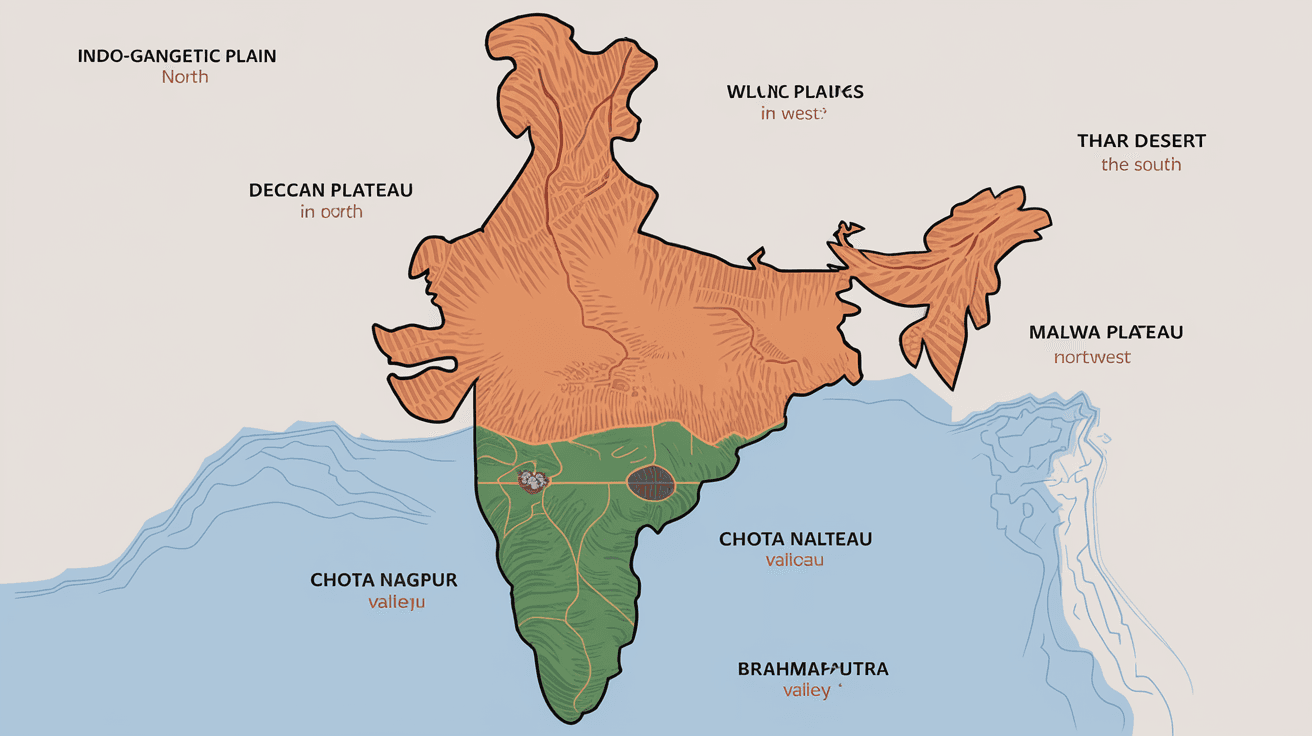
India is a vast country with diverse landscapes, including mountains, plateaus, deserts, and plains. If you have ever wondered how many plains are there in India, you are not alone. Plains cover a significant part of the country and play a crucial role in agriculture, settlement, and economy. Understanding the number and types of plains in India helps you appreciate the country's geography better.
In this article, I will guide you through the main plains of India, their formation, and their importance. You will learn about the major plains like the Northern Plains, Coastal Plains, and the Inland Plains. By the end, you will have a clear picture of how these plains shape India's environment and lifestyle.
Plains are large areas of flat or gently rolling land with minimal changes in elevation. They are often formed by the deposition of sediments by rivers or by the erosion of surrounding highlands. Plains are important because they provide fertile soil for farming, easy routes for transportation, and space for cities and towns.
In India, plains are mainly formed by river deposits and coastal processes. These plains support a large part of the population due to their favorable living conditions.
India has three major types of plains:
Each of these plains is unique in its formation, location, and characteristics. Let’s explore each type in detail.
The Northern Plains are the most extensive and fertile plains in India. They stretch across the northern part of the country, covering states like Punjab, Haryana, Uttar Pradesh, Bihar, and West Bengal.
These plains were formed by the alluvial deposits of three major river systems:
Over thousands of years, these rivers carried sediments from the Himalayas and deposited them in the plains, creating a vast fertile area.
The Northern Plains are divided into three parts:
India’s coastline stretches over 7,500 kilometers, and along this coast lie the Coastal Plains. These plains are narrow strips of flat land between the Western and Eastern Ghats and the Arabian Sea and Bay of Bengal.
There are two main coastal plains in India:
Apart from the Northern and Coastal Plains, India also has Inland Plains. These are smaller plains located away from the coast and major river systems.
| Plain Type | Location | Formation | Key Features |
| Northern Plains | Northern India | Alluvial deposits by rivers | Fertile, extensive, densely populated |
| Coastal Plains | Along Arabian Sea and Bay of Bengal | Coastal deposition and river deltas | Narrow (West), broad deltas (East) |
| Inland Plains | Interior regions like Rajasthan | Varied (desert, plateau) | Less fertile, arid or semi-arid |
Plains in India are vital for several reasons:
Despite their importance, Indian plains face some challenges:
Addressing these challenges is crucial to maintaining the productivity and sustainability of India’s plains.
If you want to experience the diversity of Indian plains, consider visiting:
Each region offers a different perspective on how plains shape life in India.
India has three main types of plains: Northern Plains, Coastal Plains, and Inland Plains. Each type has distinct features, formation processes, and importance. The Northern Plains are the largest and most fertile, supporting dense populations and agriculture. Coastal Plains line the country’s long coastline and support fishing and trade. Inland Plains are smaller and vary from desert to plateau regions.
Understanding how many plains are there in India and their characteristics helps you appreciate the country’s geography and its impact on culture, economy, and environment. Whether you live in the plains or visit them, these flat lands are central to India’s identity and growth.
India has three major plains: Northern Plains, Coastal Plains, and Inland Plains. Each plays a unique role in the country's geography and economy.
The Northern Plains are formed by the alluvial deposits of the Indus, Ganga, and Brahmaputra river systems.
Yes, especially the Eastern Coastal Plains, which have broad river deltas ideal for agriculture.
Inland Plains are smaller, often less fertile, and can be arid, while Northern Plains are extensive, fertile, and densely populated.
Plains provide fertile soil, flat land, and water resources, making them ideal for growing major crops like wheat, rice, and sugarcane.