

How Many Petroleum Companies Are There in India?
F
Discover verified facts, data, and insights about India’s states, culture, economy, education, and more — all in one place at FactBharat.
Search for a command to run...
Discover verified facts, data, and insights about India’s states, culture, economy, education, and more — all in one place at FactBharat.
No comments yet. Be the first to comment.
Moving to the USA from India is a dream for many. Whether you want to study, work, or live with family, the process can seem complex. But with the right information, you can plan your move confidently. I’ll guide you through the key steps and options...
Opening a college in India is a dream for many educators and entrepreneurs who want to contribute to the country’s education sector. If you are one of those who want to start a college, you need to understand the process clearly. It involves several ...
Opening a hospital in India is a significant and rewarding venture. If you’ve ever wondered how to start one, you’re in the right place. Whether you’re a healthcare professional, entrepreneur, or investor, understanding the process is crucial. You’ll...
Opening a medical store in India can be a rewarding business opportunity. You get to serve your community by providing essential medicines and healthcare products. If you are thinking about starting a medical store, you might wonder where to begin an...
Opening a restaurant in India can be an exciting and rewarding venture. Whether you dream of serving traditional Indian dishes or international cuisine, the process involves careful planning and understanding of local regulations. If you’re ready to ...
FactBharat | Insights About India
2558 posts
Discover verified facts, data, and insights about India’s states, culture, economy, education, and more — all in one place at FactBharat.
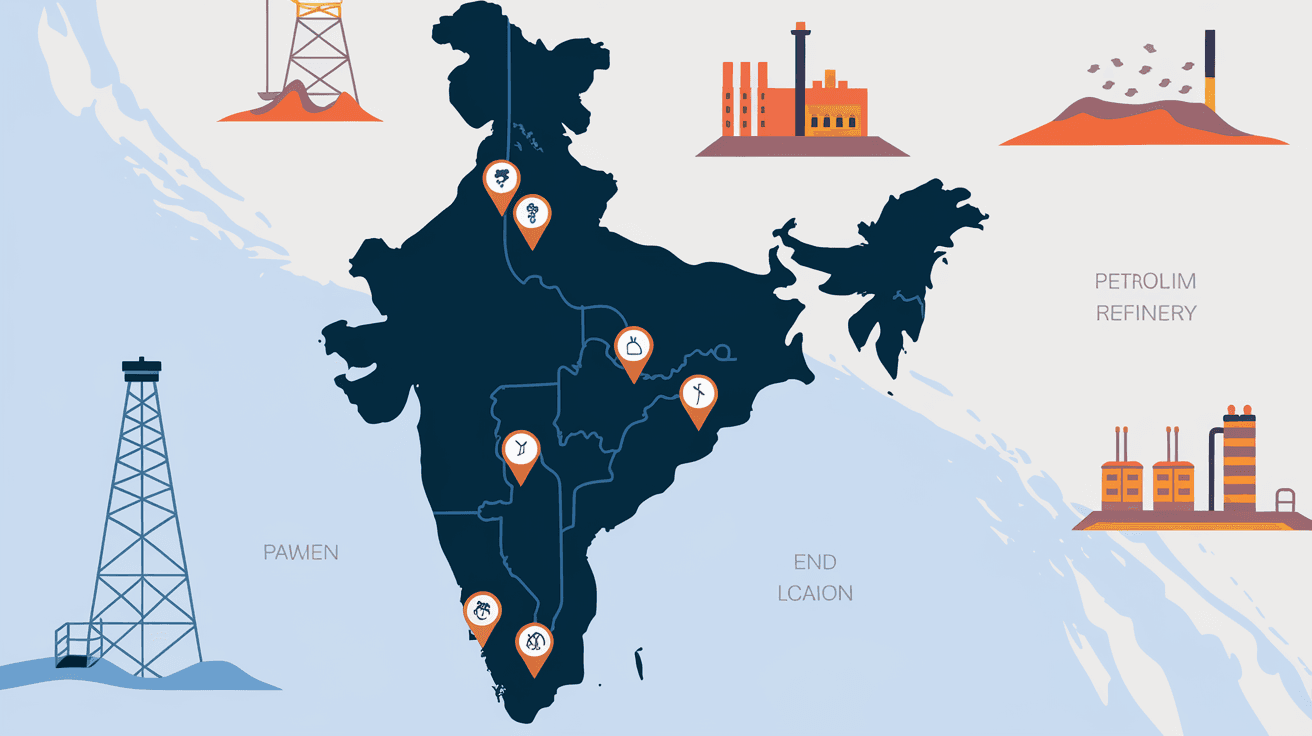
India’s petroleum industry is vast and plays a crucial role in the country’s economy. If you’ve ever wondered how many petroleum companies operate in India, you’re not alone. The sector includes a mix of government-owned giants, private firms, and joint ventures that together fuel the nation’s energy needs. Understanding the landscape can help you grasp India’s energy security and economic growth.
In this article, I’ll walk you through the number of petroleum companies in India, their types, and key players. You’ll also learn about the industry’s structure and recent trends shaping its future. Whether you’re a student, investor, or just curious, this guide will give you a clear picture of India’s petroleum sector.
India’s petroleum industry covers exploration, refining, distribution, and marketing of oil and gas products. It is one of the largest sectors in the country, contributing significantly to GDP and employment.
The government plays a major role through state-owned enterprises, but private companies have been growing steadily, especially after liberalization policies.
The exact number of petroleum companies in India varies depending on the definition and scope. However, broadly speaking:
India’s petroleum industry is dominated by government-owned companies. These PSUs are responsible for a large share of production and refining capacity.
Key PSUs include:
These five PSUs alone account for a significant portion of India’s petroleum output and infrastructure.
Private companies have increased their presence, especially in refining and exploration.
Notable private players include:
Private firms are also active in oilfield services, trading, and renewable energy integration.
India also hosts several joint ventures between Indian companies and foreign oil majors. These partnerships help bring in technology, investment, and expertise.
Examples include:
To understand the industry better, it helps to categorize companies by their main activities:
| Segment | Description | Examples |
| Upstream | Exploration and production of crude oil | ONGC, Oil India Limited (OIL) |
| Midstream | Transportation and storage of oil/gas | GAIL, Indian Oil pipelines |
| Downstream | Refining, marketing, and distribution | IOCL, BPCL, HPCL, RIL |
| Oilfield Services | Support services like drilling, equipment | Schlumberger India, Baker Hughes |
| Petrochemicals | Manufacturing chemicals from petroleum | Reliance Industries, Indian Oil |
Each segment has multiple companies, but the largest ones often operate across several segments.
The petroleum industry in India is evolving rapidly due to global energy shifts and domestic policies.
These trends influence how many companies operate and how they compete.
If you want to find petroleum companies in India, here are some tips:
Using these sources, you can explore companies by size, segment, and ownership.
Operating in India’s petroleum sector comes with challenges:
Companies must innovate and adapt to stay competitive.
Looking ahead, petroleum companies in India will likely:
While the number of companies may fluctuate, the sector will remain a cornerstone of India’s energy landscape.
India’s petroleum industry is made up of around 20 to 30 major companies, with many smaller firms supporting various segments. The mix of public sector giants, private players, and joint ventures creates a dynamic market that fuels the country’s growth. You now know the key players, industry structure, and trends shaping this vital sector.
Whether you’re interested in energy policy, investment, or career opportunities, understanding how many petroleum companies operate in India helps you see the bigger picture. The industry faces challenges but also exciting opportunities as India transitions to a more sustainable energy future.
There are about 20 to 30 major petroleum companies in India, including public sector undertakings like IOCL and ONGC, private firms like Reliance Industries, and joint ventures.
Indian Oil Corporation Limited (IOCL) is the largest petroleum company in India, with extensive refining, pipeline, and marketing operations.
Yes, private companies like Reliance Industries and Adani Group play significant roles in refining, exploration, and marketing.
They operate in upstream (exploration), midstream (transportation), downstream (refining and marketing), oilfield services, and petrochemicals.
The industry is evolving with a focus on cleaner fuels, privatization, digitalization, infrastructure expansion, and international partnerships.