

How Many Percentage of Rajputs in India
F
Discover verified facts, data, and insights about India’s states, culture, economy, education, and more — all in one place at FactBharat.
Search for a command to run...
Discover verified facts, data, and insights about India’s states, culture, economy, education, and more — all in one place at FactBharat.
No comments yet. Be the first to comment.
Moving to the USA from India is a dream for many. Whether you want to study, work, or live with family, the process can seem complex. But with the right information, you can plan your move confidently. I’ll guide you through the key steps and options...
Opening a college in India is a dream for many educators and entrepreneurs who want to contribute to the country’s education sector. If you are one of those who want to start a college, you need to understand the process clearly. It involves several ...
Opening a hospital in India is a significant and rewarding venture. If you’ve ever wondered how to start one, you’re in the right place. Whether you’re a healthcare professional, entrepreneur, or investor, understanding the process is crucial. You’ll...
Opening a medical store in India can be a rewarding business opportunity. You get to serve your community by providing essential medicines and healthcare products. If you are thinking about starting a medical store, you might wonder where to begin an...
Opening a restaurant in India can be an exciting and rewarding venture. Whether you dream of serving traditional Indian dishes or international cuisine, the process involves careful planning and understanding of local regulations. If you’re ready to ...
FactBharat | Insights About India
2558 posts
Discover verified facts, data, and insights about India’s states, culture, economy, education, and more — all in one place at FactBharat.
You might be curious about how many Rajputs live in India today. Rajputs are a well-known community with a rich history and cultural heritage. Understanding their population size helps us appreciate their role in India's social fabric.
In this article, I will share clear facts about the percentage of Rajputs in India. We’ll explore their distribution, historical background, and why knowing their numbers matters. Let’s dive into the details together.
Rajputs are a group of warrior clans known for their bravery and honor. They have played a significant role in Indian history, especially in the northern and western regions. The word "Rajput" means "son of a king," reflecting their royal lineage.
Understanding who Rajputs are helps us see why their population percentage is a topic of interest.
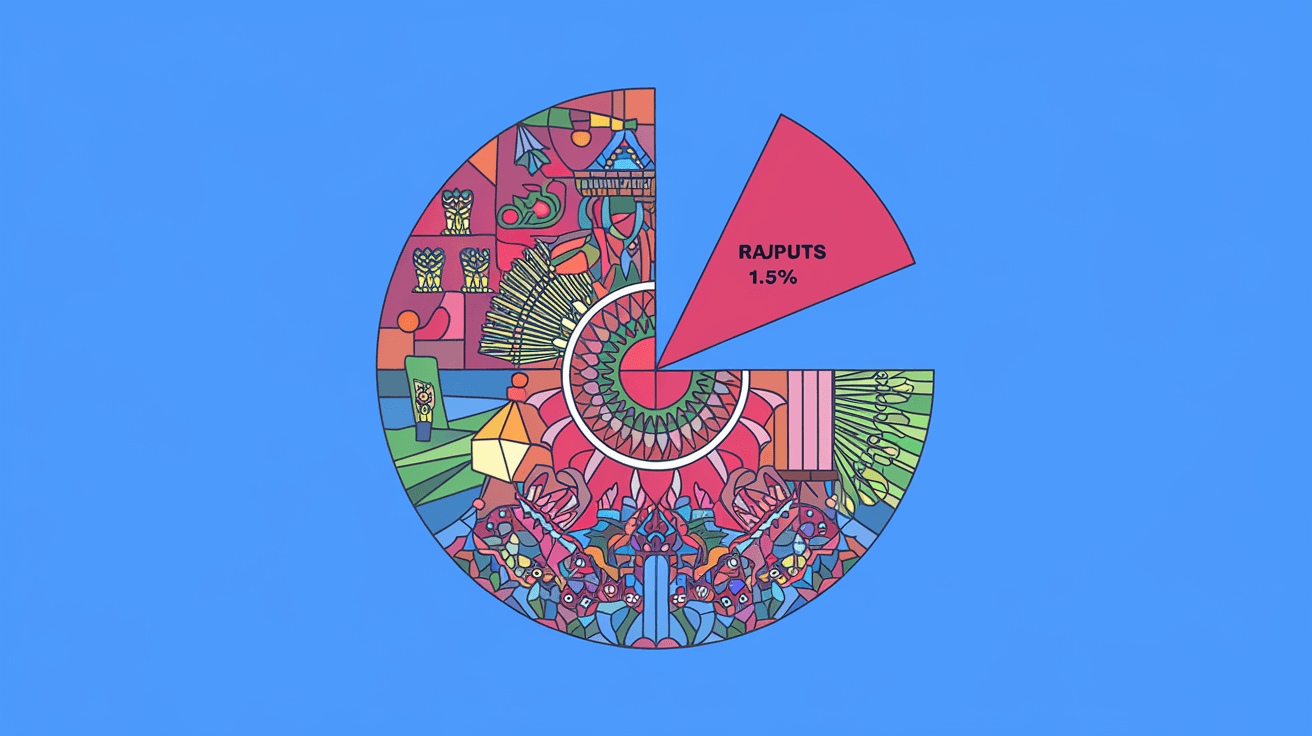
Determining the exact percentage of Rajputs in India is challenging because the Indian census does not categorize people by caste in detail. However, based on various studies and surveys, Rajputs make up roughly 6% to 7% of the total population in some northern states.
These figures vary depending on the source and region but give a general idea of their presence.
Rajputs are mainly concentrated in certain states where they have historically been influential. Here’s a quick look at their distribution:
| State | Estimated Rajput Population Percentage |
| Rajasthan | 10-12% |
| Uttar Pradesh | 3-5% |
| Madhya Pradesh | 3-5% |
| Gujarat | 4-6% |
| Haryana | 5-7% |
This distribution shows that Rajputs are mostly found in northern and western India. Their presence in these states is linked to their historical kingdoms and social influence.
You might wonder why there isn’t a precise figure for Rajput population. Here are some reasons:
Because of these factors, estimates rely on surveys, academic research, and community records rather than official government data.
Knowing the percentage of Rajputs is not just about numbers. It also helps us understand their cultural impact. Rajputs have contributed greatly to Indian art, architecture, and traditions.
This cultural richness makes the Rajput community an important part of India’s heritage.
Today, Rajputs continue to play a role in politics, society, and culture. Many Rajput leaders are active in regional and national politics. The community also focuses on education and economic development.
Understanding their population helps us see how this community adapts and thrives in modern India.
Studying Rajput demographics faces some challenges:
Researchers often use indirect methods like surveys and historical records to estimate numbers. Despite these challenges, the available data provides useful insights.
The percentage of Rajputs influences social and political dynamics in their regions. In states like Rajasthan, where they form a significant part of the population, Rajputs have considerable influence.
Knowing their population size helps understand these social patterns better.
Now you have a clearer picture of how many Rajputs live in India and where they are mostly found. While exact numbers are hard to pin down, estimates suggest they make up a small but significant part of India’s population, especially in northern states.
Rajputs are more than just a number; they are a community with a proud history and vibrant culture. Their presence continues to shape the social and cultural landscape of India today. I hope this article helped you understand their population and importance better.
Rajputs are estimated to be around 2-3% of India’s total population, with higher percentages in states like Rajasthan where they form about 10-12%.
The census does not collect detailed caste data, and Rajputs have many sub-clans and varied identities, making exact counts difficult.
Rajputs are mainly found in Rajasthan, Uttar Pradesh, Madhya Pradesh, Gujarat, and Haryana, with the highest concentration in Rajasthan.
Rajputs have contributed to architecture, festivals, and literature, especially in northern India, preserving a rich cultural heritage.
Yes, many Rajput leaders participate in politics, especially in states where they have a significant population, influencing local and national decisions.