

How Many Payment Banks Are There in India
F
Discover verified facts, data, and insights about India’s states, culture, economy, education, and more — all in one place at FactBharat.
Search for a command to run...
Discover verified facts, data, and insights about India’s states, culture, economy, education, and more — all in one place at FactBharat.
No comments yet. Be the first to comment.
Moving to the USA from India is a dream for many. Whether you want to study, work, or live with family, the process can seem complex. But with the right information, you can plan your move confidently. I’ll guide you through the key steps and options...
Opening a college in India is a dream for many educators and entrepreneurs who want to contribute to the country’s education sector. If you are one of those who want to start a college, you need to understand the process clearly. It involves several ...
Opening a hospital in India is a significant and rewarding venture. If you’ve ever wondered how to start one, you’re in the right place. Whether you’re a healthcare professional, entrepreneur, or investor, understanding the process is crucial. You’ll...
Opening a medical store in India can be a rewarding business opportunity. You get to serve your community by providing essential medicines and healthcare products. If you are thinking about starting a medical store, you might wonder where to begin an...
Opening a restaurant in India can be an exciting and rewarding venture. Whether you dream of serving traditional Indian dishes or international cuisine, the process involves careful planning and understanding of local regulations. If you’re ready to ...
FactBharat | Insights About India
2558 posts
Discover verified facts, data, and insights about India’s states, culture, economy, education, and more — all in one place at FactBharat.
India’s banking landscape has evolved significantly with the introduction of payment banks. You might be wondering, how many payment banks are there in India today? This article will guide you through the current count, what payment banks do, and why they matter to you.
We’ll explore the list of active payment banks, their unique features, and how they differ from traditional banks. By the end, you’ll have a clear understanding of payment banks and their growing role in India’s financial ecosystem.
Payment banks are a new type of bank in India designed to increase financial inclusion. They focus on providing basic banking services to people who may not have easy access to traditional banks.
These banks can accept deposits, offer remittance services, and issue debit cards. However, they cannot lend money or issue credit cards. This limitation helps them focus on safe, low-risk banking services.
Payment banks mainly target low-income groups, small businesses, and rural customers. They use technology to reach people in remote areas where traditional banks are scarce.
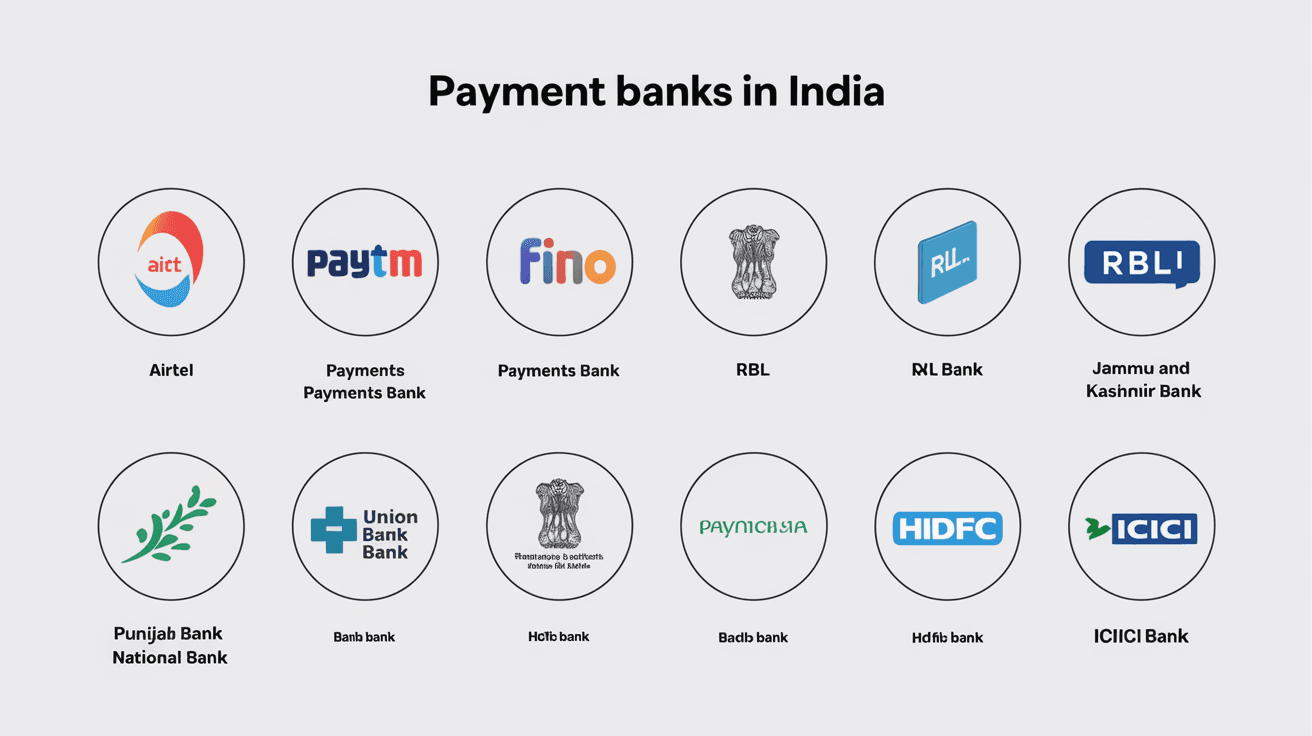
As of 2025, India has 11 licensed payment banks operating across the country. The Reserve Bank of India (RBI) granted licenses to these banks to promote financial inclusion and digital payments.
Here is a list of the payment banks currently active in India:
| Payment Bank Name | Parent Company/Promoter |
| Airtel Payments Bank | Bharti Airtel |
| India Post Payments Bank | India Post |
| Fino Payments Bank | Fino PayTech |
| Jio Payments Bank | Reliance Jio |
| Paytm Payments Bank | Paytm |
| NSDL Payments Bank | National Securities Depository Limited |
| Aditya Birla Payments Bank | Aditya Birla Group |
| Saraswat Bank Payments Bank | Saraswat Bank |
| Vodafone M-Pesa Payments Bank | Vodafone Idea Limited |
| NSDL Payments Bank | National Securities Depository Limited |
| Unity Small Finance Bank (Payment Bank services) | Unity Small Finance Bank |
Note: Some banks operate as small finance banks but also offer payment bank services.
India introduced payment banks in 2015 to solve specific challenges in the banking sector:
The RBI issued licenses to 11 entities after a rigorous selection process. These banks were chosen for their ability to leverage technology and reach underserved populations.
Payment banks operate mainly through digital channels like mobile apps, USSD codes, and online portals. They also have physical outlets or agents in villages and towns.
Here’s how you can use a payment bank:
These banks use technology to keep costs low and provide quick services. They often partner with telecom companies or digital platforms to expand their reach.
Understanding the difference between payment banks and traditional banks helps you choose the right service.
| Feature | Payment Banks | Traditional Banks |
| Deposit Limit | Up to ₹2 lakh per customer | No limit |
| Lending | Not allowed | Allowed |
| Credit Cards | Not issued | Issued |
| Services Offered | Basic banking, payments, remittances | Full banking services including loans, investments |
| Branch Network | Limited, mostly digital | Extensive physical branches |
| Target Customers | Low-income, rural, small businesses | All customer segments |
Payment banks focus on simple, safe banking services. Traditional banks offer a wider range of products but may not reach remote areas as effectively.
Payment banks offer several advantages, especially for people new to banking or living in remote areas.
For example, India Post Payments Bank has millions of customers in rural India who previously had no bank accounts. Similarly, Airtel Payments Bank leverages its telecom network to reach millions of users.
Despite their benefits, payment banks face some challenges:
Payment banks are working on innovative solutions like partnerships with fintech firms and expanding agent networks to overcome these challenges.
Payment banks are expected to grow as India moves toward a cashless economy. The government’s push for digital payments and financial inclusion supports their expansion.
Here are some trends shaping the future:
The RBI may also review regulations to allow payment banks to offer more services while maintaining safety.
If you want to open an account with a payment bank, consider these factors:
For example, if you are a frequent mobile user, Airtel Payments Bank or Jio Payments Bank might be convenient. If you prefer government-backed security, India Post Payments Bank is a good choice.
Now you know that India has 11 payment banks licensed by the RBI. These banks play a vital role in bringing banking services to millions of people who were previously excluded. They focus on simple, safe, and affordable banking through digital channels.
Payment banks are not a replacement for traditional banks but a complementary service that helps expand financial inclusion. As technology advances and regulations evolve, payment banks will continue to grow and offer more benefits to customers across India.
There are 11 payment banks currently operating in India, licensed by the Reserve Bank of India to provide basic banking services.
No, payment banks are not allowed to offer loans or credit cards. They focus on deposits, payments, and remittance services.
The maximum deposit limit per customer in a payment bank is ₹2 lakh.
Yes, payment banks are regulated by the RBI, ensuring that your deposits and transactions are secure.
Payment banks use technology and agent networks to reach underserved populations, providing easy access to banking services in rural and remote areas.