

How Many Paramilitary Forces Are There in India?
F
Discover verified facts, data, and insights about India’s states, culture, economy, education, and more — all in one place at FactBharat.
Search for a command to run...
Discover verified facts, data, and insights about India’s states, culture, economy, education, and more — all in one place at FactBharat.
No comments yet. Be the first to comment.
Moving to the USA from India is a dream for many. Whether you want to study, work, or live with family, the process can seem complex. But with the right information, you can plan your move confidently. I’ll guide you through the key steps and options...
Opening a college in India is a dream for many educators and entrepreneurs who want to contribute to the country’s education sector. If you are one of those who want to start a college, you need to understand the process clearly. It involves several ...
Opening a hospital in India is a significant and rewarding venture. If you’ve ever wondered how to start one, you’re in the right place. Whether you’re a healthcare professional, entrepreneur, or investor, understanding the process is crucial. You’ll...
Opening a medical store in India can be a rewarding business opportunity. You get to serve your community by providing essential medicines and healthcare products. If you are thinking about starting a medical store, you might wonder where to begin an...
Opening a restaurant in India can be an exciting and rewarding venture. Whether you dream of serving traditional Indian dishes or international cuisine, the process involves careful planning and understanding of local regulations. If you’re ready to ...
FactBharat | Insights About India
2558 posts
Discover verified facts, data, and insights about India’s states, culture, economy, education, and more — all in one place at FactBharat.
India’s security landscape is vast and complex. If you’ve ever wondered how many paramilitary forces India has, you’re not alone. These forces play a crucial role in maintaining internal security, border protection, and disaster response. Understanding their numbers and functions helps you appreciate the scale of India’s security apparatus.
In this article, I’ll walk you through the different paramilitary forces in India, their strength, and their key responsibilities. Whether you’re curious about their role in peacekeeping or counter-insurgency, this guide will give you a clear picture of India’s paramilitary setup.
Paramilitary forces in India are uniformed organizations that operate alongside the military and police. They are not part of the regular army but have military-like training and equipment. Their main job is to support the army and police in maintaining law and order, border security, and internal stability.
These forces are controlled by the Ministry of Home Affairs, except for the Assam Rifles, which is under the Ministry of Defence. They often handle situations that require more force than the police but less than the army.
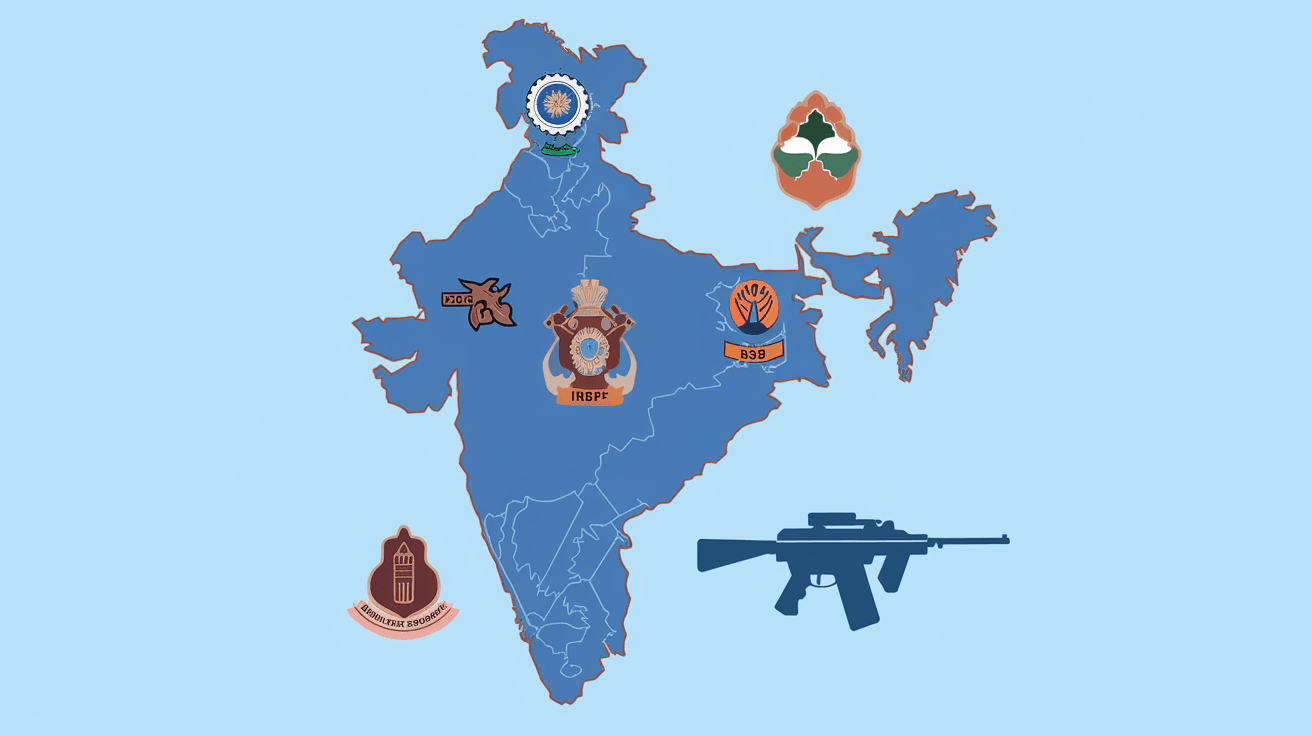
India has seven major paramilitary forces. Each has a specific role and area of operation. Together, they form a robust security network across the country.
Here’s a list of the main paramilitary forces:
The combined strength of these forces is approximately 2.5 million personnel. This number fluctuates slightly due to recruitment and operational needs.
| Paramilitary Force | Approximate Strength (Personnel) |
| Border Security Force (BSF) | 2,65,000 |
| Central Reserve Police Force (CRPF) | 3,00,000 |
| Indo-Tibetan Border Police (ITBP) | 90,000 |
| Central Industrial Security Force (CISF) | 1,50,000 |
| Sashastra Seema Bal (SSB) | 80,000 |
| National Security Guard (NSG) | 10,000 |
| Assam Rifles | 60,000 |
Note: These figures are rounded estimates based on recent official data.
The BSF is India’s primary border guarding force. It was established in 1965 after the Indo-Pak war. The BSF guards India’s borders with Pakistan and Bangladesh, covering over 6,000 kilometers.
The CRPF is India’s largest paramilitary force. It is the backbone of internal security and counter-insurgency operations, especially in areas affected by Naxalite and Maoist insurgencies.
The ITBP guards the India-China border along the Himalayan region. It operates in some of the toughest terrains and harshest climates.
The CISF protects critical infrastructure like airports, nuclear plants, and government buildings. It also provides security to public sector undertakings.
The SSB guards India’s borders with Nepal and Bhutan. It also assists in maintaining internal security in border areas.
The NSG is India’s elite counter-terrorism force. It is often called the “Black Cats” due to its distinctive uniform.
The Assam Rifles is the oldest paramilitary force, dating back to 1835. It operates mainly in Northeast India, focusing on counter-insurgency and border security.
India’s vast geography and diverse security challenges require multiple paramilitary forces. Here’s why:
While the Indian Army is responsible for defending the country from external threats, paramilitary forces focus on internal security and border guarding. Here are some differences:
| Aspect | Indian Army | Paramilitary Forces |
| Primary Role | External defense | Internal security and border guarding |
| Command | Ministry of Defence | Mostly Ministry of Home Affairs |
| Training | Military combat training | Police and military hybrid training |
| Deployment | War zones and conflict areas | Border areas, insurgency zones, critical infrastructure |
| Equipment | Heavy artillery, tanks | Light arms, specialized equipment |
Despite their importance, paramilitary forces face several challenges:
India is investing in modernizing its paramilitary forces. Some key developments include:
These steps aim to make paramilitary forces more effective in handling evolving security threats.
Now you know that India has seven major paramilitary forces with a combined strength of around 2.5 million personnel. Each force has a unique role, from guarding borders to counter-terrorism and protecting critical infrastructure. Together, they form a vital part of India’s security framework.
Understanding these forces helps you appreciate the complexity of maintaining peace and security in a diverse and vast country like India. Whether it’s the BSF guarding borders or the NSG tackling terror threats, paramilitary forces are always on the frontlines to keep the nation safe.
India has seven major paramilitary forces: BSF, CRPF, ITBP, CISF, SSB, NSG, and Assam Rifles.
The Central Reserve Police Force (CRPF) is the largest, with about 3 lakh personnel.
Most paramilitary forces are under the Ministry of Home Affairs, except Assam Rifles, which is under the Ministry of Defence.
The NSG specializes in counter-terrorism, hostage rescue, and VIP protection.
No, paramilitary forces are separate from the Indian Army and focus mainly on internal security and border guarding.