

How Many National Symbols Are There in India
F
Discover verified facts, data, and insights about India’s states, culture, economy, education, and more — all in one place at FactBharat.
Search for a command to run...
Discover verified facts, data, and insights about India’s states, culture, economy, education, and more — all in one place at FactBharat.
No comments yet. Be the first to comment.
Moving to the USA from India is a dream for many. Whether you want to study, work, or live with family, the process can seem complex. But with the right information, you can plan your move confidently. I’ll guide you through the key steps and options...
Opening a college in India is a dream for many educators and entrepreneurs who want to contribute to the country’s education sector. If you are one of those who want to start a college, you need to understand the process clearly. It involves several ...
Opening a hospital in India is a significant and rewarding venture. If you’ve ever wondered how to start one, you’re in the right place. Whether you’re a healthcare professional, entrepreneur, or investor, understanding the process is crucial. You’ll...
Opening a medical store in India can be a rewarding business opportunity. You get to serve your community by providing essential medicines and healthcare products. If you are thinking about starting a medical store, you might wonder where to begin an...
Opening a restaurant in India can be an exciting and rewarding venture. Whether you dream of serving traditional Indian dishes or international cuisine, the process involves careful planning and understanding of local regulations. If you’re ready to ...
FactBharat | Insights About India
2558 posts
Discover verified facts, data, and insights about India’s states, culture, economy, education, and more — all in one place at FactBharat.
India is a country rich in culture, history, and diversity. When you think about India, you might picture the Taj Mahal, the national flag, or the majestic Bengal tiger. These are all part of India’s national symbols, which represent the country’s identity and values. But have you ever wondered how many national symbols India actually has? Understanding these symbols helps you appreciate the spirit and unity of India.
In this article, I will take you through the various national symbols of India. We will explore what they are, why they are important, and what they represent. By the end, you will have a clear idea of how many national symbols India has and what makes each one special.
National symbols are objects, animals, plants, or emblems that represent a country’s culture, history, and values. They help create a sense of pride and unity among citizens. For India, these symbols reflect its rich heritage, natural beauty, and democratic ideals.
National symbols can be:
Each symbol has a story behind it and is chosen carefully to represent the country’s unique identity.
India has a total of 11 official national symbols. These symbols cover a range of categories, including animals, birds, flowers, trees, and more. Each one is recognized by the government and holds special significance.
Here is a list of India’s national symbols:
| Symbol Type | National Symbol |
| National Flag | Tiranga (Tricolor) |
| National Emblem | Lion Capital of Ashoka |
| National Anthem | Jana Gana Mana |
| National Song | Vande Mataram |
| National Animal | Bengal Tiger |
| National Bird | Indian Peacock |
| National Flower | Lotus |
| National Tree | Banyan Tree |
| National Fruit | Mango |
| National River | Ganga |
| National Calendar | Saka Calendar |
Each of these symbols plays a unique role in representing India’s culture, history, and natural heritage.
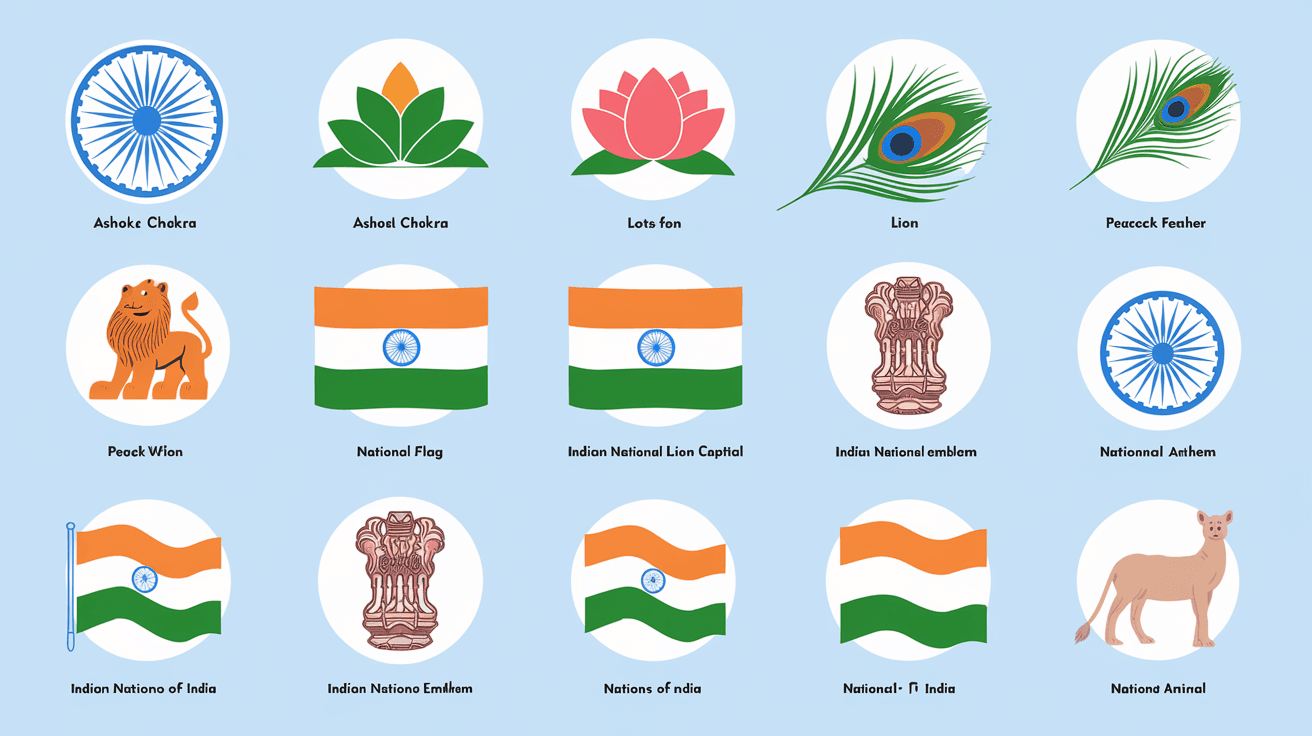
The Indian national flag, known as the Tiranga, is one of the most important symbols. It has three horizontal stripes of saffron, white, and green, with a navy blue Ashoka Chakra (wheel) in the center.
The flag was adopted on July 22, 1947, just before India gained independence. It is a symbol of freedom and unity for all Indians.
India’s national emblem is the Lion Capital of Ashoka, which was originally erected around 250 BCE by Emperor Ashoka. It features four lions standing back to back on a circular base with a horse, a bull, and a wheel.
This emblem reflects India’s ancient heritage and commitment to justice.
The national anthem of India is Jana Gana Mana, written by Rabindranath Tagore. It was adopted in 1950 and is sung at official events and ceremonies.
Vande Mataram is India’s national song, written by Bankim Chandra Chatterjee. It played a key role in India’s freedom movement.
The Bengal tiger is India’s national animal. It symbolizes strength, power, and grace.
The Indian peacock is the national bird of India. It is known for its colorful feathers and graceful dance.
The lotus is India’s national flower. It holds spiritual and cultural significance.
The banyan tree is the national tree of India. It is known for its large canopy and aerial roots.
The mango is India’s national fruit. It is loved for its sweet taste and aroma.
The Ganga river is India’s national river. It holds religious and cultural importance.
India uses the Saka calendar as its official national calendar alongside the Gregorian calendar.
National symbols are more than just images or objects. They connect you to your country’s history and culture. They remind you of shared values and inspire pride.
When you see the national flag or hear the anthem, you feel a sense of belonging and respect for your country.
National symbols are chosen based on their historical, cultural, or natural significance. The government and experts study various options before making a decision.
For example, the Bengal tiger was chosen because it is native to India and symbolizes strength.
It is important to protect these symbols and respect their meaning. India has laws to prevent misuse of the national flag and emblem.
You can also play a role by learning about these symbols and teaching others.
India has 11 official national symbols that beautifully represent its culture, history, and natural heritage. From the vibrant Tiranga flag to the majestic Bengal tiger, each symbol tells a story about India’s identity. These symbols unite millions of people and remind us of the values we share.
By understanding these national symbols, you connect more deeply with India’s rich traditions and diverse beauty. Whether it’s the lotus flower or the Ganga river, each symbol holds a special place in the heart of every Indian. So next time you see any of these symbols, remember the pride and history they carry.
India has 11 official national symbols, including the national flag, emblem, anthem, animal, bird, flower, tree, fruit, river, song, and calendar.
The national emblem, the Lion Capital of Ashoka, symbolizes power, courage, and justice. It reflects India’s ancient heritage and is used on official documents and currency.
The Bengal tiger represents strength, power, and grace. It is native to India and is a symbol of the country’s rich wildlife and conservation efforts.
The lotus symbolizes purity, beauty, and spiritual enlightenment. It grows in muddy water but remains clean, representing resilience and purity.
Yes, the Ganga is India’s national river. It holds religious significance and supports millions of people with water and agriculture. Efforts are ongoing to protect and clean the river.