

How Many National Highways Are There in India
F
Discover verified facts, data, and insights about India’s states, culture, economy, education, and more — all in one place at FactBharat.
Search for a command to run...
Discover verified facts, data, and insights about India’s states, culture, economy, education, and more — all in one place at FactBharat.
No comments yet. Be the first to comment.
Moving to the USA from India is a dream for many. Whether you want to study, work, or live with family, the process can seem complex. But with the right information, you can plan your move confidently. I’ll guide you through the key steps and options...
Opening a college in India is a dream for many educators and entrepreneurs who want to contribute to the country’s education sector. If you are one of those who want to start a college, you need to understand the process clearly. It involves several ...
Opening a hospital in India is a significant and rewarding venture. If you’ve ever wondered how to start one, you’re in the right place. Whether you’re a healthcare professional, entrepreneur, or investor, understanding the process is crucial. You’ll...
Opening a medical store in India can be a rewarding business opportunity. You get to serve your community by providing essential medicines and healthcare products. If you are thinking about starting a medical store, you might wonder where to begin an...
Opening a restaurant in India can be an exciting and rewarding venture. Whether you dream of serving traditional Indian dishes or international cuisine, the process involves careful planning and understanding of local regulations. If you’re ready to ...
FactBharat | Insights About India
2558 posts
Discover verified facts, data, and insights about India’s states, culture, economy, education, and more — all in one place at FactBharat.
India’s road network is one of the largest in the world, and national highways play a crucial role in connecting cities, states, and regions. If you’ve ever wondered how many national highways there are in India, you’re not alone. These highways form the backbone of the country’s transport system, supporting trade, travel, and economic growth.
In this article, I’ll take you through the current number of national highways in India, how they are managed, and why they matter so much. Whether you’re a traveler, student, or just curious, you’ll get a clear picture of India’s vast highway network and its importance.
National highways are roads that connect major cities, ports, state capitals, and important industrial hubs across India. They are designed to facilitate smooth and fast movement of goods and people over long distances. The government of India is responsible for their development and maintenance, primarily through the Ministry of Road Transport and Highways (MoRTH).
These highways are marked with numbers and are usually wider and better maintained than other roads. They often have multiple lanes, service areas, and safety features to support heavy traffic.
As of 2025, India has approximately 161,000 kilometers of national highways. The total number of national highways is around 270. This number has grown significantly over the past decade due to extensive infrastructure development programs.
The government has been actively expanding the highway network to improve connectivity, reduce travel time, and boost economic growth. The National Highways Authority of India (NHAI) plays a key role in this expansion by building new highways and upgrading existing ones.
This rapid growth reflects India’s focus on improving its transport infrastructure to support its growing economy.
India follows a systematic numbering system for its national highways to make navigation easier. The numbering was revamped in 2010 to bring uniformity and logic.
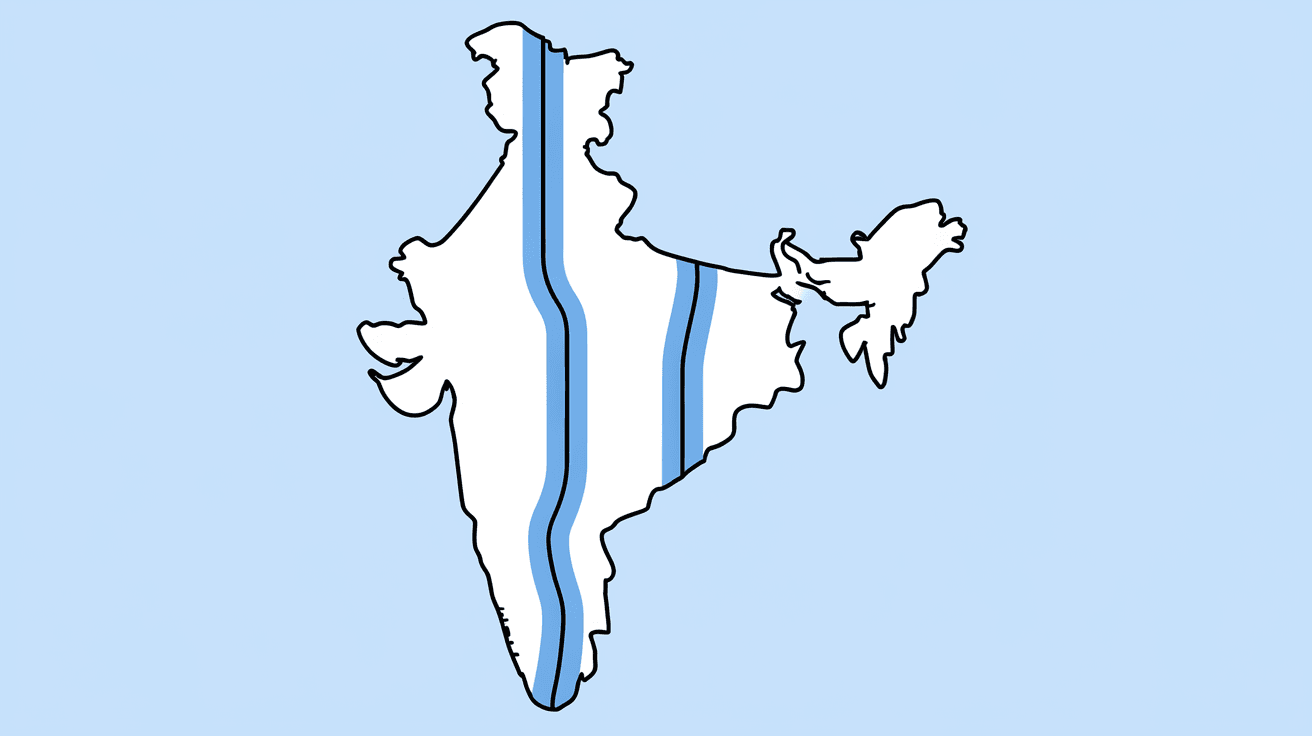
For example, NH 44 is a major north-south highway running from Srinagar in the north to Kanyakumari in the south. NH 27 is a major east-west highway connecting the eastern and western parts of India.
This system helps travelers and transporters easily identify the direction and importance of each highway.
National highways are vital for India’s economy and daily life. They connect remote areas with urban centers, making travel and transport more efficient.
Some national highways are particularly important due to their length, connectivity, or economic significance. Here are a few examples:
| Highway Number | Route | Length (km) | Significance |
| NH 44 | Srinagar to Kanyakumari | 3,745 | Longest highway, north-south axis |
| NH 27 | Porbandar to Silchar | 3,507 | Longest east-west highway |
| NH 48 | Delhi to Chennai | 2,807 | Connects major metro cities |
| NH 16 | Kolkata to Chennai | 1,764 | Important east coast corridor |
These highways are crucial for interstate travel and commerce.
The maintenance of national highways is primarily handled by the National Highways Authority of India (NHAI), along with state public works departments and private contractors.
The government also uses public-private partnerships (PPP) to fund and maintain highways, which helps speed up development and improve quality.
Despite the progress, there are challenges in managing such a vast network.
The government is addressing these by investing in smart highway technologies, better traffic management, and stricter safety regulations.
India has ambitious plans to further expand and modernize its national highways.
These plans aim to make India’s highway network more efficient, safe, and environmentally friendly.
If you travel on national highways, here are some tips to make your journey safer and smoother:
By staying informed and careful, you can enjoy the benefits of India’s vast highway network.
India’s national highways are a vital part of the country’s infrastructure, connecting people and places across vast distances. With around 270 highways covering over 161,000 kilometers, they support economic growth, social development, and national integration. The government’s continuous efforts to expand and upgrade these roads promise even better connectivity in the future.
Understanding how many national highways there are and their role helps you appreciate the scale and importance of India’s road network. Whether you’re traveling for business or leisure, these highways make your journey possible and efficient.
There are about 270 national highways in India, covering a total length of approximately 161,000 kilometers.
The Ministry of Road Transport and Highways (MoRTH) and the National Highways Authority of India (NHAI) manage and maintain national highways.
NH 44 is the longest national highway, running from Srinagar in the north to Kanyakumari in the south, covering around 3,745 kilometers.
Odd numbers are for north-south highways, increasing from east to west; even numbers are for east-west highways, increasing from north to south.
India plans to expand its highway network to over 2 lakh kilometers, develop expressways, and integrate highways with logistics and green technologies.