

How Many National Festivals Are There in India
F
Discover verified facts, data, and insights about India’s states, culture, economy, education, and more — all in one place at FactBharat.
Search for a command to run...
Discover verified facts, data, and insights about India’s states, culture, economy, education, and more — all in one place at FactBharat.
No comments yet. Be the first to comment.
Moving to the USA from India is a dream for many. Whether you want to study, work, or live with family, the process can seem complex. But with the right information, you can plan your move confidently. I’ll guide you through the key steps and options...
Opening a college in India is a dream for many educators and entrepreneurs who want to contribute to the country’s education sector. If you are one of those who want to start a college, you need to understand the process clearly. It involves several ...
Opening a hospital in India is a significant and rewarding venture. If you’ve ever wondered how to start one, you’re in the right place. Whether you’re a healthcare professional, entrepreneur, or investor, understanding the process is crucial. You’ll...
Opening a medical store in India can be a rewarding business opportunity. You get to serve your community by providing essential medicines and healthcare products. If you are thinking about starting a medical store, you might wonder where to begin an...
Opening a restaurant in India can be an exciting and rewarding venture. Whether you dream of serving traditional Indian dishes or international cuisine, the process involves careful planning and understanding of local regulations. If you’re ready to ...
FactBharat | Insights About India
2558 posts
Discover verified facts, data, and insights about India’s states, culture, economy, education, and more — all in one place at FactBharat.
India is a land of vibrant cultures and traditions. If you’ve ever wondered how many national festivals are celebrated across this diverse country, you’re not alone. National festivals in India are special days that unite people from all walks of life, reflecting the country’s rich history and values.
In this article, I’ll walk you through the main national festivals celebrated in India. We’ll explore what makes each festival unique and why they hold such importance for the nation. By the end, you’ll have a clear understanding of how many national festivals there are and what they represent.
National festivals are official celebrations recognized by the government of India. These festivals mark important events in the country’s history or honor significant cultural traditions. Unlike regional or religious festivals, national festivals are celebrated across the entire country.
Here’s what sets national festivals apart:
Understanding these festivals helps you appreciate the spirit of India and its diverse heritage.
India officially recognizes three main national festivals. These are:
Each of these festivals has a unique significance and is celebrated with great enthusiasm throughout the country.
Republic Day marks the date when the Constitution of India came into effect in 1950. This day symbolizes India becoming a sovereign republic. It is celebrated with a grand parade in the capital, New Delhi, showcasing India’s cultural diversity and military strength.
Key features of Republic Day include:
Independence Day celebrates India’s freedom from British rule on August 15, 1947. It is a day of patriotism and remembrance for those who fought for the country’s independence.
Typical Independence Day celebrations involve:
Gandhi Jayanti honors the birth anniversary of Mahatma Gandhi, the Father of the Nation. Celebrated on October 2, it is a day to remember Gandhi’s contributions to India’s freedom struggle and his philosophy of non-violence.
On Gandhi Jayanti, you will find:
You might wonder why India has only three national festivals when there are so many other important celebrations. The reason is that these three festivals are officially recognized by the government as symbols of national unity and identity.
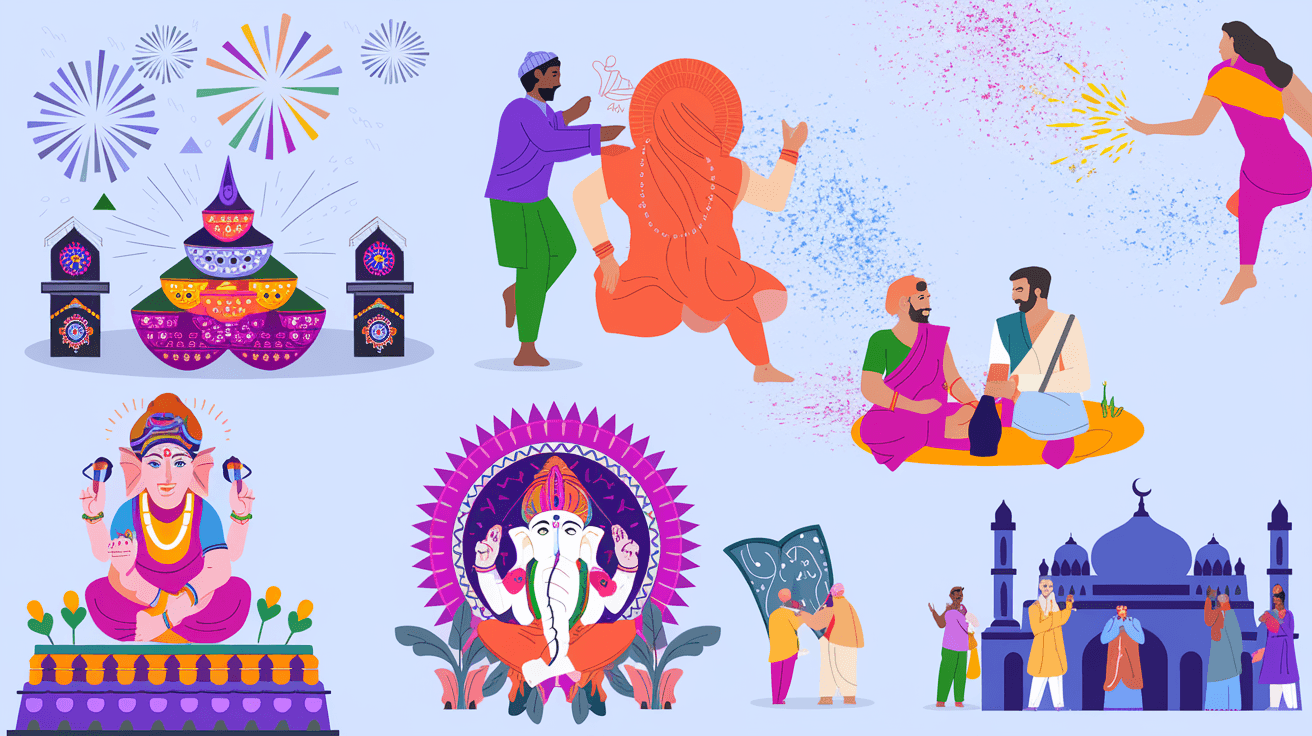
Other festivals like Diwali, Holi, Eid, Christmas, and Pongal are widely celebrated but are considered religious or regional festivals. National festivals are meant to transcend religious and cultural boundaries, bringing all Indians together.
National festivals are celebrated with enthusiasm in every corner of India. Here’s how they typically unfold:
In rural and urban areas alike, these festivals create a sense of belonging and pride among citizens.
Besides the three main national festivals, India also observes several other important days that hold national significance. These include:
While these are not classified as national festivals, they are important national observances that contribute to India’s cultural fabric.
India is a country with many languages, religions, and cultures. National festivals play a crucial role in uniting people across these differences. They remind us of shared values and common history.
Here’s how national festivals promote unity:
By participating in these festivals, you become part of a larger community that values harmony and cooperation.
If you want to celebrate national festivals in a way that truly honors their spirit, here are some ideas:
These actions help deepen your connection to the nation and its heritage.
So, how many national festivals are there in India? Officially, there are three: Republic Day, Independence Day, and Gandhi Jayanti. Each of these festivals holds deep meaning and is celebrated with pride across the country.
These festivals are more than just holidays. They are moments when we come together as one nation, remembering our past and looking forward to a brighter future. By understanding and participating in these celebrations, you join millions of Indians in honoring the spirit of unity and freedom.
India has three official national festivals: Republic Day, Independence Day, and Gandhi Jayanti.
These three festivals symbolize national unity and identity, transcending religious and cultural differences.
No, Diwali and Holi are major cultural and religious festivals but not classified as national festivals.
Republic Day features a grand parade, flag hoisting, cultural performances, and award ceremonies.
You can celebrate by learning about Gandhi’s teachings, participating in cleanliness drives, and attending prayer services.