

How Many Mountains Are There in India
F
Discover verified facts, data, and insights about India’s states, culture, economy, education, and more — all in one place at FactBharat.
Search for a command to run...
Discover verified facts, data, and insights about India’s states, culture, economy, education, and more — all in one place at FactBharat.
No comments yet. Be the first to comment.
Moving to the USA from India is a dream for many. Whether you want to study, work, or live with family, the process can seem complex. But with the right information, you can plan your move confidently. I’ll guide you through the key steps and options...
Opening a college in India is a dream for many educators and entrepreneurs who want to contribute to the country’s education sector. If you are one of those who want to start a college, you need to understand the process clearly. It involves several ...
Opening a hospital in India is a significant and rewarding venture. If you’ve ever wondered how to start one, you’re in the right place. Whether you’re a healthcare professional, entrepreneur, or investor, understanding the process is crucial. You’ll...
Opening a medical store in India can be a rewarding business opportunity. You get to serve your community by providing essential medicines and healthcare products. If you are thinking about starting a medical store, you might wonder where to begin an...
Opening a restaurant in India can be an exciting and rewarding venture. Whether you dream of serving traditional Indian dishes or international cuisine, the process involves careful planning and understanding of local regulations. If you’re ready to ...
FactBharat | Insights About India
2558 posts
Discover verified facts, data, and insights about India’s states, culture, economy, education, and more — all in one place at FactBharat.
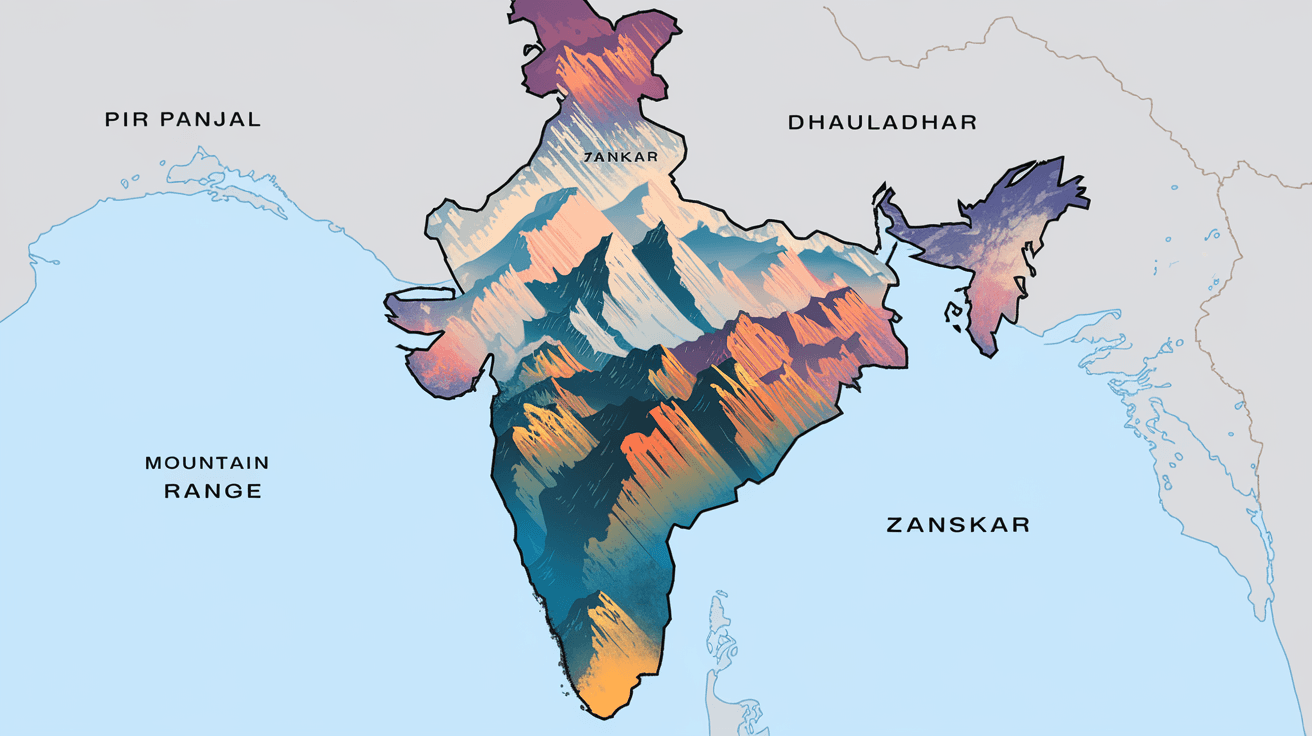
India is a land of incredible natural beauty, and its mountains play a huge role in shaping its geography and culture. If you’ve ever wondered how many mountains are there in India, you’re not alone. The country is home to thousands of mountains spread across various ranges, each with its own unique features and stories.
In this article, I’ll take you through the major mountain ranges in India, the number of significant peaks, and some fascinating facts about these majestic natural wonders. Whether you’re a traveler, a student, or just curious, this guide will help you understand the vastness and diversity of India’s mountainous landscape.
India’s mountains are not just a single group but a collection of several major ranges. These ranges stretch across the country, influencing climate, culture, and biodiversity. The main mountain ranges in India include:
Each of these ranges contains numerous peaks and hills, contributing to the total count of mountains in India.
The Himalayas are the most famous and highest mountain range in India. They stretch over 2,400 kilometers across five Indian states: Jammu & Kashmir, Himachal Pradesh, Uttarakhand, Sikkim, and Arunachal Pradesh.
The Western Ghats run parallel to India’s western coast, covering states like Maharashtra, Goa, Karnataka, Kerala, and Tamil Nadu. This range is older than the Himalayas and is recognized as a UNESCO World Heritage Site.
The Eastern Ghats are a series of discontinuous hills along India’s eastern coast, passing through Odisha, Andhra Pradesh, Tamil Nadu, and parts of Telangana.
The Aravalli Range is located in western India, mainly in Rajasthan, and is one of the oldest mountain ranges in the world.
These ranges run through central India, mainly in Madhya Pradesh and Maharashtra.
The Trans-Himalayan region includes ranges like the Karakoram and Ladakh ranges in northernmost India.
Counting the exact number of mountains in India is challenging due to the vastness and diversity of its ranges. However, here’s a rough estimate:
If you include every hill and peak, the number easily runs into several thousands.
India’s mountains are more than just tall landforms. They:
If you want to explore these mountains, here are some tips:
India’s mountains are vast, varied, and vital to the country’s environment and culture. While it’s hard to give an exact number, thousands of mountains and peaks make up India’s diverse landscape. From the towering Himalayas to the ancient Aravallis, each range has its own story and significance.
Whether you’re fascinated by the highest peaks or the rich biodiversity of the Western Ghats, India’s mountains offer something for everyone. Understanding how many mountains there are helps us appreciate the natural wealth and beauty that India holds.
India has six major mountain ranges: the Himalayas, Western Ghats, Eastern Ghats, Aravalli Range, Vindhya Range, and Satpura Range, along with the Trans-Himalayan ranges.
The highest mountain in India is Kangchenjunga, standing at 8,586 meters. It is the third highest peak in the world.
Yes, the Western Ghats have higher peaks, with Anamudi at 2,695 meters, while the Eastern Ghats’ highest peak, Arma Konda, is about 1,680 meters.
India has over 50 peaks above 7,000 meters, mostly located in the Himalayan range.
The Aravalli Range is one of the oldest mountain ranges and helps prevent the expansion of the Thar Desert. It also has historical and ecological significance.