

How Many Major Rivers Are There in India
F
Discover verified facts, data, and insights about India’s states, culture, economy, education, and more — all in one place at FactBharat.
Search for a command to run...
Discover verified facts, data, and insights about India’s states, culture, economy, education, and more — all in one place at FactBharat.
No comments yet. Be the first to comment.
Moving to the USA from India is a dream for many. Whether you want to study, work, or live with family, the process can seem complex. But with the right information, you can plan your move confidently. I’ll guide you through the key steps and options...
Opening a college in India is a dream for many educators and entrepreneurs who want to contribute to the country’s education sector. If you are one of those who want to start a college, you need to understand the process clearly. It involves several ...
Opening a hospital in India is a significant and rewarding venture. If you’ve ever wondered how to start one, you’re in the right place. Whether you’re a healthcare professional, entrepreneur, or investor, understanding the process is crucial. You’ll...
Opening a medical store in India can be a rewarding business opportunity. You get to serve your community by providing essential medicines and healthcare products. If you are thinking about starting a medical store, you might wonder where to begin an...
Opening a restaurant in India can be an exciting and rewarding venture. Whether you dream of serving traditional Indian dishes or international cuisine, the process involves careful planning and understanding of local regulations. If you’re ready to ...
FactBharat | Insights About India
2558 posts
Discover verified facts, data, and insights about India’s states, culture, economy, education, and more — all in one place at FactBharat.
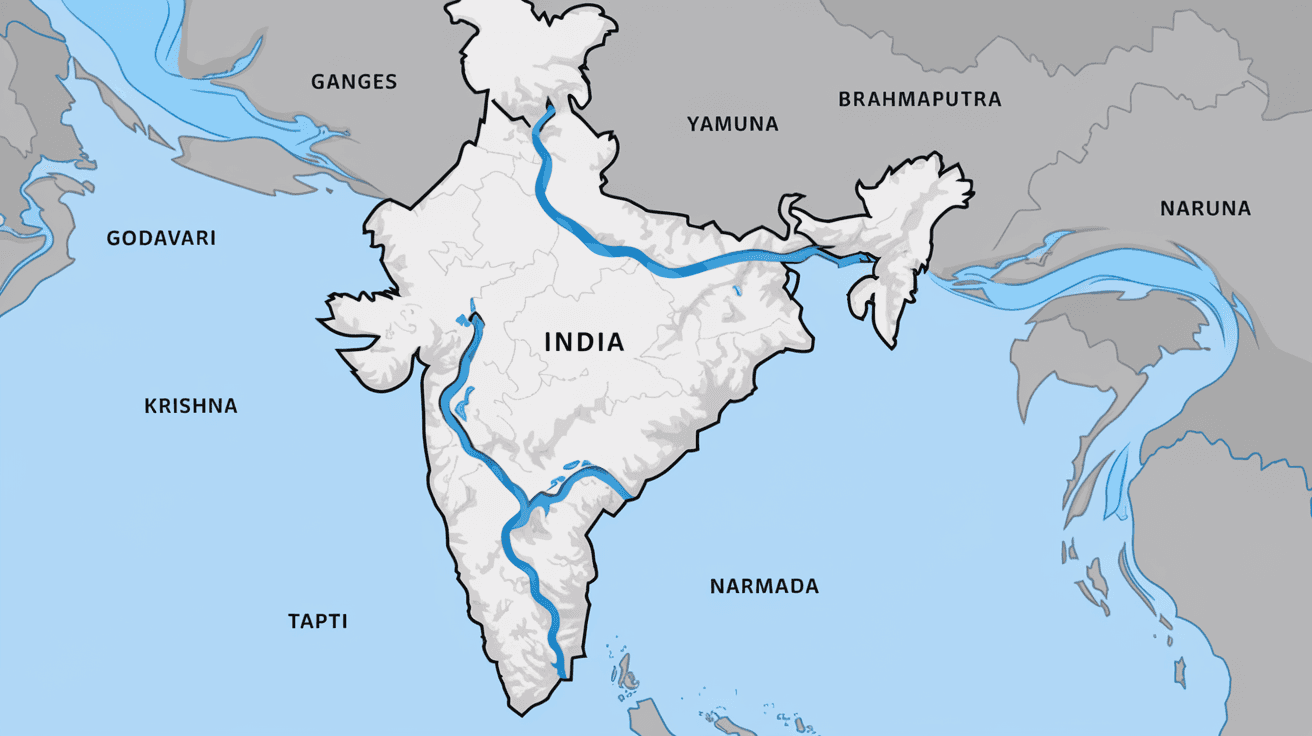
India is a land blessed with numerous rivers that have shaped its culture, agriculture, and economy for centuries. If you’ve ever wondered how many major rivers there are in India, you’re not alone. These rivers are not just water bodies; they are lifelines for millions of people, supporting farming, industry, and daily life.
In this article, I’ll take you through the number of major rivers in India, their importance, and some interesting facts about them. Whether you’re a student, traveler, or just curious, this guide will help you understand the vast river network that sustains the country.
India has around 14 major rivers that are widely recognized for their size, length, and significance. These rivers are spread across the country and are crucial for irrigation, drinking water, and hydroelectric power. The major rivers are usually categorized based on the drainage basins they belong to, mainly the Himalayan rivers and the Peninsular rivers.
The Himalayan rivers originate from the snow-capped mountains of the Himalayas. They are perennial, meaning they flow throughout the year, fed by melting glaciers and rainfall. Some of the most important Himalayan rivers include:
These rivers are vital for northern India’s agriculture and have deep cultural and religious significance.
The Peninsular rivers mostly originate from the Western Ghats and flow east or west into the Arabian Sea or Bay of Bengal. Unlike Himalayan rivers, many of these are seasonal, depending on monsoon rains. Major Peninsular rivers include:
These rivers support millions of farmers and are central to the region’s ecology.
Not all rivers in India are classified as major. The classification depends on several factors:
For example, the Ganga is not only long but also supports over 400 million people living in its basin. Similarly, the Godavari is called the “Dakshina Ganga” or the Ganges of the South due to its size and importance.
India’s economy relies heavily on its rivers. Here’s how these major rivers contribute:
India’s major rivers often have extensive tributary networks. Understanding these systems helps grasp their scale.
| River | Major Tributaries | Basin Area (sq km) | Length (km) |
| Ganga | Yamuna, Ghaghara, Gomti, Son | 1,086,000 | 2,525 |
| Brahmaputra | Subansiri, Dibang, Lohit | 580,000 | 2,900 |
| Indus | Jhelum, Chenab, Ravi, Sutlej, Beas | 1,165,000 | 3,180 |
| Godavari | Purna, Pranhita, Manjira | 312,812 | 1,465 |
| Krishna | Bhima, Tungabhadra, Koyna | 258,948 | 1,400 |
| Cauvery | Hemavati, Kabini, Bhavani | 81,155 | 760 |
| Mahanadi | Seonath, Hasdeo, Mand | 141,600 | 858 |
| Narmada | Banjar, Tawa, Hiran | 98,796 | 1,312 |
| Tapi | Purna, Girna, Waghur | 65,145 | 724 |
This table shows how these rivers and their tributaries cover vast areas, supporting diverse ecosystems and human settlements.
Rivers in India are more than just water sources; they are sacred and deeply embedded in cultural traditions.
This spiritual connection influences how people protect and value these rivers.
Despite their importance, India’s major rivers face serious challenges:
Efforts like the Namami Gange program aim to clean and conserve the Ganga, but similar attention is needed for other rivers.
If you want to explore India’s rivers further, here are some ways:
Understanding these rivers helps you appreciate their role in India’s past, present, and future.
India has about 14 major rivers that are vital to its geography, economy, and culture. These rivers, from the mighty Ganga and Brahmaputra to the life-giving Godavari and Krishna, support millions of people and countless ecosystems. They are the backbone of agriculture, industry, and spiritual life in the country.
However, these rivers face challenges like pollution and overuse, which need urgent attention. By learning about these rivers and their importance, you can better appreciate their role and support efforts to protect them. Whether you live near these rivers or far away, their story is a part of India’s heart and soul.
India has around 14 major rivers, including the Ganga, Brahmaputra, Indus, Godavari, Krishna, and Cauvery, among others.
The Ganga is the longest river flowing entirely in India, stretching about 2,525 kilometers.
Himalayan rivers originate from the Himalayas and flow year-round, while Peninsular rivers mostly depend on monsoon rains and are seasonal.
Rivers provide essential water for irrigation, supporting over 60% of India’s population engaged in farming.
Pollution, over-extraction, dam construction, climate change, and urban encroachment are major threats to India’s rivers.