

How Many Lakes Are There in India
F
Discover verified facts, data, and insights about India’s states, culture, economy, education, and more — all in one place at FactBharat.
Search for a command to run...
Discover verified facts, data, and insights about India’s states, culture, economy, education, and more — all in one place at FactBharat.
No comments yet. Be the first to comment.
Moving to the USA from India is a dream for many. Whether you want to study, work, or live with family, the process can seem complex. But with the right information, you can plan your move confidently. I’ll guide you through the key steps and options...
Opening a college in India is a dream for many educators and entrepreneurs who want to contribute to the country’s education sector. If you are one of those who want to start a college, you need to understand the process clearly. It involves several ...
Opening a hospital in India is a significant and rewarding venture. If you’ve ever wondered how to start one, you’re in the right place. Whether you’re a healthcare professional, entrepreneur, or investor, understanding the process is crucial. You’ll...
Opening a medical store in India can be a rewarding business opportunity. You get to serve your community by providing essential medicines and healthcare products. If you are thinking about starting a medical store, you might wonder where to begin an...
Opening a restaurant in India can be an exciting and rewarding venture. Whether you dream of serving traditional Indian dishes or international cuisine, the process involves careful planning and understanding of local regulations. If you’re ready to ...
FactBharat | Insights About India
2558 posts
Discover verified facts, data, and insights about India’s states, culture, economy, education, and more — all in one place at FactBharat.
India is home to a vast number of lakes, each with its unique charm and ecological importance. If you’ve ever wondered how many lakes there are in India, you’re not alone. Lakes in India range from small ponds to massive water bodies that support diverse ecosystems and communities. Understanding their number and types helps us appreciate their role in nature and culture.
In this article, I’ll take you through the estimated count of lakes in India, their classifications, and why they matter. Whether you’re curious about natural lakes, man-made reservoirs, or saline water bodies, this guide covers it all in simple terms. Let’s dive into the fascinating world of Indian lakes.
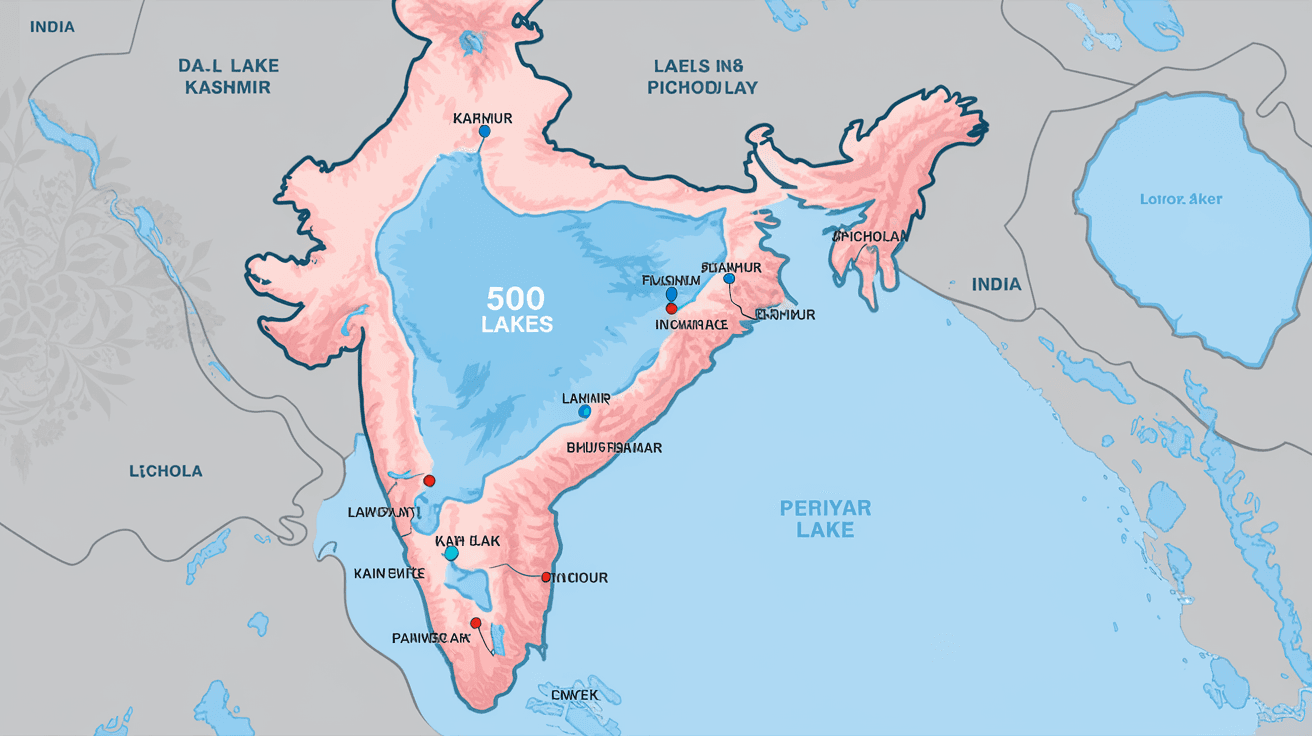
India has approximately 2,500 to 3,000 lakes spread across its vast geography. This number includes natural lakes, man-made reservoirs, and seasonal water bodies. The exact count varies due to factors like seasonal changes, human activities, and differing definitions of what constitutes a lake.
India’s diverse climate and topography contribute to this variety. From the high-altitude lakes in the Himalayas to the coastal lagoons in the south, each lake has its own story.
Some lakes in India are famous for their size, beauty, or cultural significance. Here are a few notable examples:
These lakes highlight the geographical spread and ecological diversity of India’s water bodies.
Lakes play a crucial role in India’s environment and economy. Here’s why their count and classification are important:
Understanding how many lakes exist helps in managing these resources sustainably.
Counting lakes accurately is not straightforward. Several challenges affect the estimation:
Satellite imagery and GIS technology have improved lake mapping, but challenges remain.
Lakes in India are often classified based on their origin and water type. Here’s a simple breakdown:
| Classification | Description | Examples |
| Tectonic Lakes | Formed by earth movements creating depressions | Wular Lake (J&K) |
| Glacial Lakes | Created by melting glaciers | Gurudongmar Lake (Sikkim) |
| Fluvial Lakes | Formed by river activity, like oxbow lakes | Kanwar Lake (Bihar) |
| Coastal Lakes | Located near the sea, often brackish | Pulicat Lake (Tamil Nadu) |
| Artificial Lakes | Man-made reservoirs or tanks | Hussain Sagar (Telangana) |
This classification helps in understanding their formation and ecological characteristics.
Lakes are lifelines for many Indian communities. They provide:
For example, the people around Dal Lake depend on it for fishing and tourism. Similarly, the communities near Chilika Lake rely on it for fishery and salt production.
Due to increasing threats, conservation of lakes has become a priority. Some key efforts include:
For instance, the restoration of Hussain Sagar Lake in Hyderabad involved cleaning and planting aquatic vegetation to improve water quality.
Modern technology plays a big role in understanding lakes better:
These tools provide accurate data, helping policymakers and conservationists make informed decisions.
Apart from permanent lakes, India has many seasonal or temporary lakes. These form during monsoon rains and dry up later. Examples include:
These lakes are important for migratory birds and local ecosystems, even if they don’t exist year-round.
You might wonder how you can contribute to lake conservation. Here are some simple actions:
Every small effort counts in preserving these vital water bodies for future generations.
India’s lakes are numerous and diverse, with estimates ranging from 2,500 to 3,000. They vary from natural to man-made, freshwater to saline, and permanent to seasonal. These lakes are crucial for water supply, biodiversity, culture, and economy.
Counting lakes accurately is challenging due to seasonal changes and human impact. However, advances in technology and conservation efforts are helping protect these valuable resources. By understanding the number and types of lakes in India, you can appreciate their importance and join in efforts to safeguard them.
India has around 2,500 to 3,000 lakes, including natural and man-made ones. The exact number varies due to seasonal changes and different definitions of lakes.
Chilika Lake in Odisha is the largest lake in India. It is Asia’s largest brackish water lagoon, covering about 1,100 square kilometers.
No, India has both freshwater and saltwater lakes. For example, Sambhar Salt Lake is saline, while Dal Lake is freshwater.
Many lakes are seasonal, filling up during monsoon rains and drying out in dry seasons. This is common in arid and semi-arid regions.
Lakes provide water for drinking and irrigation, support fisheries, and hold cultural significance. They also boost tourism and help maintain biodiversity.