

How Many Jets Does India Have
F
Discover verified facts, data, and insights about India’s states, culture, economy, education, and more — all in one place at FactBharat.
Search for a command to run...
Discover verified facts, data, and insights about India’s states, culture, economy, education, and more — all in one place at FactBharat.
No comments yet. Be the first to comment.
Moving to the USA from India is a dream for many. Whether you want to study, work, or live with family, the process can seem complex. But with the right information, you can plan your move confidently. I’ll guide you through the key steps and options...
Opening a college in India is a dream for many educators and entrepreneurs who want to contribute to the country’s education sector. If you are one of those who want to start a college, you need to understand the process clearly. It involves several ...
Opening a hospital in India is a significant and rewarding venture. If you’ve ever wondered how to start one, you’re in the right place. Whether you’re a healthcare professional, entrepreneur, or investor, understanding the process is crucial. You’ll...
Opening a medical store in India can be a rewarding business opportunity. You get to serve your community by providing essential medicines and healthcare products. If you are thinking about starting a medical store, you might wonder where to begin an...
Opening a restaurant in India can be an exciting and rewarding venture. Whether you dream of serving traditional Indian dishes or international cuisine, the process involves careful planning and understanding of local regulations. If you’re ready to ...
FactBharat | Insights About India
2558 posts
Discover verified facts, data, and insights about India’s states, culture, economy, education, and more — all in one place at FactBharat.
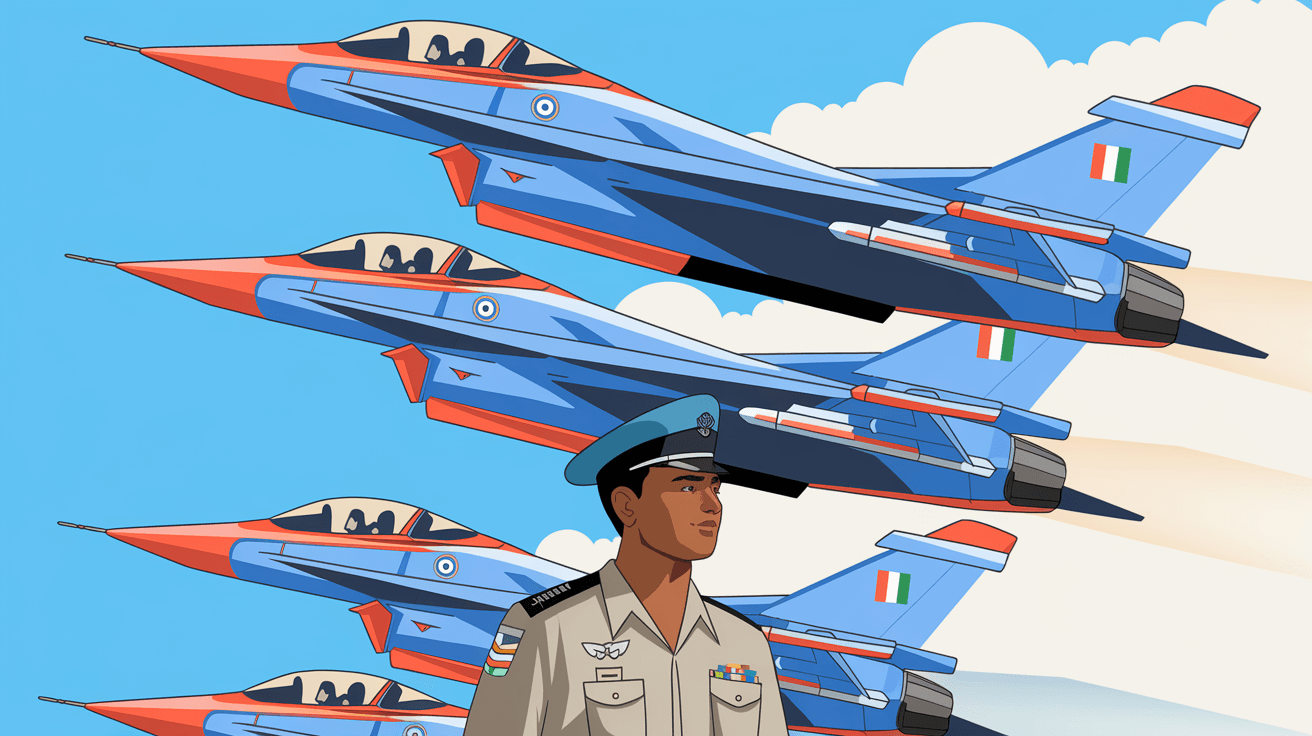
India's air power is a crucial part of its defense strategy. If you've ever wondered, "How many jets does India have?" you're not alone. Understanding the size and strength of India's air fleet helps you appreciate its military capabilities and regional influence.
In this article, I'll walk you through the numbers and types of jets India operates today. We'll explore fighter jets, transport aircraft, and trainers, giving you a clear picture of India's air force strength in 2025.
India's air force, officially called the Indian Air Force (IAF), operates a diverse fleet of jets. These include combat fighters, transport planes, and training aircraft. The IAF is one of the largest air forces in the world, with a focus on modernizing its fleet.
As of 2025, India has approximately 700 to 750 active jets. This number includes:
This mix ensures India can defend its airspace, support ground forces, and train new pilots effectively.
Fighter jets are the backbone of any air force. India has a strong lineup of fighters designed for air superiority, ground attack, and multi-role missions.
India continues to upgrade these fighters with new weapons, radar, and electronic warfare systems.
Transport jets are vital for moving troops, equipment, and humanitarian aid. India’s air force operates a range of transport and special mission aircraft.
These jets ensure India can respond quickly to crises and maintain surveillance over its vast borders.
Training new pilots is critical for maintaining a skilled air force. India uses several types of trainer jets to prepare pilots for advanced fighters.
This structured training pipeline ensures pilots are ready for complex combat missions.
India is actively modernizing its air fleet to keep pace with evolving threats. This includes acquiring new jets and upgrading existing ones.
These efforts aim to keep India’s air force ready for future challenges.
India’s air force ranks among the top globally in terms of jet numbers and capabilities.
| Country | Approximate Number of Jets | Notable Jets |
| India | 700-750 | Su-30MKI, Rafale, Tejas |
| China | 1,200+ | J-20, J-10, J-16 |
| United States | 1,800+ | F-22, F-35, F-15, F-16 |
| Russia | 1,500+ | Su-35, MiG-29, Su-57 |
While India’s fleet is smaller than China or the US, it is highly capable and rapidly modernizing.
Despite its strengths, India faces some challenges with its jets.
India is addressing these issues through new acquisitions and partnerships with global defense firms.
Now you know that India has around 700 to 750 jets in its air force, including fighters, transport, and trainers. The Su-30MKI and Rafale jets form the core of its combat strength, while transport aircraft like the C-17 and Il-76 support logistics and rapid deployment.
India is actively modernizing its fleet with new jets and upgrades, ensuring it remains a powerful air force in the region. While challenges exist, ongoing projects and acquisitions show India’s commitment to maintaining air superiority and readiness for future threats.
India operates about 300 fighter jets, including Su-30MKI, Rafale, MiG-29, Tejas, and Mirage 2000 aircraft.
The Sukhoi Su-30MKI is the most numerous, with around 270 jets in active service.
Yes, India produces the HAL Tejas, an indigenous light combat aircraft, and is developing the Tejas Mk2.
India has roughly 200 transport and special mission jets, including C-17 Globemaster III, Il-76, C-130J, and An-32 aircraft.
Yes, India plans to acquire more Rafale jets, develop the Tejas Mk2, and work on next-generation fighter projects.