

How Many Islands in India
F
Discover verified facts, data, and insights about India’s states, culture, economy, education, and more — all in one place at FactBharat.
Search for a command to run...
Discover verified facts, data, and insights about India’s states, culture, economy, education, and more — all in one place at FactBharat.
No comments yet. Be the first to comment.
Moving to the USA from India is a dream for many. Whether you want to study, work, or live with family, the process can seem complex. But with the right information, you can plan your move confidently. I’ll guide you through the key steps and options...
Opening a college in India is a dream for many educators and entrepreneurs who want to contribute to the country’s education sector. If you are one of those who want to start a college, you need to understand the process clearly. It involves several ...
Opening a hospital in India is a significant and rewarding venture. If you’ve ever wondered how to start one, you’re in the right place. Whether you’re a healthcare professional, entrepreneur, or investor, understanding the process is crucial. You’ll...
Opening a medical store in India can be a rewarding business opportunity. You get to serve your community by providing essential medicines and healthcare products. If you are thinking about starting a medical store, you might wonder where to begin an...
Opening a restaurant in India can be an exciting and rewarding venture. Whether you dream of serving traditional Indian dishes or international cuisine, the process involves careful planning and understanding of local regulations. If you’re ready to ...
FactBharat | Insights About India
2558 posts
Discover verified facts, data, and insights about India’s states, culture, economy, education, and more — all in one place at FactBharat.
India is a vast country with a rich coastline that stretches over 7,500 kilometers. When you think about India’s geography, you might picture its mountains, rivers, and plains. But did you know India also has a significant number of islands? These islands are scattered across the Arabian Sea, the Bay of Bengal, and the Indian Ocean. They are home to unique cultures, diverse ecosystems, and important strategic locations.
If you’ve ever wondered how many islands India has, you’re not alone. The answer is interesting and tells a lot about the country’s natural diversity. In this article, I’ll take you through the total number of islands in India, where they are located, and some fascinating facts about the major island groups. Let’s dive in and explore these hidden gems of India.
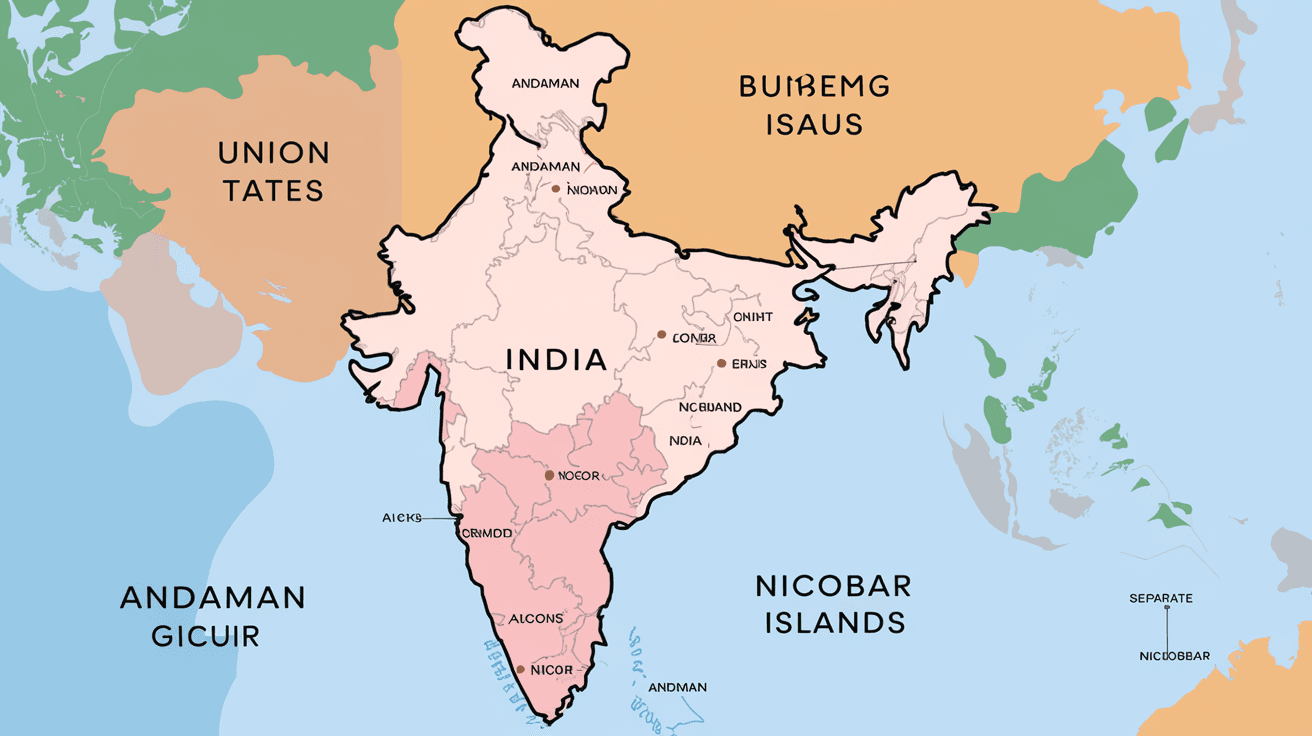
India has a total of 1,382 islands spread across its coastal waters. These islands vary greatly in size, population, and ecological importance. Some are large and inhabited, while others are small and uninhabited. The islands are mainly grouped into two major archipelagos:
Apart from these, there are several smaller islands along the mainland coastlines of India.
These islands play a crucial role in India’s maritime security, biodiversity, and tourism.
The Andaman and Nicobar Islands are the largest group of islands in India. They are located in the Bay of Bengal, closer to Southeast Asia than to mainland India. This group consists of about 572 islands, of which around 38 are inhabited.
These islands attract tourists for their pristine beaches, scuba diving, and historical sites like the Cellular Jail.
Lakshadweep is India’s smallest Union Territory and consists of 36 coral islands. These islands lie in the Arabian Sea, off the southwestern coast of India.
Lakshadweep’s coral reefs are among the most pristine in the world, making it a hotspot for marine biodiversity.
Besides the two major island groups, India has many smaller islands along its mainland coast. These islands are found in the Arabian Sea, the Bay of Bengal, and the Gulf of Kutch.
These islands are important for tourism, culture, and ecology.
India’s islands are not just landmasses surrounded by water. They have multiple roles that benefit the country in various ways.
Despite their importance, India’s islands face several challenges that need attention.
India is working on sustainable development plans to address these issues and preserve its island heritage.
If you want to explore India’s islands, here are some tips to help you plan your trip.
Visiting these islands offers a unique experience of nature and culture.
Now you know that India has a total of 1,382 islands, spread mainly across the Andaman and Nicobar Islands, Lakshadweep, and the mainland coast. These islands are rich in natural beauty, biodiversity, and cultural heritage. They play a vital role in India’s ecology, economy, and security.
Whether you want to explore the coral reefs of Lakshadweep or the tropical forests of Andaman, India’s islands offer something special for every traveler. Protecting these islands is essential for future generations to enjoy their unique charm. So next time you think about India’s geography, remember the many islands that make the country’s coastline truly remarkable.
India has a total of 1,382 islands, including the Andaman and Nicobar Islands, Lakshadweep, and smaller islands along the mainland coast.
The Andaman and Nicobar Islands are the largest group, with about 572 islands in the Bay of Bengal.
No, many islands are uninhabited. For example, only around 38 islands in the Andaman and Nicobar group are inhabited.
They are important for biodiversity, maritime security, tourism, and local economies.
No, some islands require special permits, especially those inhabited by indigenous tribes or protected areas.