

How Many IIT Seats Are There in India
F
Discover verified facts, data, and insights about India’s states, culture, economy, education, and more — all in one place at FactBharat.
Search for a command to run...
Discover verified facts, data, and insights about India’s states, culture, economy, education, and more — all in one place at FactBharat.
No comments yet. Be the first to comment.
Moving to the USA from India is a dream for many. Whether you want to study, work, or live with family, the process can seem complex. But with the right information, you can plan your move confidently. I’ll guide you through the key steps and options...
Opening a college in India is a dream for many educators and entrepreneurs who want to contribute to the country’s education sector. If you are one of those who want to start a college, you need to understand the process clearly. It involves several ...
Opening a hospital in India is a significant and rewarding venture. If you’ve ever wondered how to start one, you’re in the right place. Whether you’re a healthcare professional, entrepreneur, or investor, understanding the process is crucial. You’ll...
Opening a medical store in India can be a rewarding business opportunity. You get to serve your community by providing essential medicines and healthcare products. If you are thinking about starting a medical store, you might wonder where to begin an...
Opening a restaurant in India can be an exciting and rewarding venture. Whether you dream of serving traditional Indian dishes or international cuisine, the process involves careful planning and understanding of local regulations. If you’re ready to ...
FactBharat | Insights About India
2558 posts
Discover verified facts, data, and insights about India’s states, culture, economy, education, and more — all in one place at FactBharat.
India’s Indian Institutes of Technology (IITs) are among the most prestigious engineering institutions in the world. Every year, thousands of students aspire to secure a seat in these institutes. If you’re wondering how many IIT seats are available in India, you’re not alone. Understanding the total number of seats, their distribution, and admission criteria can help you plan your preparation better.
In this article, I’ll walk you through the current seat matrix across all IITs, explain how seats are allocated, and share insights on category-wise distribution. Whether you’re a student preparing for JEE Advanced or a parent seeking clarity, this guide will give you a clear picture of IIT seat availability in India.
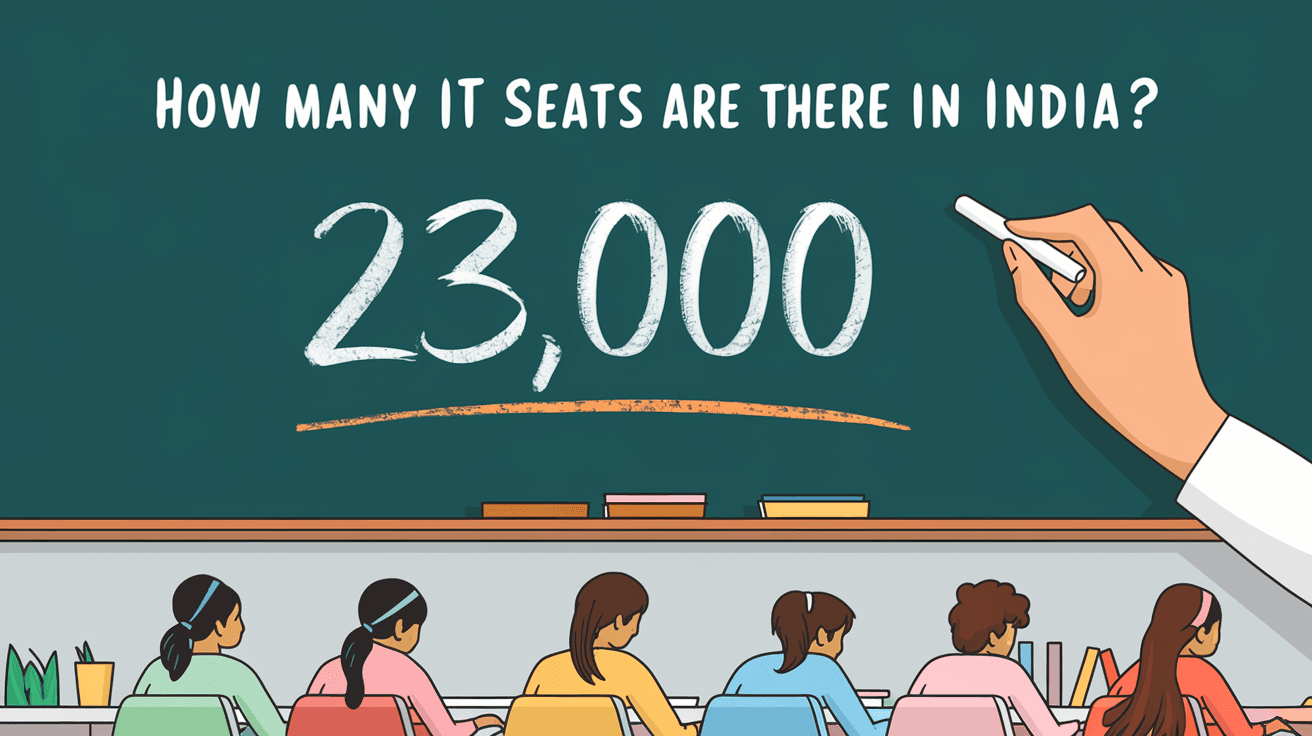
India currently has 23 IITs spread across the country. These institutes offer undergraduate programs primarily through the Joint Entrance Examination (JEE) Advanced. The total number of seats in all IITs combined has been increasing steadily to meet the growing demand for quality technical education.
This means that every year, around 16,000 students get the opportunity to join an IIT for their B.Tech or related undergraduate courses. The exact number can vary slightly due to new programs or seat adjustments.
The 23 IITs are not equal in size or seat capacity. Older IITs like IIT Bombay, IIT Delhi, and IIT Kanpur have larger seat capacities compared to newer ones such as IIT Bhilai or IIT Jammu.
Here’s a rough breakdown of seat distribution:
| IIT Name | Approximate Seats |
| IIT Bombay | 1,100 |
| IIT Delhi | 1,000 |
| IIT Kanpur | 1,000 |
| IIT Kharagpur | 1,200 |
| IIT Madras | 1,100 |
| IIT Roorkee | 1,000 |
| New IITs (each) | 300-600 |
Older IITs generally offer more seats due to their established infrastructure and wider range of courses. Newer IITs are gradually increasing their seat count as they develop.
India follows a reservation system in IIT admissions to ensure representation from various social groups. The seat allocation is divided among different categories as per government norms.
For example, if an IIT has 1,000 seats, roughly 500 will be for the general category, 270 for OBC, 150 for SC, 75 for ST, and 100 for EWS candidates.
Apart from the main reservation categories, IITs also have some supernumerary seats. These are additional seats over and above the sanctioned intake.
These special seats ensure inclusivity and diversity in the IIT student community.
To get an IIT seat, students must clear two stages:
The Joint Seat Allocation Authority (JoSAA) conducts the counseling and seat allocation process. Based on JEE Advanced rank and category, students choose their preferred IIT and branch.
This transparent process ensures merit-based admission while respecting reservation policies.
Several factors influence the number of seats available each year:
For example, the government’s push to expand technical education has led to the creation of new IITs and more seats in existing ones.
Knowing the total number of IIT seats and their distribution helps you set realistic goals.
Use official JoSAA seat matrices and previous years’ cutoff data to strategize your preparation and choices.
The Indian government and IIT Council continue to focus on expanding access to quality technical education.
These trends suggest that while competition remains high, opportunities to join IITs will grow steadily.
Understanding how many IIT seats are available in India is crucial for anyone aiming to join these elite institutes. Currently, there are about 16,000 undergraduate seats spread across 23 IITs. These seats are distributed based on institute size, category reservations, and special quotas.
By knowing the seat matrix and admission process, you can better plan your preparation and choices. Keep an eye on government policies and seat trends to stay updated. Remember, securing an IIT seat is challenging but with the right strategy and hard work, it’s achievable.
There are 23 Indian Institutes of Technology (IITs) across India offering undergraduate and postgraduate courses.
Approximately 16,000 undergraduate seats are available across all IITs combined.
Seats are reserved as 50% general, 27% OBC-NCL, 15% SC, 7.5% ST, and 10% EWS, along with horizontal reservations for PwD.
Yes, IITs have supernumerary seats reserved for foreign nationals and NRIs.
The Joint Seat Allocation Authority (JoSAA) publishes the official seat matrix and cutoff details on its website before counseling begins.