

How Many Himalayan States in India
F
Discover verified facts, data, and insights about India’s states, culture, economy, education, and more — all in one place at FactBharat.
Search for a command to run...
Discover verified facts, data, and insights about India’s states, culture, economy, education, and more — all in one place at FactBharat.
No comments yet. Be the first to comment.
Moving to the USA from India is a dream for many. Whether you want to study, work, or live with family, the process can seem complex. But with the right information, you can plan your move confidently. I’ll guide you through the key steps and options...
Opening a college in India is a dream for many educators and entrepreneurs who want to contribute to the country’s education sector. If you are one of those who want to start a college, you need to understand the process clearly. It involves several ...
Opening a hospital in India is a significant and rewarding venture. If you’ve ever wondered how to start one, you’re in the right place. Whether you’re a healthcare professional, entrepreneur, or investor, understanding the process is crucial. You’ll...
Opening a medical store in India can be a rewarding business opportunity. You get to serve your community by providing essential medicines and healthcare products. If you are thinking about starting a medical store, you might wonder where to begin an...
Opening a restaurant in India can be an exciting and rewarding venture. Whether you dream of serving traditional Indian dishes or international cuisine, the process involves careful planning and understanding of local regulations. If you’re ready to ...
FactBharat | Insights About India
2558 posts
Discover verified facts, data, and insights about India’s states, culture, economy, education, and more — all in one place at FactBharat.
If you’ve ever wondered how many Himalayan states are in India, you’re not alone. The Himalayas stretch across northern India, creating some of the most breathtaking landscapes and unique cultures in the country. These states are home to towering mountains, rich biodiversity, and vibrant traditions.
In this article, I’ll guide you through the Himalayan states of India, explaining what makes each one special. You’ll also learn about their geography, culture, and why they matter so much to India’s identity and environment.
Before we count the states, it’s important to understand what makes a state “Himalayan.” The Himalayas are a vast mountain range that spans several countries, but in India, they cover a specific region in the north.
A Himalayan state in India is generally one that lies within or is significantly influenced by the Himalayan mountain range. These states have mountainous terrain, cooler climates, and unique ecosystems compared to the rest of India.
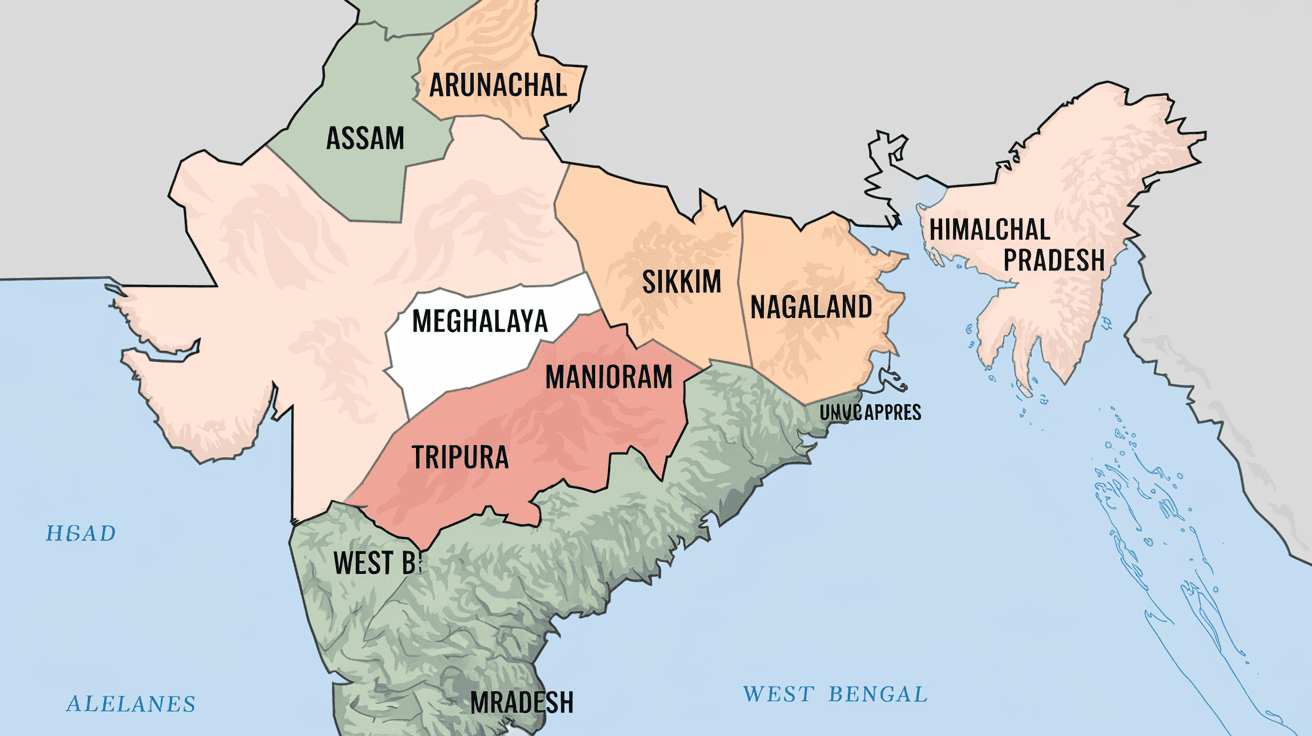
India officially has 12 Himalayan states. These states are spread across the western, central, and eastern Himalayas. Each state has its own unique geography and culture shaped by the mountains.
Here’s the list of the 12 Himalayan states:
The northern Himalayan states are often what people picture when they think of the Himalayas. These include Jammu and Kashmir, Himachal Pradesh, and Uttarakhand.
The eastern Himalayan states include Sikkim, Arunachal Pradesh, Nagaland, Manipur, Mizoram, Tripura, Meghalaya, Assam, and West Bengal. These states are known for their rich biodiversity and tribal cultures.
The Himalayan states are crucial for India in many ways:
Living in the Himalayas comes with challenges that affect these states:
If you want to experience the Himalayan states, here are some tips:
Now you know that India has 12 Himalayan states, each with its own charm and significance. From the snowy peaks of Jammu and Kashmir to the lush forests of Arunachal Pradesh, these states offer a rich blend of nature, culture, and adventure.
Understanding the Himalayan states helps you appreciate their role in India’s geography and heritage. Whether you’re planning a trip or just curious, these states are truly special parts of India’s diverse landscape.
India has 12 Himalayan states, including Jammu and Kashmir, Himachal Pradesh, Uttarakhand, Sikkim, and several northeastern states.
Kangchenjunga, located in Sikkim, is the highest peak in the Indian Himalayas and the third highest in the world.
Not all northeastern states are fully Himalayan, but many like Arunachal Pradesh and Nagaland have significant Himalayan terrain.
They are the source of major rivers, protect unique wildlife, and help regulate climate and water resources.
Some Himalayan states are well-connected and popular with tourists, while others, especially in the northeast, require more planning due to remote locations.