

How Many Gulfs Are in India
F
Discover verified facts, data, and insights about India’s states, culture, economy, education, and more — all in one place at FactBharat.
Search for a command to run...
Discover verified facts, data, and insights about India’s states, culture, economy, education, and more — all in one place at FactBharat.
No comments yet. Be the first to comment.
Moving to the USA from India is a dream for many. Whether you want to study, work, or live with family, the process can seem complex. But with the right information, you can plan your move confidently. I’ll guide you through the key steps and options...
Opening a college in India is a dream for many educators and entrepreneurs who want to contribute to the country’s education sector. If you are one of those who want to start a college, you need to understand the process clearly. It involves several ...
Opening a hospital in India is a significant and rewarding venture. If you’ve ever wondered how to start one, you’re in the right place. Whether you’re a healthcare professional, entrepreneur, or investor, understanding the process is crucial. You’ll...
Opening a medical store in India can be a rewarding business opportunity. You get to serve your community by providing essential medicines and healthcare products. If you are thinking about starting a medical store, you might wonder where to begin an...
Opening a restaurant in India can be an exciting and rewarding venture. Whether you dream of serving traditional Indian dishes or international cuisine, the process involves careful planning and understanding of local regulations. If you’re ready to ...
FactBharat | Insights About India
2558 posts
Discover verified facts, data, and insights about India’s states, culture, economy, education, and more — all in one place at FactBharat.
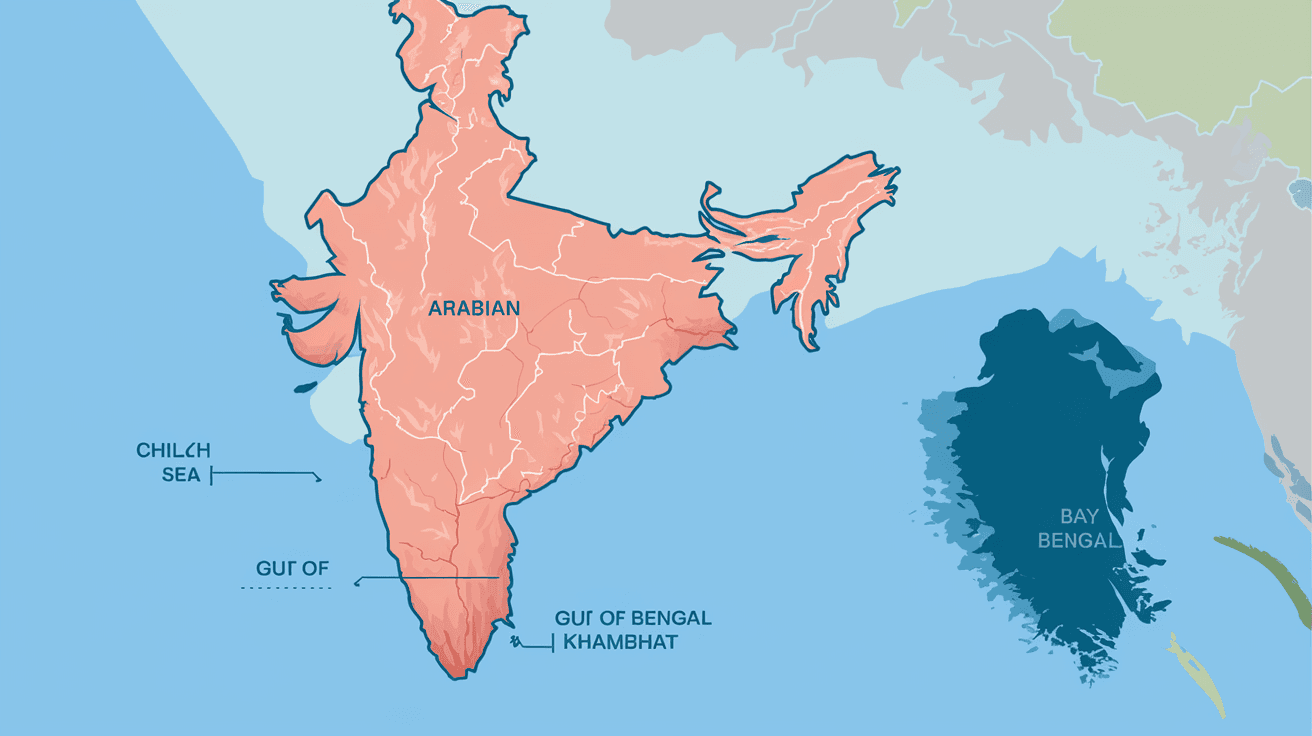
India's coastline stretches over 7,500 kilometers, touching both the Arabian Sea and the Bay of Bengal. Along this vast shoreline, you might wonder how many gulfs India has and where they are located. If you’re curious about the natural coastal features that shape India's geography, this article will guide you through the key gulfs found in India.
We will explore the number of gulfs, their geographical importance, and how they influence trade, climate, and marine life. By the end, you’ll have a clear understanding of India's gulfs and their role in the country’s coastal ecosystem.
Before diving into the specifics, it helps to understand what a gulf is. A gulf is a large inlet from the ocean into the landmass, typically larger and more enclosed than a bay. Gulfs often have narrower openings to the sea and are surrounded by land on most sides.
Knowing this, let’s look at how many gulfs India has and where they are.
India has two major gulfs along its coastline:
These two gulfs are located on the western coast of India, along the Arabian Sea. Both are significant for their unique geography and economic importance.
The Gulf of Kutch lies in the state of Gujarat, in the northwest part of India. It is known for its rich marine biodiversity and is one of the largest tidal areas in India.
The Gulf of Kutch also has strategic importance due to the presence of the Kandla Port, one of India’s major ports handling cargo and trade.
South of the Gulf of Kutch, the Gulf of Khambhat is another large gulf in Gujarat. It is narrower and deeper compared to the Gulf of Kutch.
The Gulf of Khambhat is also important for its fishing industry and salt pans.
While the Gulf of Kutch and the Gulf of Khambhat are the two major recognized gulfs, some smaller coastal indentations are sometimes referred to as gulfs or bays, but they do not have the same scale or recognition.
So, officially, India has two major gulfs.
India’s gulfs play a vital role in the country’s economy, environment, and culture.
Gulfs influence local climate and weather patterns along the coast.
Understanding these effects helps in planning coastal development and disaster management.
Despite their importance, India’s gulfs face several challenges:
Efforts are underway to protect and manage these areas sustainably.
If you want to experience India’s gulfs firsthand, here are some ways:
These experiences offer a glimpse into the natural beauty and cultural richness of India’s gulfs.
| Gulf Name | Location | Length (approx.) | Key Features | Economic Importance |
| Gulf of Kutch | Gujarat (NW) | 180 km | Coral reefs, Marine National Park | Kandla Port, fishing, salt |
| Gulf of Khambhat | Gujarat (SW) | 200 km | Funnel shape, strong tides | Dahej Port, oil & gas, fishing |
Now you know that India has two major gulfs: the Gulf of Kutch and the Gulf of Khambhat. Both are located on the western coast in Gujarat and play crucial roles in India’s economy, environment, and culture. These gulfs support important ports, rich marine biodiversity, and coastal communities.
Understanding these gulfs helps you appreciate India’s diverse coastal geography and the challenges it faces. Whether you’re interested in geography, marine life, or trade, India’s gulfs offer fascinating insights into the country’s connection with the sea.
India has two major gulfs: the Gulf of Kutch and the Gulf of Khambhat, both located along the western coast in Gujarat.
The Gulf of Kutch is in the northwest part of Gujarat, along the Arabian Sea, known for its coral reefs and marine biodiversity.
The Gulf of Khambhat supports ports like Dahej, has oil and gas reserves, and sustains a large fishing industry.
No, the Bay of Bengal and Arabian Sea are large bodies of water but are not classified as gulfs.
Pollution, coastal erosion, overfishing, and climate change are major challenges affecting India’s gulfs and their ecosystems.