

How Many Earthquake Zones Are There in India?
F
Discover verified facts, data, and insights about India’s states, culture, economy, education, and more — all in one place at FactBharat.
Search for a command to run...
Discover verified facts, data, and insights about India’s states, culture, economy, education, and more — all in one place at FactBharat.
No comments yet. Be the first to comment.
Moving to the USA from India is a dream for many. Whether you want to study, work, or live with family, the process can seem complex. But with the right information, you can plan your move confidently. I’ll guide you through the key steps and options...
Opening a college in India is a dream for many educators and entrepreneurs who want to contribute to the country’s education sector. If you are one of those who want to start a college, you need to understand the process clearly. It involves several ...
Opening a hospital in India is a significant and rewarding venture. If you’ve ever wondered how to start one, you’re in the right place. Whether you’re a healthcare professional, entrepreneur, or investor, understanding the process is crucial. You’ll...
Opening a medical store in India can be a rewarding business opportunity. You get to serve your community by providing essential medicines and healthcare products. If you are thinking about starting a medical store, you might wonder where to begin an...
Opening a restaurant in India can be an exciting and rewarding venture. Whether you dream of serving traditional Indian dishes or international cuisine, the process involves careful planning and understanding of local regulations. If you’re ready to ...
FactBharat | Insights About India
2558 posts
Discover verified facts, data, and insights about India’s states, culture, economy, education, and more — all in one place at FactBharat.
India is a vast country with diverse geography, and understanding its earthquake zones is crucial for safety and planning. If you live in or are visiting India, knowing how many earthquake zones exist and where they are located can help you stay prepared. In this article, I’ll walk you through the different earthquake zones in India, what they mean, and why they matter.
We’ll explore the classification system used by experts, the regions that fall under each zone, and how this information helps in building safer structures. By the end, you’ll have a clear picture of India’s earthquake risk areas and what you can do to stay safe.
Earthquake zones are regions classified based on the likelihood and intensity of earthquakes occurring there. These zones help governments, engineers, and residents understand the seismic risk in their area. In India, the seismic zoning map divides the country into different zones based on historical earthquake data and geological studies.
The zones indicate how strong an earthquake could be and how often it might happen. This classification guides building codes, disaster management plans, and public awareness campaigns. Knowing your zone can help you prepare better for any seismic event.
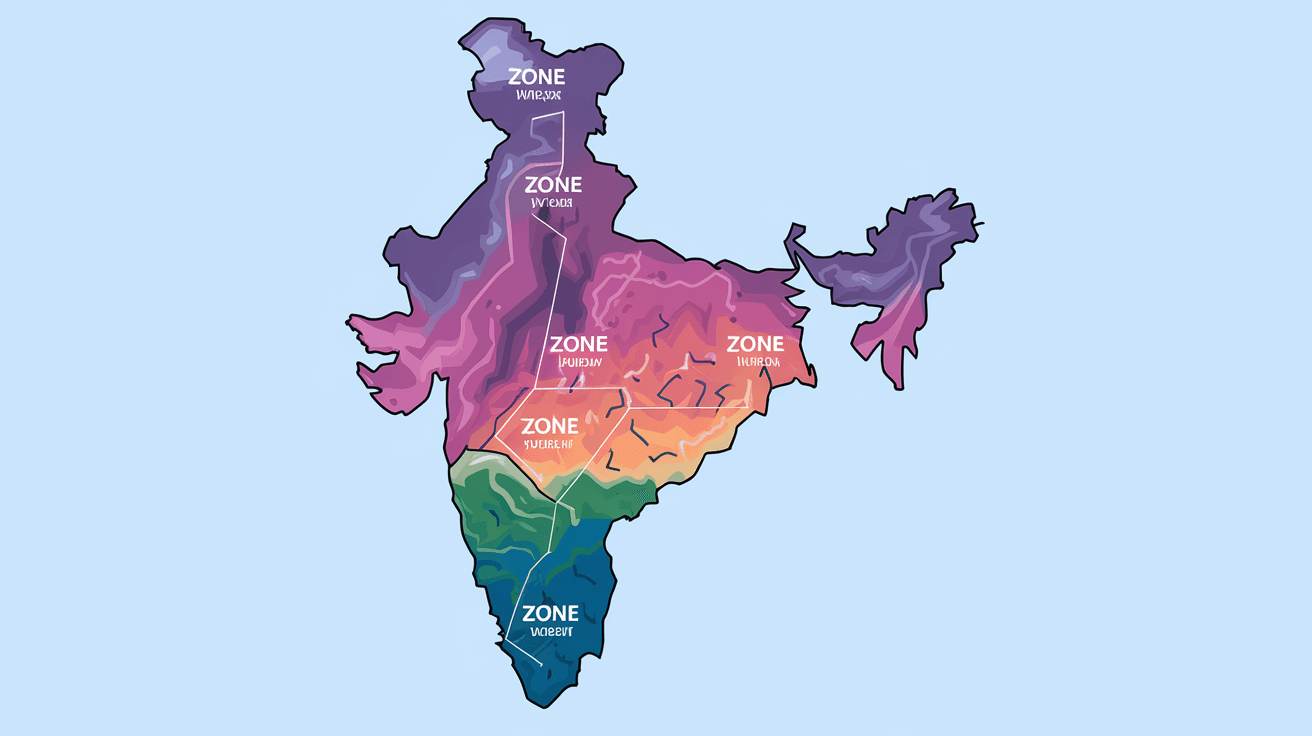
India is divided into four main earthquake zones, each representing a different level of seismic risk. These zones are:
This zoning system is based on the Bureau of Indian Standards (BIS) seismic zoning map, which is widely used for construction and safety regulations.
Zone II covers areas where earthquakes are rare and usually weak. These regions have a low chance of experiencing damaging earthquakes. Examples include parts of the Deccan Plateau and some coastal areas.
Zone III includes areas with a moderate chance of earthquakes. These regions may experience earthquakes that can cause some damage but are not usually catastrophic.
Zone IV is considered a high-risk area for earthquakes. These regions have experienced significant earthquakes in the past and are prone to strong tremors.
Zone V represents the highest risk for earthquakes in India. These areas are located near active fault lines and have a history of severe earthquakes.
India’s location on the Indian tectonic plate makes it vulnerable to earthquakes. The plate is moving northward and colliding with the Eurasian plate, causing the uplift of the Himalayas and frequent seismic activity.
Other factors contributing to earthquakes in India include:
Understanding these causes helps explain why certain zones are more vulnerable.
Earthquake zones are not just academic concepts; they have practical uses in India’s safety and development planning.
The Bureau of Indian Standards (BIS) has developed seismic codes that specify how buildings should be constructed in each zone. For example:
Government agencies use earthquake zones to plan emergency responses. This includes:
Cities in high-risk zones consider seismic risk when planning infrastructure like bridges, roads, and hospitals. This ensures critical facilities remain operational after an earthquake.
Here’s a quick overview of major regions and their earthquake zones:
| Region | Earthquake Zone | Notes |
| Himalayan Region | Zone V | Highest risk, frequent strong quakes |
| Northeast States | Zone V | Active seismic zone |
| Jammu & Kashmir | Zone IV | High seismic activity |
| Himachal Pradesh | Zone IV | High seismic activity |
| Uttarakhand | Zone IV | High seismic activity |
| Gujarat | Zone III & IV | Moderate to high risk |
| Indo-Gangetic Plains | Zone III | Moderate risk |
| Central India | Zone II | Low risk |
| Deccan Plateau | Zone II | Low risk |
| Coastal Tamil Nadu | Zone II | Low risk |
This table helps you quickly identify the seismic risk in different parts of India.
Living or traveling in earthquake-prone zones means you should be prepared. Here are some practical tips:
Being proactive can reduce risks and help you respond calmly during an earthquake.
India has improved its earthquake monitoring systems in recent years. The Indian Meteorological Department (IMD) and other agencies operate a network of seismic stations across the country.
These advances make India better equipped to handle seismic events.
India has four main earthquake zones, ranging from low to very high risk. These zones help us understand where earthquakes are more likely and how strong they might be. Knowing your zone is important for safety, construction, and disaster planning.
The Himalayan region and Northeast India are the most vulnerable, while central and southern parts of India face lower risks. By following building codes, preparing emergency kits, and staying informed, you can protect yourself and your family. Earthquake zones are a vital tool for making India safer and more resilient.
India is divided into four earthquake zones: Zone II (low risk), Zone III (moderate risk), Zone IV (high risk), and Zone V (very high risk).
The Himalayan region and Northeast India fall under Zone V, the very high-risk earthquake zone.
Earthquake zones guide building codes, disaster preparedness, and urban planning to reduce damage and save lives during earthquakes.
You can check the seismic zoning map published by the Bureau of Indian Standards or consult local government resources.
Southern India mostly falls in Zone II, indicating a low risk of earthquakes, though minor tremors can still occur occasionally.