

How Many Divisions Are There in India?
F
Discover verified facts, data, and insights about India’s states, culture, economy, education, and more — all in one place at FactBharat.
Search for a command to run...
Discover verified facts, data, and insights about India’s states, culture, economy, education, and more — all in one place at FactBharat.
No comments yet. Be the first to comment.
Moving to the USA from India is a dream for many. Whether you want to study, work, or live with family, the process can seem complex. But with the right information, you can plan your move confidently. I’ll guide you through the key steps and options...
Opening a college in India is a dream for many educators and entrepreneurs who want to contribute to the country’s education sector. If you are one of those who want to start a college, you need to understand the process clearly. It involves several ...
Opening a hospital in India is a significant and rewarding venture. If you’ve ever wondered how to start one, you’re in the right place. Whether you’re a healthcare professional, entrepreneur, or investor, understanding the process is crucial. You’ll...
Opening a medical store in India can be a rewarding business opportunity. You get to serve your community by providing essential medicines and healthcare products. If you are thinking about starting a medical store, you might wonder where to begin an...
Opening a restaurant in India can be an exciting and rewarding venture. Whether you dream of serving traditional Indian dishes or international cuisine, the process involves careful planning and understanding of local regulations. If you’re ready to ...
FactBharat | Insights About India
2558 posts
Discover verified facts, data, and insights about India’s states, culture, economy, education, and more — all in one place at FactBharat.
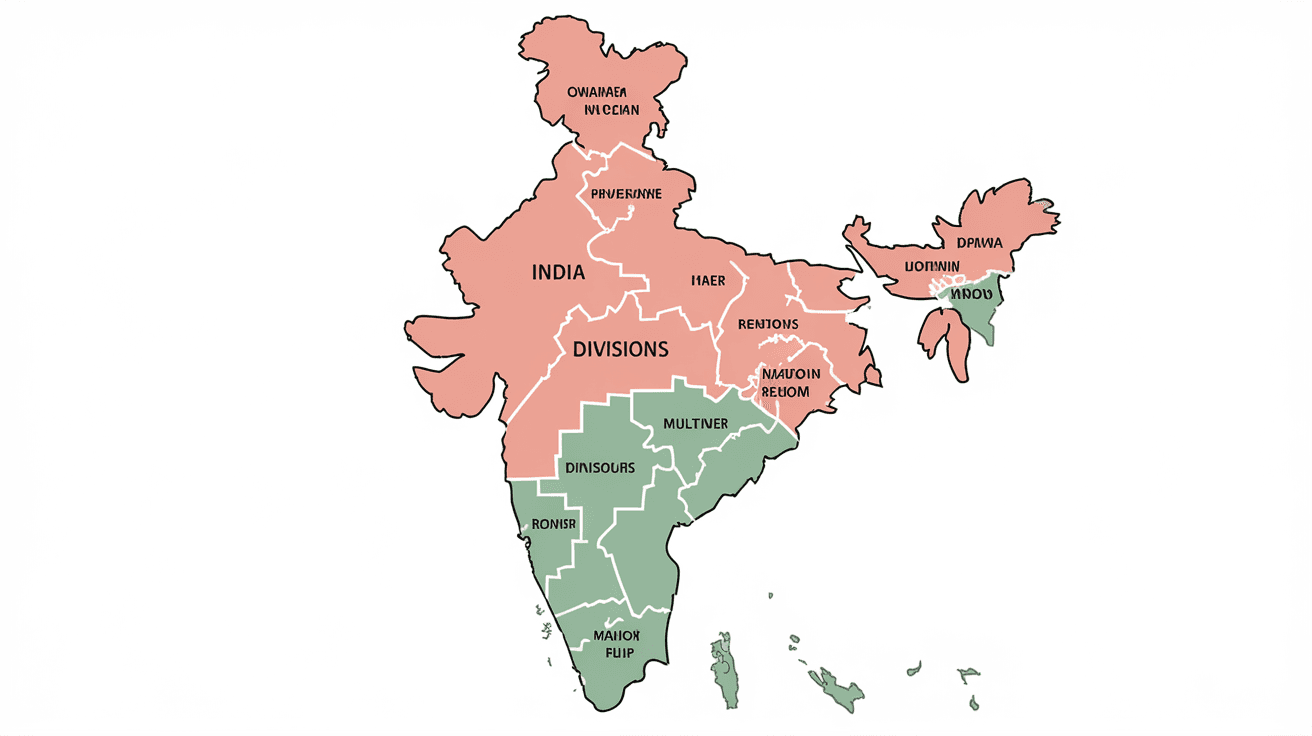
India is a vast and diverse country with a complex administrative structure. If you’ve ever wondered how India manages such a large population and area, understanding its divisions is key. You might be curious about how many divisions India has and what role they play in the country’s governance.
In this article, I’ll walk you through the different types of divisions in India, focusing on administrative divisions. You’ll learn about states, union territories, divisions within states, and other important subdivisions. Let’s explore how India is organized to keep everything running smoothly.
India’s administrative divisions are the layers of government that help manage the country efficiently. These divisions break down the large country into smaller, manageable parts. This system helps in governance, law enforcement, development, and public administration.
The main levels of administrative divisions in India are:
Each level has its own responsibilities and officials. The division level, which is the focus here, is an important middle layer between states and districts.
India is divided into 28 states and 8 union territories. These are the highest administrative units in the country.
This division into states and union territories helps manage the country’s diversity in language, culture, and geography.
Within many Indian states, there is a further administrative unit called a "division." A division is a group of districts combined for administrative convenience. It acts as an intermediate level between the state government and the district administration.
India has approximately 100 divisions spread across various states. The exact number can vary as states reorganize their administrative units.
Here are some examples of divisions in major states:
| State | Number of Divisions | Example Divisions |
| Uttar Pradesh | 18 | Lucknow, Kanpur, Varanasi |
| Maharashtra | 6 | Pune, Nagpur, Aurangabad |
| Madhya Pradesh | 10 | Bhopal, Indore, Jabalpur |
| Rajasthan | 7 | Jaipur, Udaipur, Jodhpur |
| Bihar | 9 | Patna, Muzaffarpur, Darbhanga |
These divisions help state governments manage large numbers of districts effectively.
The use of divisions depends on the size and administrative needs of the state.
Divisional Commissioners play a crucial role in the administration of divisions. Their responsibilities include:
They act as a bridge between the state government and district officials, ensuring smooth governance.
It’s important to understand the difference between divisions and districts:
Districts are where most government services reach the public directly. Divisions help coordinate and supervise these districts.
India has over 750 districts. Each district is further divided into smaller units like tehsils or talukas.
The number of districts is increasing as states create new districts for better governance. For example:
Besides administrative divisions, India has other types of divisions based on different contexts:
Each type of division serves a specific purpose in governance.
| Level | Description | Number (Approximate) |
| States | Highest administrative units | 28 |
| Union Territories | Central government-controlled units | 8 |
| Divisions | Groups of districts within states | ~100 |
| Districts | Basic administrative units | 750+ |
| Sub-districts | Tehsils or talukas within districts | Varies |
India’s divisions allow the government to:
Without these divisions, managing such a large and diverse country would be much harder.
Now you know that India has 28 states and 8 union territories, and within many states, there are about 100 divisions. These divisions group districts to help the government manage administration better. Divisional Commissioners play a key role in overseeing these areas.
Understanding India’s divisions gives you insight into how the country handles governance across its vast landscape. Whether you’re interested in geography, politics, or administration, knowing about these divisions helps you appreciate the complexity and efficiency of India’s system.
India has around 100 administrative divisions spread across various states. These divisions group districts for better governance.
No, only larger states with many districts have divisions. Smaller states often manage districts directly without divisions.
A Divisional Commissioner supervises districts within a division, coordinating law and order, revenue, and development activities.
There are over 750 districts in India, with new districts created periodically to improve administration.
A division is a group of districts, while a district is the basic administrative unit where government services are delivered.