

How Many Deserts Are There in India
F
Discover verified facts, data, and insights about India’s states, culture, economy, education, and more — all in one place at FactBharat.
Search for a command to run...
Discover verified facts, data, and insights about India’s states, culture, economy, education, and more — all in one place at FactBharat.
No comments yet. Be the first to comment.
Moving to the USA from India is a dream for many. Whether you want to study, work, or live with family, the process can seem complex. But with the right information, you can plan your move confidently. I’ll guide you through the key steps and options...
Opening a college in India is a dream for many educators and entrepreneurs who want to contribute to the country’s education sector. If you are one of those who want to start a college, you need to understand the process clearly. It involves several ...
Opening a hospital in India is a significant and rewarding venture. If you’ve ever wondered how to start one, you’re in the right place. Whether you’re a healthcare professional, entrepreneur, or investor, understanding the process is crucial. You’ll...
Opening a medical store in India can be a rewarding business opportunity. You get to serve your community by providing essential medicines and healthcare products. If you are thinking about starting a medical store, you might wonder where to begin an...
Opening a restaurant in India can be an exciting and rewarding venture. Whether you dream of serving traditional Indian dishes or international cuisine, the process involves careful planning and understanding of local regulations. If you’re ready to ...
FactBharat | Insights About India
2558 posts
Discover verified facts, data, and insights about India’s states, culture, economy, education, and more — all in one place at FactBharat.
India is a land of diverse landscapes, from lush forests to towering mountains. But have you ever wondered how many deserts are there in India? Deserts might not be the first thing that comes to mind when you think of India, but they play a significant role in the country's geography and culture.
In this article, I will take you through the deserts found in India, explaining their locations, characteristics, and why they matter. Whether you are curious about the vast sandy stretches or the unique wildlife that thrives there, this guide will give you a clear picture of India's desert regions.
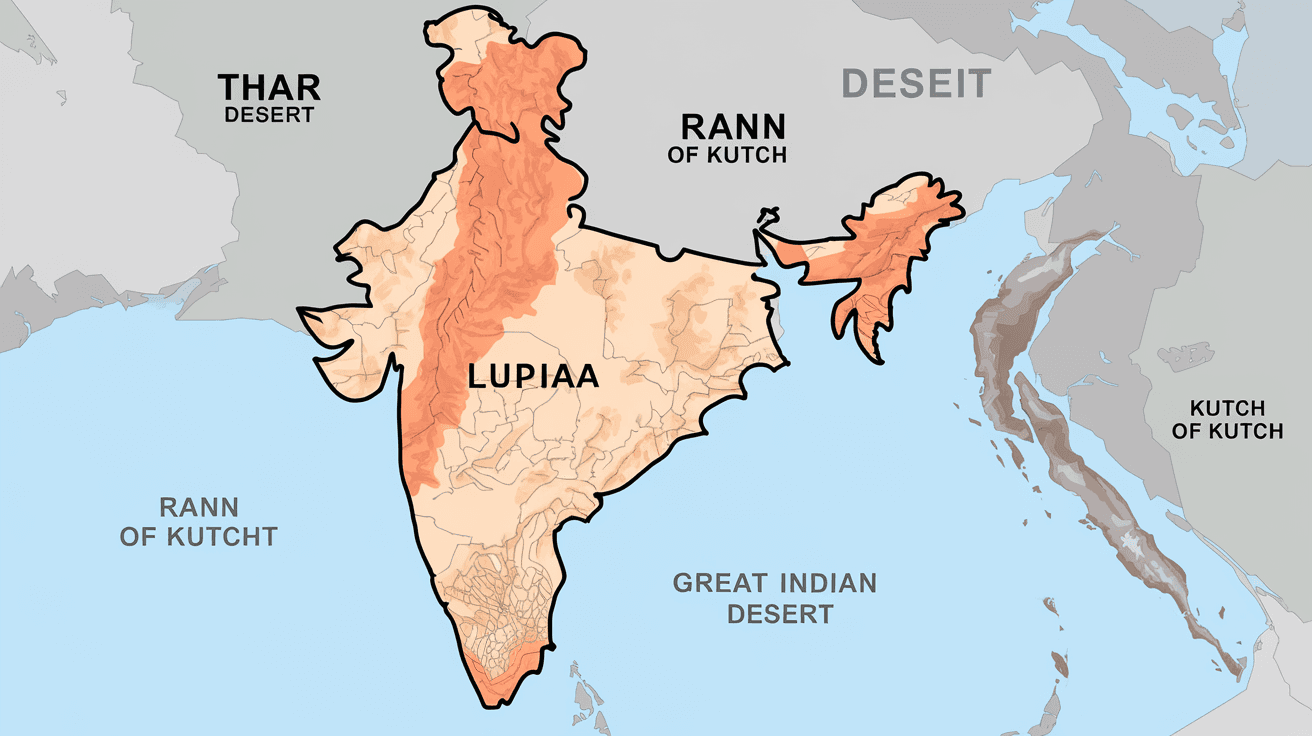
India has two main deserts: the Thar Desert and the Cold Desert in the Himalayas. These deserts are very different from each other in terms of climate, terrain, and ecology.
Let’s explore each desert in detail to understand their unique features.
The Thar Desert is the most famous and extensive desert in India. It covers about 200,000 square kilometers, spreading across the states of Rajasthan, Gujarat, Punjab, and Haryana.
Unlike the hot Thar Desert, the Cold Desert is found in the high-altitude regions of the Himalayas, mainly in Ladakh and parts of Himachal Pradesh.
While the Thar and Cold Deserts are the main deserts, India also has some semi-arid and desert-like regions worth mentioning.
Deserts in India are not just barren lands; they have ecological, cultural, and economic importance.
Despite their importance, Indian deserts face several challenges that threaten their ecosystems and communities.
India has taken steps to protect its desert environments and promote sustainable development.
If you plan to explore India’s deserts, here are some tips and highlights.
So, how many deserts are there in India? The answer is mainly two: the vast, hot Thar Desert and the unique, cold Himalayan desert regions. Both deserts offer fascinating landscapes, rich cultures, and diverse wildlife. Beyond these, areas like the Rann of Kutch add to India’s desert diversity.
Understanding these deserts helps us appreciate their role in India’s environment and heritage. Whether you want to explore the golden sands of Rajasthan or the stark beauty of Ladakh’s cold desert, India’s deserts have something special to offer. By learning about their challenges and conservation, we can help protect these remarkable places for future generations.
India has two main deserts: the Thar Desert and the Cold Desert in the Himalayas. There are also desert-like areas such as the Rann of Kutch.
The Thar Desert is mainly in Rajasthan but also extends into Gujarat, Punjab, and Haryana.
The Cold Desert is located in high-altitude Himalayan regions with freezing temperatures, unlike the hot and arid Thar Desert.
Yes, Desert National Park in Rajasthan and Hemis National Park in Ladakh protect desert ecosystems and wildlife.
Absolutely! Tourists can enjoy camel safaris, cultural festivals, trekking, and wildlife spotting in India’s deserts.