

How Many Deltas Are There in India
F
Discover verified facts, data, and insights about India’s states, culture, economy, education, and more — all in one place at FactBharat.
Search for a command to run...
Discover verified facts, data, and insights about India’s states, culture, economy, education, and more — all in one place at FactBharat.
No comments yet. Be the first to comment.
Moving to the USA from India is a dream for many. Whether you want to study, work, or live with family, the process can seem complex. But with the right information, you can plan your move confidently. I’ll guide you through the key steps and options...
Opening a college in India is a dream for many educators and entrepreneurs who want to contribute to the country’s education sector. If you are one of those who want to start a college, you need to understand the process clearly. It involves several ...
Opening a hospital in India is a significant and rewarding venture. If you’ve ever wondered how to start one, you’re in the right place. Whether you’re a healthcare professional, entrepreneur, or investor, understanding the process is crucial. You’ll...
Opening a medical store in India can be a rewarding business opportunity. You get to serve your community by providing essential medicines and healthcare products. If you are thinking about starting a medical store, you might wonder where to begin an...
Opening a restaurant in India can be an exciting and rewarding venture. Whether you dream of serving traditional Indian dishes or international cuisine, the process involves careful planning and understanding of local regulations. If you’re ready to ...
FactBharat | Insights About India
2558 posts
Discover verified facts, data, and insights about India’s states, culture, economy, education, and more — all in one place at FactBharat.
India is home to some of the most fertile and ecologically important deltas in the world. If you’ve ever wondered how many deltas India has, you’re not alone. These landforms play a crucial role in agriculture, biodiversity, and the economy. Understanding the number and nature of these deltas can give you a clearer picture of India’s geography and environmental wealth.
In this article, I’ll walk you through the main deltas found in India, their locations, and why they matter. Whether you’re a student, traveler, or just curious, you’ll find useful insights about India’s deltas and their impact on the country.
Before diving into the number of deltas in India, it helps to understand what a delta is. A delta forms where a river meets a larger body of water, like an ocean or sea, and deposits sediment. This sediment builds up over time, creating fertile land that often supports rich ecosystems and agriculture.
Deltas are usually triangular or fan-shaped, and they can vary in size. They are important because:
India’s geography, with many large rivers flowing into the sea, makes it a country rich in delta formations.
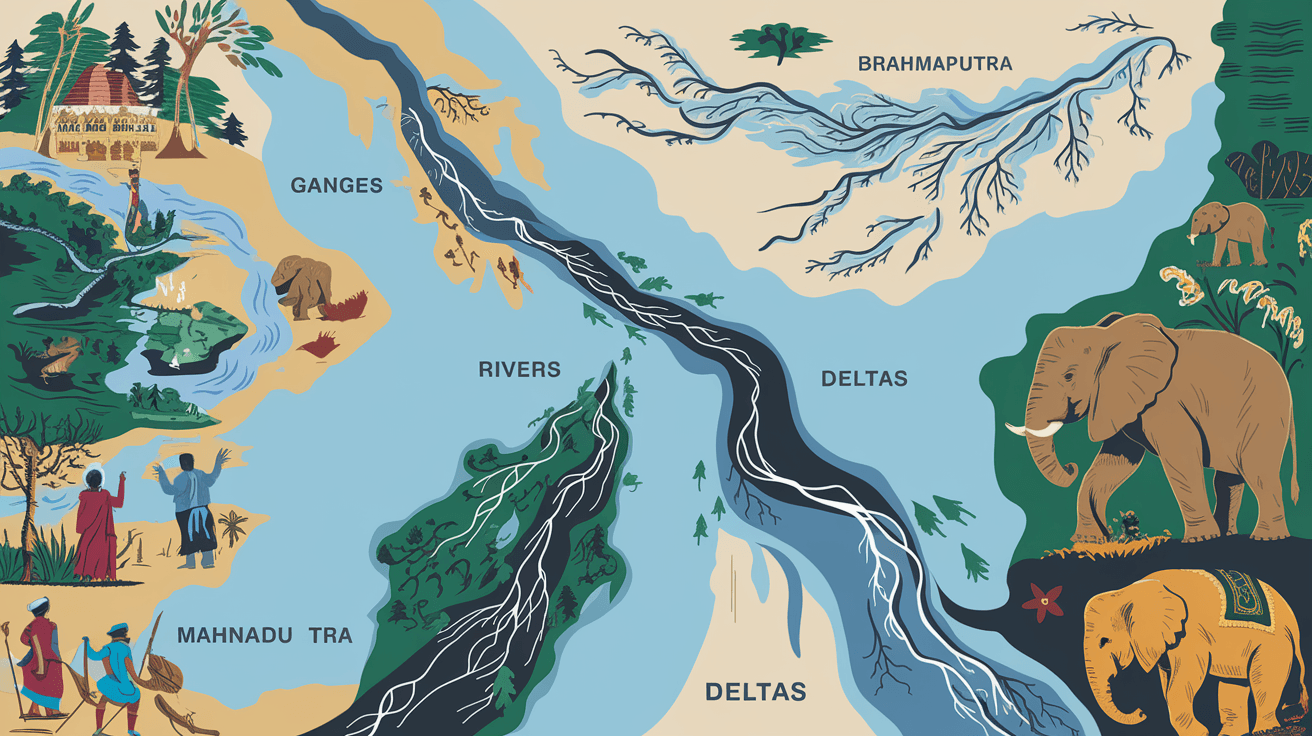
India has around seven major deltas formed by its large river systems. These deltas are spread mainly along the eastern coast, where rivers drain into the Bay of Bengal, and a few along the western coast.
Here’s a list of the major deltas in India:
Let’s explore each of these deltas in more detail.
The Sundarbans Delta is the largest delta in India and one of the largest in the world. It is formed by the confluence of the Ganges, Brahmaputra, and Meghna rivers. This delta stretches across India and Bangladesh.
This delta is a classic example of a river delta with extensive sediment deposits and a complex network of waterways.
The Godavari Delta is the second-largest delta in India, located in the state of Andhra Pradesh. The Godavari River is the longest river in peninsular India, and its delta is highly fertile.
The Godavari Delta is often called the "Rice Bowl of India" because of its high agricultural output.
The Krishna Delta lies south of the Godavari Delta, also in Andhra Pradesh. It is formed by the Krishna River as it flows into the Bay of Bengal.
The Krishna Delta is smaller than the Godavari but equally important for regional agriculture.
The Mahanadi Delta is located in Odisha and parts of Chhattisgarh. The Mahanadi River flows into the Bay of Bengal, creating a fertile delta region.
The Mahanadi Delta is a vital agricultural and ecological zone in eastern India.
The Cauvery Delta is in Tamil Nadu, formed by the Cauvery River and its tributaries. It is one of the most fertile regions in southern India.
The Cauvery Delta is often called the "Rice Bowl of Tamil Nadu."
The Narmada River flows westward into the Arabian Sea, forming a smaller delta in Gujarat and Maharashtra.
The Narmada Delta is an example of a western coast delta, which are fewer in India.
The Tapi River also flows westward into the Arabian Sea, creating a small delta near Surat in Gujarat.
The Tapi Delta is another key delta on India’s western coast.
Deltas in India are crucial for several reasons:
India’s deltas are also vulnerable to climate change, rising sea levels, and human activities. Protecting these areas is vital for sustainable development.
Despite their importance, Indian deltas face several challenges:
Efforts are underway by government and environmental groups to conserve and restore delta ecosystems.
If you want to explore Indian deltas further, here are some ways:
Understanding deltas helps you appreciate their role in India’s environment and economy.
India has about seven major deltas, mostly along its eastern coast, formed by rivers like the Ganges, Godavari, Krishna, Mahanadi, and Cauvery. These deltas are vital for agriculture, biodiversity, and protecting coastal communities. The Sundarbans Delta is the largest and most famous, known for its unique mangrove forests and wildlife.
While these deltas bring many benefits, they also face environmental challenges. Protecting them is essential for India’s future. By learning about these fascinating landforms, you can better understand India’s natural wealth and the importance of sustainable development.
India has around seven major deltas, mainly along the eastern coast, formed by rivers like the Ganges, Godavari, Krishna, Mahanadi, Cauvery, Narmada, and Tapi.
The Sundarbans Delta, formed by the Ganges-Brahmaputra river system, is the largest delta in India and one of the largest in the world.
Deltas provide fertile soil for agriculture, support rich biodiversity, protect coastal areas from storms, and contribute to the economy through fisheries and ports.
Yes, the Narmada and Tapi rivers form smaller deltas on India’s western coast, though eastern coast deltas are more extensive.
Indian deltas face erosion, pollution, overfishing, urbanization, and climate change impacts like flooding and salinity intrusion.