

How Many Dams Are There in India
F
Discover verified facts, data, and insights about India’s states, culture, economy, education, and more — all in one place at FactBharat.
Search for a command to run...
Discover verified facts, data, and insights about India’s states, culture, economy, education, and more — all in one place at FactBharat.
No comments yet. Be the first to comment.
Moving to the USA from India is a dream for many. Whether you want to study, work, or live with family, the process can seem complex. But with the right information, you can plan your move confidently. I’ll guide you through the key steps and options...
Opening a college in India is a dream for many educators and entrepreneurs who want to contribute to the country’s education sector. If you are one of those who want to start a college, you need to understand the process clearly. It involves several ...
Opening a hospital in India is a significant and rewarding venture. If you’ve ever wondered how to start one, you’re in the right place. Whether you’re a healthcare professional, entrepreneur, or investor, understanding the process is crucial. You’ll...
Opening a medical store in India can be a rewarding business opportunity. You get to serve your community by providing essential medicines and healthcare products. If you are thinking about starting a medical store, you might wonder where to begin an...
Opening a restaurant in India can be an exciting and rewarding venture. Whether you dream of serving traditional Indian dishes or international cuisine, the process involves careful planning and understanding of local regulations. If you’re ready to ...
FactBharat | Insights About India
2558 posts
Discover verified facts, data, and insights about India’s states, culture, economy, education, and more — all in one place at FactBharat.
India is a country rich in rivers and water resources, making dams a crucial part of its infrastructure. If you’ve ever wondered how many dams are there in India, you’re not alone. Dams play a vital role in irrigation, hydroelectric power, flood control, and water supply. Understanding the scale and variety of dams in India helps you appreciate their importance in everyday life.
In this article, I’ll take you through the current number of dams in India, their types, and why they matter. We’ll also look at some of the biggest and most famous dams, along with the challenges India faces in managing these water resources. By the end, you’ll have a clear picture of India’s dam landscape and its impact on the nation’s growth.
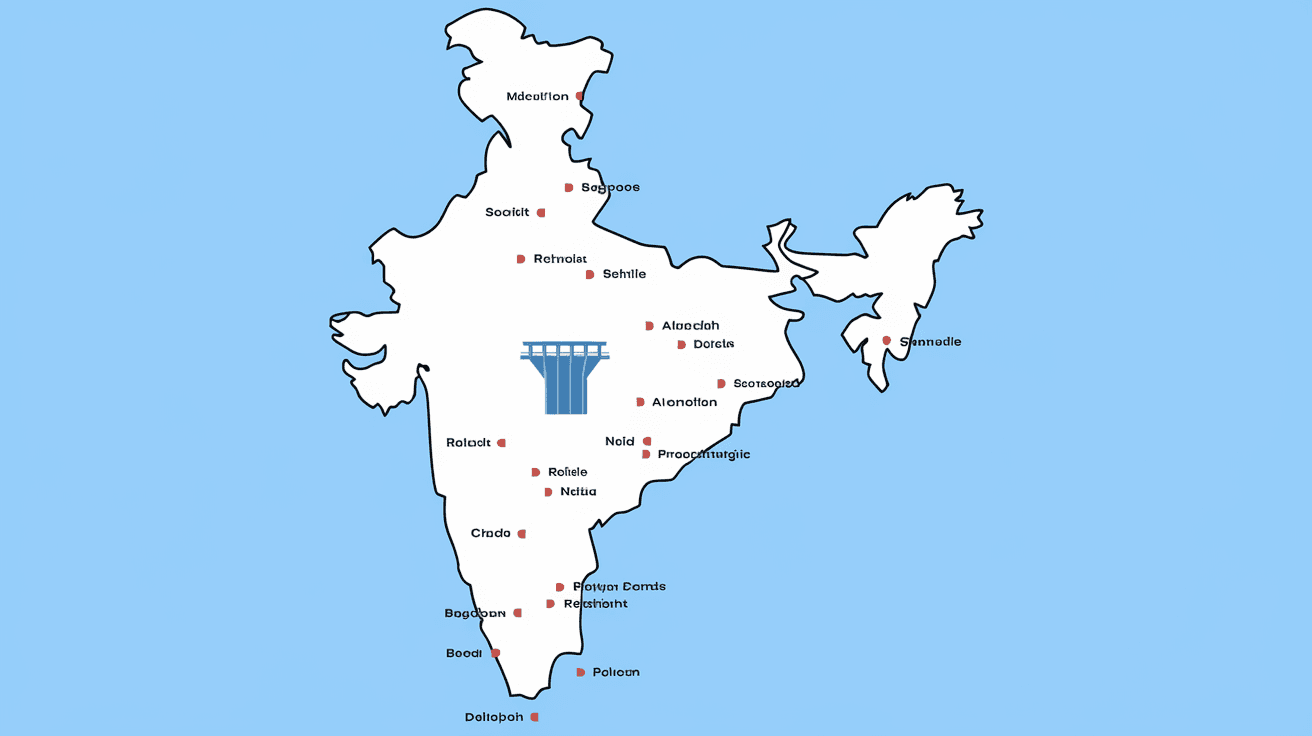
India has one of the largest dam networks in the world. According to the latest data from the National Register of Large Dams (NRLD), India has over 5,700 large dams. These are dams that are more than 15 meters high or have a reservoir capacity of more than 3 million cubic meters.
Besides large dams, there are thousands of smaller dams and reservoirs across the country. These smaller structures support local irrigation and water supply needs. When you combine both large and small dams, the total number easily crosses 10,000.
Dams in India are built for various purposes, and their design depends on the geography and intended use. Here are the main types of dams you’ll find:
Gravity dams rely on their weight to hold back water. They are usually made of concrete or stone masonry. The famous Bhakra Nangal Dam on the Sutlej River is a classic example.
These dams are made by compacting layers of earth, rocks, and clay. They are common in India because they use locally available materials.
Rockfill dams use large rocks and boulders with an impervious core to prevent water seepage.
These combine different types of dam structures, such as earthfill and concrete, to suit specific site conditions.
Dams serve multiple purposes that are essential for India’s development. Here’s why India builds dams:
India’s agriculture depends heavily on irrigation. Dams store water during the monsoon and release it during dry periods.
Many dams generate electricity by harnessing the flow of water.
Dams regulate river flow and reduce the risk of floods during heavy rains.
Dams provide water for domestic use in cities and towns.
India is home to some iconic dams that have shaped its water management and power generation.
| Dam Name | Location | Type | Purpose | Height (m) | Reservoir Capacity (billion m³) |
| Bhakra Nangal | Himachal Pradesh | Gravity | Irrigation, Hydropower | 226 | 9.34 |
| Hirakud | Odisha | Earthfill | Flood control, Irrigation | 60 | 5.81 |
| Tehri | Uttarakhand | Composite | Hydropower, Irrigation | 260 | 3.54 |
| Sardar Sarovar | Gujarat | Concrete | Irrigation, Drinking Water | 163 | 9.50 |
| Nagarjuna Sagar | Telangana/Andhra | Masonry | Irrigation, Hydropower | 124 | 11.56 |
These dams are engineering marvels and have transformed the regions around them by providing water security and energy.
While India has built many dams, managing them effectively is a challenge. Here are some issues:
India continues to invest in dam construction and modernization. New projects focus on:
The government’s emphasis on water security and renewable energy means dams will remain central to India’s growth.
Now you know that India has over 5,700 large dams and thousands of smaller ones. These dams are vital for irrigation, power generation, flood control, and drinking water. They support millions of people and drive economic growth.
However, managing these dams comes with challenges like sedimentation, environmental concerns, and safety. India is working on modernizing its dam infrastructure and balancing development with sustainability. Understanding the scale and importance of dams helps you appreciate how they shape the country’s future.
India has over 5,700 large dams, making it the third-largest dam-owning country in the world.
Maharashtra has the highest number of large dams, with over 1,800 dams across the state.
The primary purposes are irrigation, hydroelectric power generation, flood control, and providing drinking water.
No, India has thousands of small and medium dams besides the large ones, supporting local water needs.
Challenges include sedimentation, environmental impact, maintenance issues, and interstate water sharing conflicts.