

How Many CSIR Labs Are There in India?
F
Discover verified facts, data, and insights about India’s states, culture, economy, education, and more — all in one place at FactBharat.
Search for a command to run...
Discover verified facts, data, and insights about India’s states, culture, economy, education, and more — all in one place at FactBharat.
No comments yet. Be the first to comment.
Moving to the USA from India is a dream for many. Whether you want to study, work, or live with family, the process can seem complex. But with the right information, you can plan your move confidently. I’ll guide you through the key steps and options...
Opening a college in India is a dream for many educators and entrepreneurs who want to contribute to the country’s education sector. If you are one of those who want to start a college, you need to understand the process clearly. It involves several ...
Opening a hospital in India is a significant and rewarding venture. If you’ve ever wondered how to start one, you’re in the right place. Whether you’re a healthcare professional, entrepreneur, or investor, understanding the process is crucial. You’ll...
Opening a medical store in India can be a rewarding business opportunity. You get to serve your community by providing essential medicines and healthcare products. If you are thinking about starting a medical store, you might wonder where to begin an...
Opening a restaurant in India can be an exciting and rewarding venture. Whether you dream of serving traditional Indian dishes or international cuisine, the process involves careful planning and understanding of local regulations. If you’re ready to ...
FactBharat | Insights About India
2558 posts
Discover verified facts, data, and insights about India’s states, culture, economy, education, and more — all in one place at FactBharat.
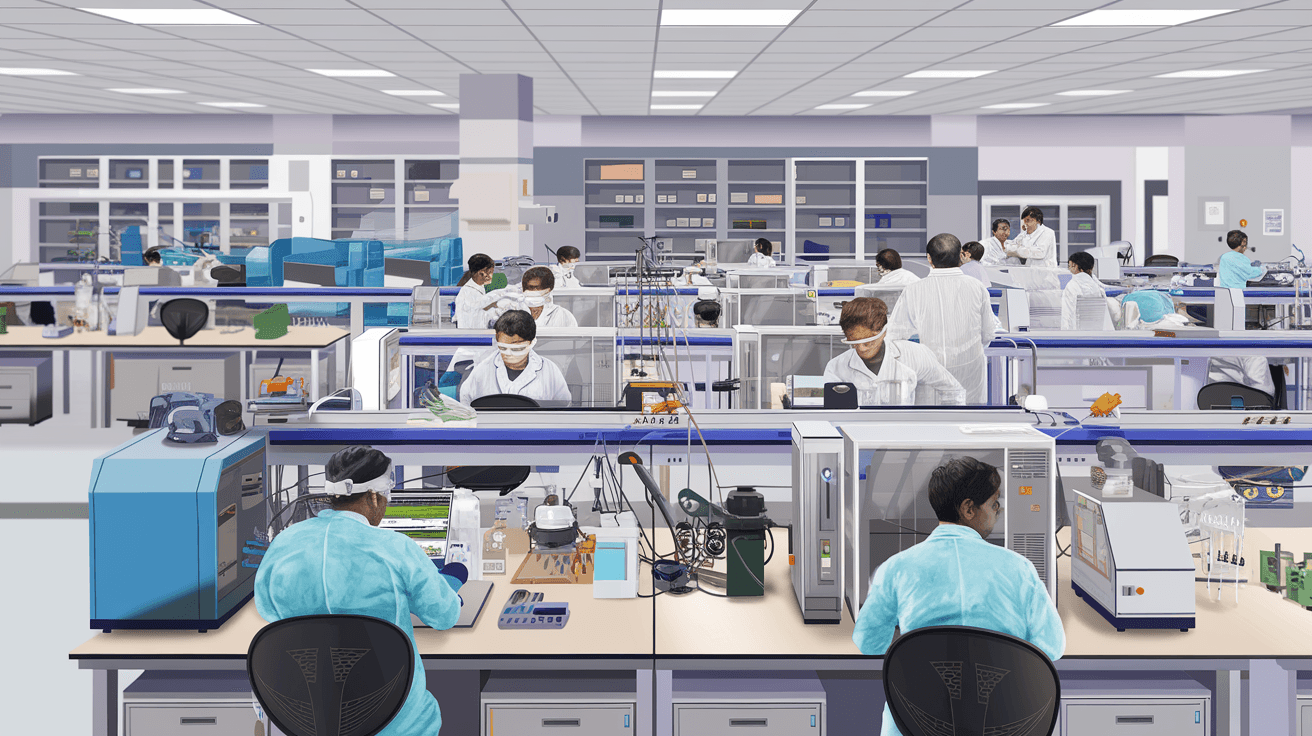
When you think about scientific research in India, the Council of Scientific and Industrial Research (CSIR) stands out as a major player. You might wonder, how many CSIR labs are there in India? Knowing this helps you appreciate the scale of research and innovation happening across the country. CSIR labs cover a wide range of fields, from biotechnology to materials science, and they play a crucial role in India’s development.
In this article, I’ll walk you through the number of CSIR labs, what they do, and why they matter. Whether you’re a student, researcher, or just curious, this guide will give you a clear picture of CSIR’s presence in India and how it supports science and industry.
CSIR is India’s premier research and development organization. It was established in 1942 to promote scientific research and industrial development. The labs under CSIR focus on various scientific disciplines, aiming to solve real-world problems and boost India’s economy.
CSIR labs work on:
These labs are spread across India, each specializing in different areas like chemical sciences, environmental science, aerospace, and more. Their work leads to innovations that impact healthcare, agriculture, energy, and defense.
As of 2025, India has 38 CSIR laboratories spread across the country. These labs are strategically located in different states to cover diverse research areas and regional needs.
Here’s a quick overview of the number and distribution:
| Region | Number of Labs | Examples of Labs |
| Northern India | 10 | CSIR-National Physical Laboratory (NPL), CSIR-Institute of Genomics and Integrative Biology (IGIB) |
| Southern India | 12 | CSIR-Central Leather Research Institute (CLRI), CSIR-Indian Institute of Chemical Technology (IICT) |
| Eastern India | 8 | CSIR-Indian Institute of Chemical Biology (IICB), CSIR-National Institute of Oceanography (NIO) |
| Western India | 8 | CSIR-National Chemical Laboratory (NCL), CSIR-Central Salt and Marine Chemicals Research Institute (CSMCRI) |
Each lab focuses on specific scientific fields, contributing to India’s overall research ecosystem.
Let’s look at some of the key CSIR labs and what they specialize in:
These labs are just a few examples. Each CSIR lab has a unique role that fits into India’s broader scientific goals.
CSIR labs contribute significantly to India’s growth in several ways:
For example, CSIR labs have helped develop affordable vaccines, improved water purification methods, and created advanced materials used in aerospace.
CSIR labs are funded primarily by the Government of India through the Ministry of Science and Technology. The budget supports research projects, infrastructure, and salaries.
Management includes:
This structure ensures labs focus on both fundamental science and practical applications.
If you want to learn more or collaborate with CSIR labs, here are some tips:
Connecting with CSIR labs can open doors for students, researchers, and entrepreneurs interested in science and technology.
While CSIR labs have achieved much, they face challenges like:
Looking ahead, CSIR is focusing on:
These efforts aim to keep CSIR labs at the forefront of science and technology in India.
Now you know that India has 38 CSIR labs, each playing a vital role in advancing science and technology. These labs cover a wide range of fields, from chemistry to genomics, and contribute to India’s growth and innovation. Whether it’s developing new materials, improving healthcare, or supporting industries, CSIR labs are essential to India’s scientific landscape.
If you’re interested in science or looking to collaborate, CSIR labs offer many opportunities. Their work not only pushes the boundaries of knowledge but also creates practical solutions that benefit society. Understanding the number and role of CSIR labs helps you appreciate the scale and impact of scientific research in India.
There are 38 CSIR labs across India, each specializing in different scientific and industrial research areas.
CSIR labs cover fields like chemical sciences, biotechnology, materials science, environmental science, and more.
CSIR labs are spread throughout India, with clusters in northern, southern, eastern, and western regions.
Yes, CSIR offers internships and fellowships for students and researchers interested in science and technology.
CSIR labs develop new technologies and processes that industries can adopt, boosting innovation and economic growth.