

How Many Coastal States Are There in India
F
Discover verified facts, data, and insights about India’s states, culture, economy, education, and more — all in one place at FactBharat.
Search for a command to run...
Discover verified facts, data, and insights about India’s states, culture, economy, education, and more — all in one place at FactBharat.
No comments yet. Be the first to comment.
Moving to the USA from India is a dream for many. Whether you want to study, work, or live with family, the process can seem complex. But with the right information, you can plan your move confidently. I’ll guide you through the key steps and options...
Opening a college in India is a dream for many educators and entrepreneurs who want to contribute to the country’s education sector. If you are one of those who want to start a college, you need to understand the process clearly. It involves several ...
Opening a hospital in India is a significant and rewarding venture. If you’ve ever wondered how to start one, you’re in the right place. Whether you’re a healthcare professional, entrepreneur, or investor, understanding the process is crucial. You’ll...
Opening a medical store in India can be a rewarding business opportunity. You get to serve your community by providing essential medicines and healthcare products. If you are thinking about starting a medical store, you might wonder where to begin an...
Opening a restaurant in India can be an exciting and rewarding venture. Whether you dream of serving traditional Indian dishes or international cuisine, the process involves careful planning and understanding of local regulations. If you’re ready to ...
FactBharat | Insights About India
2558 posts
Discover verified facts, data, and insights about India’s states, culture, economy, education, and more — all in one place at FactBharat.
India is a vast country with a diverse geography that includes mountains, plains, deserts, and a long coastline. If you’ve ever wondered how many coastal states India has, you’re not alone. The coastline plays a crucial role in India’s economy, culture, and environment. Understanding the number of coastal states helps you appreciate the country’s maritime importance and the unique features of each coastal region.
In this article, I’ll guide you through the exact number of coastal states in India, explain why they matter, and share interesting facts about India’s coastline. Whether you’re a student, traveler, or just curious, this article will give you clear and useful information about India’s coastal states.
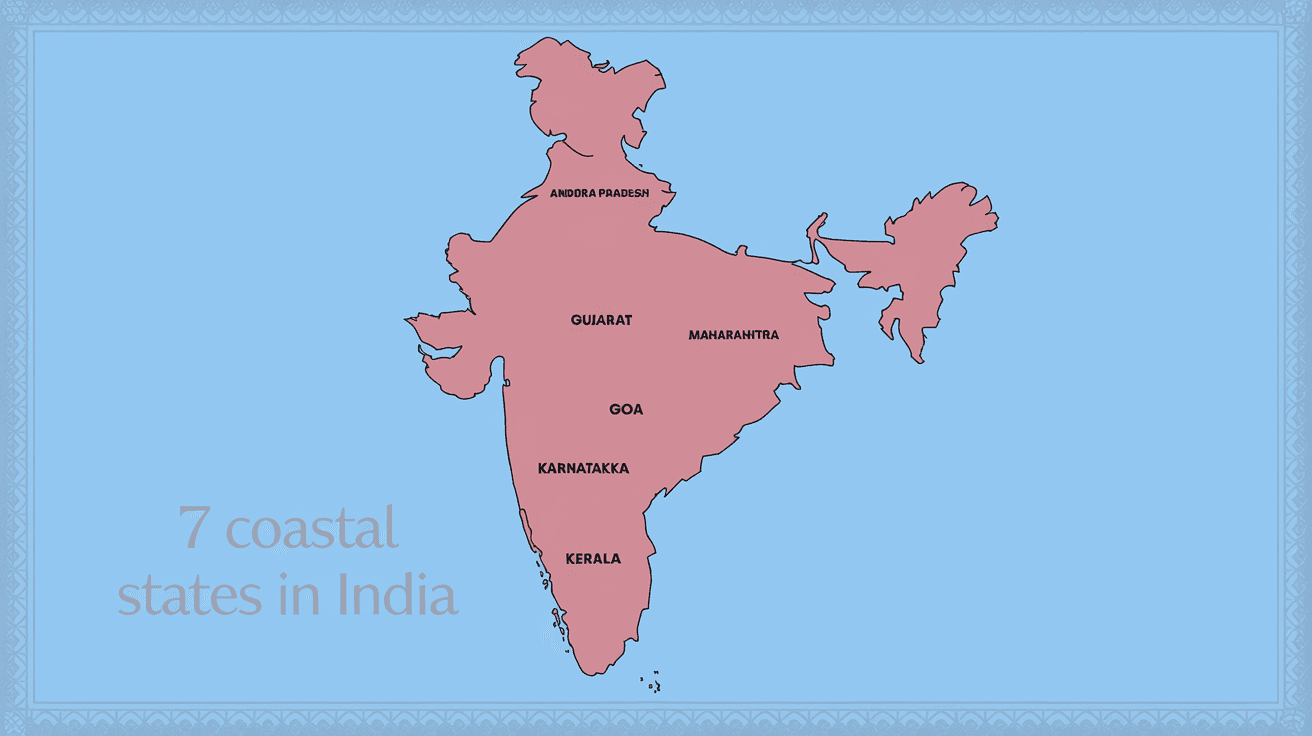
India has a total of 9 coastal states. These states have a coastline along the Arabian Sea, the Bay of Bengal, or the Indian Ocean. The coastline stretches over 7,500 kilometers, making it one of the longest in the world.
Here are the 9 coastal states of India:
Each of these states has a unique coastline with different features like beaches, ports, and fishing communities. Besides these states, India also has 4 coastal union territories with coastlines, but they are not counted as states.
India has 28 states in total, but only 9 have direct access to the sea. The rest are landlocked, meaning they are surrounded by other states and have no coastline. The coastal states are important for trade, tourism, and fishing industries.
The coastal states contribute significantly to India’s economy and culture. Here’s why they are important:
Let’s explore each coastal state briefly to understand their coastline and significance.
Besides the 9 coastal states, India has 4 union territories with coastlines:
These territories also contribute to India’s maritime activities but are governed differently from states.
Coastal states face several challenges that affect their environment and economy:
Governments and communities are working on solutions like coastal protection projects, pollution control, and sustainable fishing to address these issues.
The coastal states are economic powerhouses for India. Here’s how they contribute:
| Sector | Contribution |
| Ports & Shipping | Handle over 95% of India’s trade by volume |
| Fishing | Employ millions and contribute significantly |
| Tourism | Generate billions in revenue annually |
| Industry | Coastal zones have many industries and SEZs |
These states also attract foreign investment due to their strategic location and infrastructure.
The coastal states have rich cultural traditions shaped by the sea:
This cultural diversity adds to India’s vibrant heritage.
If you want to experience India’s coastline, here are some tips:
Traveling along the coast gives you a mix of nature, culture, and history.
Now you know that India has 9 coastal states, each with its own unique coastline and importance. These states play a vital role in India’s economy, culture, and environment. From bustling ports to serene beaches, the coastal states offer a rich experience for residents and visitors alike.
Understanding the coastal states helps you appreciate India’s connection to the sea and the challenges and opportunities it brings. Whether you’re interested in geography, travel, or economics, the coastal states of India are fascinating to explore.
India’s coastline is about 7,516 kilometers long, including the mainland and islands.
Gujarat has the longest coastline, stretching around 1,600 kilometers.
Yes, there are 4 coastal union territories: Puducherry, Andaman and Nicobar Islands, Lakshadweep, and Daman and Diu.
Major ports include Mumbai, Chennai, Kolkata, Kandla, Mundra, Visakhapatnam, and Paradip.
They support trade through ports, fishing industries, tourism, and coastal industries, contributing significantly to the economy.