

How Many Borders Does India Have
F
Discover verified facts, data, and insights about India’s states, culture, economy, education, and more — all in one place at FactBharat.
Search for a command to run...
Discover verified facts, data, and insights about India’s states, culture, economy, education, and more — all in one place at FactBharat.
No comments yet. Be the first to comment.
Moving to the USA from India is a dream for many. Whether you want to study, work, or live with family, the process can seem complex. But with the right information, you can plan your move confidently. I’ll guide you through the key steps and options...
Opening a college in India is a dream for many educators and entrepreneurs who want to contribute to the country’s education sector. If you are one of those who want to start a college, you need to understand the process clearly. It involves several ...
Opening a hospital in India is a significant and rewarding venture. If you’ve ever wondered how to start one, you’re in the right place. Whether you’re a healthcare professional, entrepreneur, or investor, understanding the process is crucial. You’ll...
Opening a medical store in India can be a rewarding business opportunity. You get to serve your community by providing essential medicines and healthcare products. If you are thinking about starting a medical store, you might wonder where to begin an...
Opening a restaurant in India can be an exciting and rewarding venture. Whether you dream of serving traditional Indian dishes or international cuisine, the process involves careful planning and understanding of local regulations. If you’re ready to ...
FactBharat | Insights About India
2558 posts
Discover verified facts, data, and insights about India’s states, culture, economy, education, and more — all in one place at FactBharat.
India is a vast country with a rich history and diverse geography. When you think about its borders, you might wonder how many countries it touches and what those borders mean for the nation. Understanding India's borders helps you grasp its geopolitical importance and the challenges it faces.
In this article, I will walk you through how many borders India has, which countries share these borders, and some interesting facts about each boundary. Whether you’re curious about geography or international relations, this guide will give you clear and simple answers.
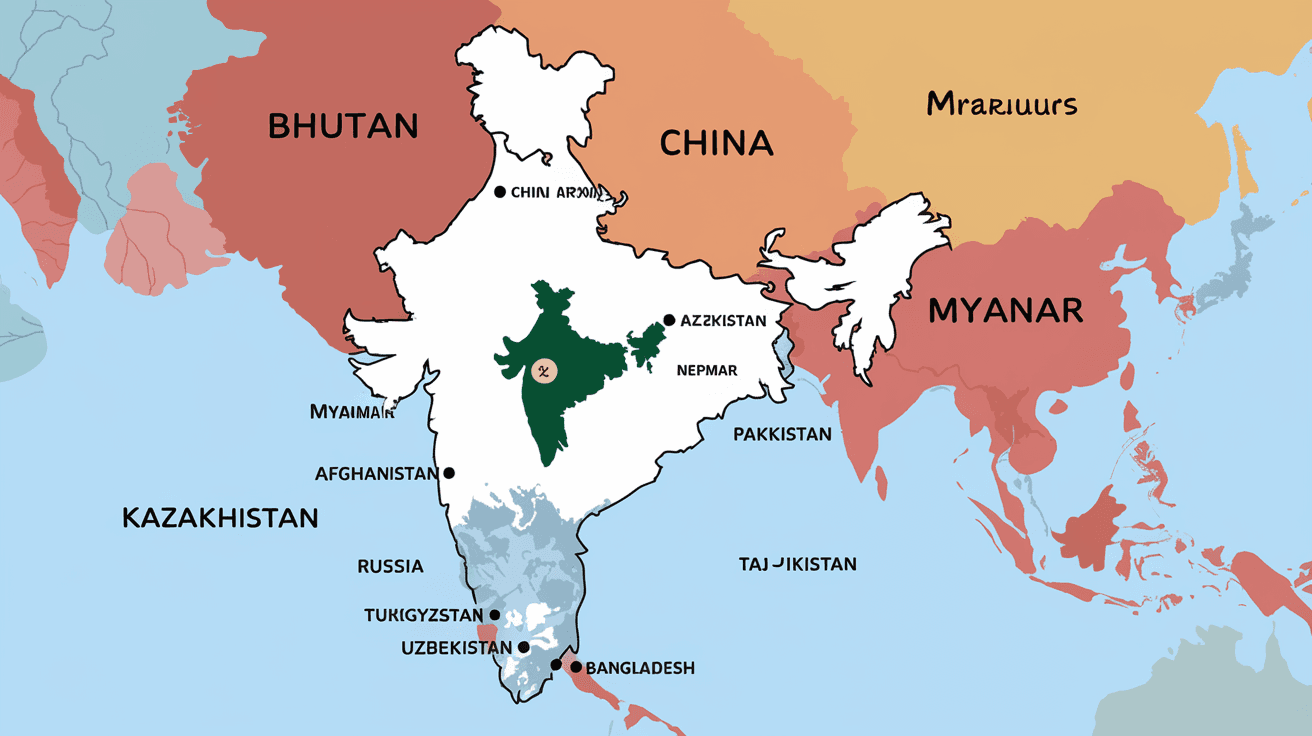
India shares its land borders with seven countries. These borders stretch over thousands of kilometers and cross various terrains, from mountains to plains. The countries that share a border with India are:
The total length of India’s land borders is approximately 15,200 kilometers. This makes India one of the countries with the longest land borders in the world.
India’s location in South Asia places it at the crossroads of several countries. Its borders reflect historical, cultural, and political ties with its neighbors. Over time, these borders have been shaped by wars, treaties, and agreements.
Let’s look at each border individually to understand their length, significance, and any special features.
The India-Pakistan border is one of the most well-known and sensitive borders in the world. It stretches for about 3,323 kilometers.
This border has seen several wars and ongoing disputes, making it a critical area for security and diplomacy.
India shares a long and complex border with China, approximately 3,488 kilometers.
Tensions have occasionally flared up here, but both countries continue to engage in talks to maintain peace.
India and Nepal share an open and friendly border of about 1,770 kilometers.
This border is unique because of the close relationship between India and Nepal.
The India-Bhutan border is around 699 kilometers long.
Bhutan relies heavily on India for trade and security support.
India shares a long border with Bangladesh, about 4,096 kilometers, making it the longest border India has with any country.
This border is vital for both countries’ economies and cultures.
India’s border with Myanmar is about 1,643 kilometers long.
This border is part of India’s “Look East” policy to strengthen ties with Southeast Asia.
India shares a very small border with Afghanistan, about 106 kilometers, through the region of Jammu and Kashmir.
This border is less significant in terms of trade but important for strategic reasons.
India’s borders can be categorized based on their nature and the relationship with neighboring countries:
Understanding these types helps you see how India manages its security and diplomacy.
India’s borders come with several challenges:
Despite these challenges, India works hard to maintain peace and cooperation with its neighbors.
India uses various methods to secure and manage its borders:
These efforts help India protect its borders while fostering friendly relations.
Here are some quick facts you might find interesting:
Now you know that India shares its land borders with seven countries: Pakistan, China, Nepal, Bhutan, Bangladesh, Myanmar, and Afghanistan. These borders vary in length, terrain, and political importance. Some are peaceful and open, while others are sensitive and heavily guarded.
Understanding India’s borders gives you insight into its geography, security concerns, and international relationships. Whether it’s the mountainous border with China or the long and lively border with Bangladesh, each boundary plays a crucial role in shaping India’s identity and future.
India shares land borders with seven countries: Pakistan, China, Nepal, Bhutan, Bangladesh, Myanmar, and Afghanistan.
The longest border India has is with Bangladesh, stretching about 4,096 kilometers.
Yes, India has open borders with Nepal and Bhutan, allowing free movement of people without visas.
The LAC is the de facto border between India and China, which is not officially agreed upon and is a source of disputes.
India uses border security forces, fencing, surveillance, and diplomatic talks to manage and secure its borders.