

How Many Biogeographical Zones Are in India
F
Discover verified facts, data, and insights about India’s states, culture, economy, education, and more — all in one place at FactBharat.
Search for a command to run...
Discover verified facts, data, and insights about India’s states, culture, economy, education, and more — all in one place at FactBharat.
No comments yet. Be the first to comment.
Moving to the USA from India is a dream for many. Whether you want to study, work, or live with family, the process can seem complex. But with the right information, you can plan your move confidently. I’ll guide you through the key steps and options...
Opening a college in India is a dream for many educators and entrepreneurs who want to contribute to the country’s education sector. If you are one of those who want to start a college, you need to understand the process clearly. It involves several ...
Opening a hospital in India is a significant and rewarding venture. If you’ve ever wondered how to start one, you’re in the right place. Whether you’re a healthcare professional, entrepreneur, or investor, understanding the process is crucial. You’ll...
Opening a medical store in India can be a rewarding business opportunity. You get to serve your community by providing essential medicines and healthcare products. If you are thinking about starting a medical store, you might wonder where to begin an...
Opening a restaurant in India can be an exciting and rewarding venture. Whether you dream of serving traditional Indian dishes or international cuisine, the process involves careful planning and understanding of local regulations. If you’re ready to ...
FactBharat | Insights About India
2558 posts
Discover verified facts, data, and insights about India’s states, culture, economy, education, and more — all in one place at FactBharat.
India is one of the most biologically diverse countries in the world. When you explore its natural landscapes, you’ll find a wide range of ecosystems, from deserts to rainforests. This diversity is organized into distinct biogeographical zones. Understanding how many biogeographical zones India has helps you appreciate the variety of life and habitats across the country.
In this article, I’ll explain the number of biogeographical zones in India and describe each zone’s unique features. You’ll learn why these zones matter for conservation and how they reflect India’s rich natural heritage. Let’s dive into the fascinating world of India’s biogeographical zones.
Biogeographical zones are regions defined by their unique climate, geography, and living organisms. These zones help scientists and conservationists understand how plants, animals, and ecosystems are distributed across a country or continent.
In India, biogeographical zones are used to classify areas with similar ecological characteristics. This classification helps in planning conservation efforts and managing natural resources effectively.
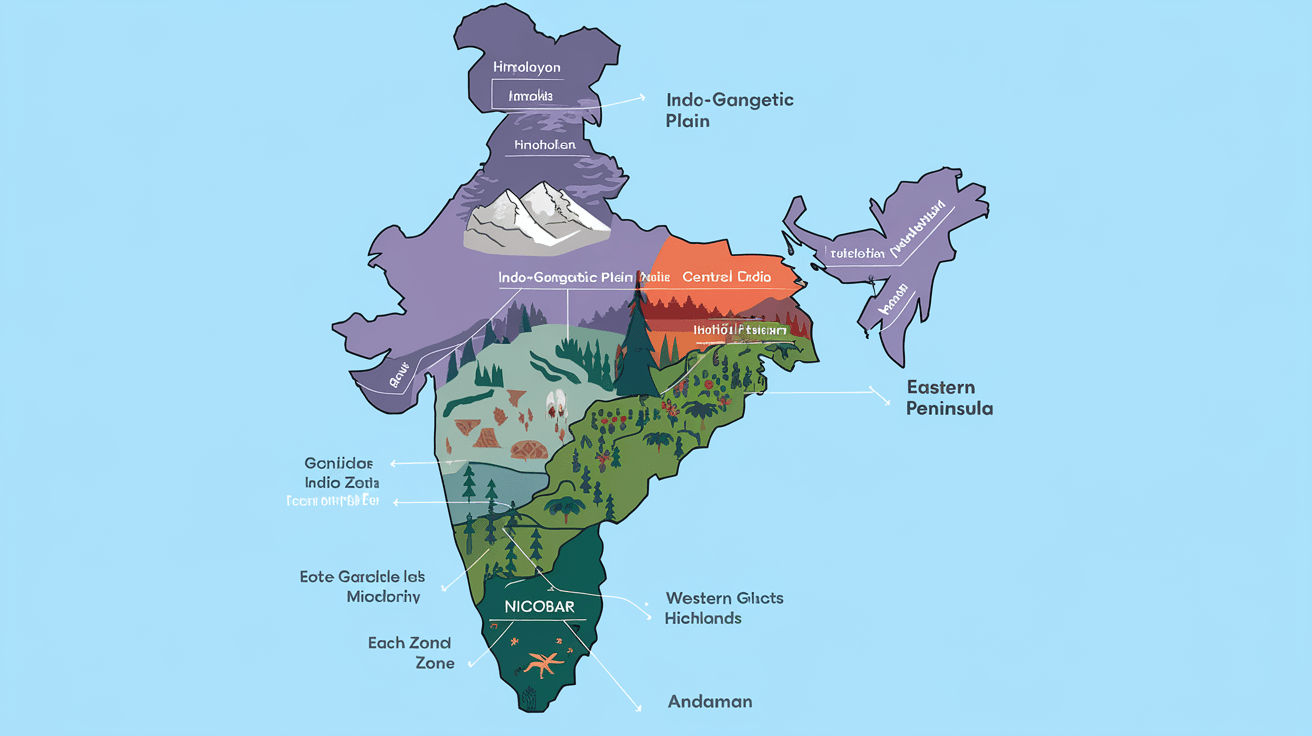
India officially has 10 biogeographical zones. This classification was developed by the Wildlife Institute of India and is widely accepted by ecologists and environmental planners.
The ten zones are:
Each zone has distinct environmental conditions and supports different types of ecosystems and wildlife.
This zone lies in the northernmost part of India, covering parts of Ladakh and the cold desert areas.
The Himalayan zone includes the forested mountain ranges of the Himalayas.
This zone covers the Thar Desert in Rajasthan.
Found in parts of Punjab, Haryana, and western Uttar Pradesh.
A biodiversity hotspot along the western coast.
Covers the central and southern plateau regions.
Extends across northern India along the Ganges River.
Known for its rich rainforests and hilly terrain.
Covers the eastern and western coastal plains.
Includes the Andaman and Nicobar Islands and Lakshadweep.
Understanding these zones helps you see how India’s natural environment is organized. It also plays a crucial role in:
Each zone has unique conservation challenges. For example:
Conservationists tailor their strategies based on the zone’s characteristics. This targeted approach improves the chances of protecting India’s rich biodiversity.
India has many national parks and wildlife sanctuaries spread across these zones. Here are some examples:
| Biogeographical Zone | Protected Area | Notable Species |
| Trans-Himalayan | Hemis National Park | Snow leopard, Tibetan antelope |
| Himalayan | Valley of Flowers National Park | Himalayan monal, musk deer |
| Indian Desert | Desert National Park | Chinkara, desert fox |
| Western Ghats | Silent Valley National Park | Lion-tailed macaque, Nilgiri tahr |
| North-East India | Kaziranga National Park | One-horned rhinoceros, elephants |
These protected areas help conserve the unique biodiversity of each zone.
If you love nature, visiting different biogeographical zones in India offers amazing experiences:
Each zone offers a different adventure and a chance to connect with nature.
Managing these zones is not without difficulties:
Addressing these challenges requires cooperation between government, scientists, and local people.
India is committed to protecting its natural heritage. Efforts include:
These steps will help preserve India’s biogeographical zones for future generations.
India’s ten biogeographical zones showcase the country’s incredible ecological diversity. From the cold deserts of Ladakh to the tropical rainforests of the North-East, each zone has unique landscapes and wildlife. Knowing about these zones helps you appreciate how varied and rich India’s natural world is.
By understanding and protecting these zones, we can ensure that India’s biodiversity thrives. Whether you are a nature lover, student, or traveler, exploring these zones offers a deeper connection to the environment. India’s biogeographical zones are not just scientific classifications—they are living, breathing parts of the country’s heritage.
India has 10 official biogeographical zones, each with distinct climate, geography, and biodiversity.
The Western Ghats and North-East India zones are biodiversity hotspots with many endemic species.
They help in conservation planning, resource management, and understanding ecological patterns.
Yes, they form the Islands biogeographical zone, known for unique island ecosystems.
They guide targeted conservation efforts based on the specific needs and threats of each zone.