

How Many Biodiversity Hotspots Are There in India
F
Discover verified facts, data, and insights about India’s states, culture, economy, education, and more — all in one place at FactBharat.
Search for a command to run...
Discover verified facts, data, and insights about India’s states, culture, economy, education, and more — all in one place at FactBharat.
No comments yet. Be the first to comment.
Moving to the USA from India is a dream for many. Whether you want to study, work, or live with family, the process can seem complex. But with the right information, you can plan your move confidently. I’ll guide you through the key steps and options...
Opening a college in India is a dream for many educators and entrepreneurs who want to contribute to the country’s education sector. If you are one of those who want to start a college, you need to understand the process clearly. It involves several ...
Opening a hospital in India is a significant and rewarding venture. If you’ve ever wondered how to start one, you’re in the right place. Whether you’re a healthcare professional, entrepreneur, or investor, understanding the process is crucial. You’ll...
Opening a medical store in India can be a rewarding business opportunity. You get to serve your community by providing essential medicines and healthcare products. If you are thinking about starting a medical store, you might wonder where to begin an...
Opening a restaurant in India can be an exciting and rewarding venture. Whether you dream of serving traditional Indian dishes or international cuisine, the process involves careful planning and understanding of local regulations. If you’re ready to ...
FactBharat | Insights About India
2558 posts
Discover verified facts, data, and insights about India’s states, culture, economy, education, and more — all in one place at FactBharat.
India is one of the richest countries in the world when it comes to biodiversity. If you love nature or care about the environment, you might wonder how many biodiversity hotspots India has. These hotspots are special areas with a high number of unique plants and animals that are found nowhere else. They are crucial for protecting our planet’s natural heritage.
In this article, I will guide you through the number of biodiversity hotspots in India, what makes them so important, and why we need to protect them. You will also learn about the unique features of each hotspot and how they contribute to India’s rich natural diversity.
Biodiversity hotspots are regions that have a large variety of species, especially those that are endemic, meaning they exist only in that area. These places also face significant threats from human activities like deforestation, pollution, and climate change. The concept was first introduced by Norman Myers in 1988 to highlight areas needing urgent conservation.
Here’s what defines a biodiversity hotspot:
India’s biodiversity hotspots are part of a global list of 36 hotspots identified by Conservation International. These hotspots cover only 2.3% of the Earth’s land surface but contain more than half of the world’s endemic plant species.
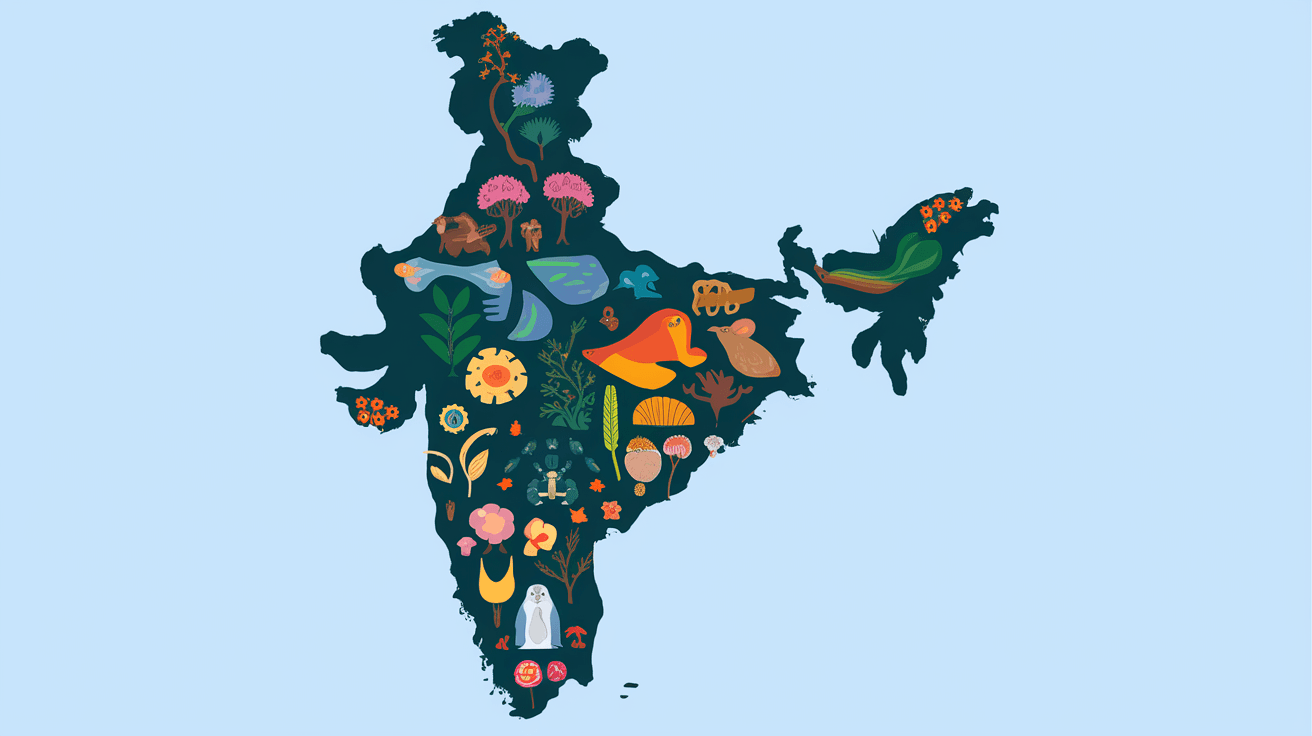
India has four internationally recognized biodiversity hotspots. These hotspots cover a wide range of ecosystems, from tropical forests to mountainous regions. Each hotspot is unique in its flora, fauna, and ecological importance.
The four biodiversity hotspots in India are:
Let’s explore each one in detail.
The Himalayas stretch across northern India and are known for their towering peaks and diverse ecosystems. This hotspot includes parts of Jammu & Kashmir, Himachal Pradesh, Uttarakhand, Sikkim, and Arunachal Pradesh.
The Western Ghats run along the western coast of India, covering states like Maharashtra, Karnataka, Kerala, and Tamil Nadu. This mountain range is one of the world’s eight "hottest hotspots" of biological diversity.
This hotspot covers the northeastern states of India, including Arunachal Pradesh, Assam, Manipur, Meghalaya, Mizoram, Nagaland, and Tripura. It extends into neighboring countries like Myanmar and Thailand.
The Nicobar Islands, part of the Sundaland hotspot, are located in the Bay of Bengal. These islands are less known but are ecologically significant.
Biodiversity hotspots are vital for many reasons:
Protecting these hotspots requires combined efforts from the government, communities, and individuals. Here are some ways you can help:
India has taken several steps to protect its biodiversity hotspots:
Despite efforts, many challenges remain:
India is home to four major biodiversity hotspots: the Himalayas, Western Ghats, Indo-Burma, and Sundaland (Nicobar Islands). Each hotspot is unique and holds a treasure trove of plants and animals found nowhere else. These areas are crucial for maintaining ecological balance, supporting livelihoods, and fighting climate change.
Protecting these hotspots is not just the job of the government or scientists—it’s something we all can contribute to. By understanding their importance and supporting conservation efforts, you help preserve India’s natural heritage for future generations. The richness of India’s biodiversity is a gift, and it’s up to us to keep it safe.
India has four biodiversity hotspots: the Himalayas, Western Ghats, Indo-Burma, and Sundaland (Nicobar Islands).
A region must have at least 1,500 endemic plant species and have lost 70% or more of its original vegetation to be classified as a biodiversity hotspot.
The Western Ghats have a high number of endemic species, diverse ecosystems, and are one of the world’s eight "hottest" biodiversity hotspots.
Major threats include deforestation, habitat loss, climate change, poaching, and human-wildlife conflicts.
You can support conservation laws, promote sustainable tourism, reduce your carbon footprint, and raise awareness about biodiversity protection.