

How Many AIIMS Are There in India?
F
Discover verified facts, data, and insights about India’s states, culture, economy, education, and more — all in one place at FactBharat.
Search for a command to run...
Discover verified facts, data, and insights about India’s states, culture, economy, education, and more — all in one place at FactBharat.
No comments yet. Be the first to comment.
Moving to the USA from India is a dream for many. Whether you want to study, work, or live with family, the process can seem complex. But with the right information, you can plan your move confidently. I’ll guide you through the key steps and options...
Opening a college in India is a dream for many educators and entrepreneurs who want to contribute to the country’s education sector. If you are one of those who want to start a college, you need to understand the process clearly. It involves several ...
Opening a hospital in India is a significant and rewarding venture. If you’ve ever wondered how to start one, you’re in the right place. Whether you’re a healthcare professional, entrepreneur, or investor, understanding the process is crucial. You’ll...
Opening a medical store in India can be a rewarding business opportunity. You get to serve your community by providing essential medicines and healthcare products. If you are thinking about starting a medical store, you might wonder where to begin an...
Opening a restaurant in India can be an exciting and rewarding venture. Whether you dream of serving traditional Indian dishes or international cuisine, the process involves careful planning and understanding of local regulations. If you’re ready to ...
FactBharat | Insights About India
2558 posts
Discover verified facts, data, and insights about India’s states, culture, economy, education, and more — all in one place at FactBharat.
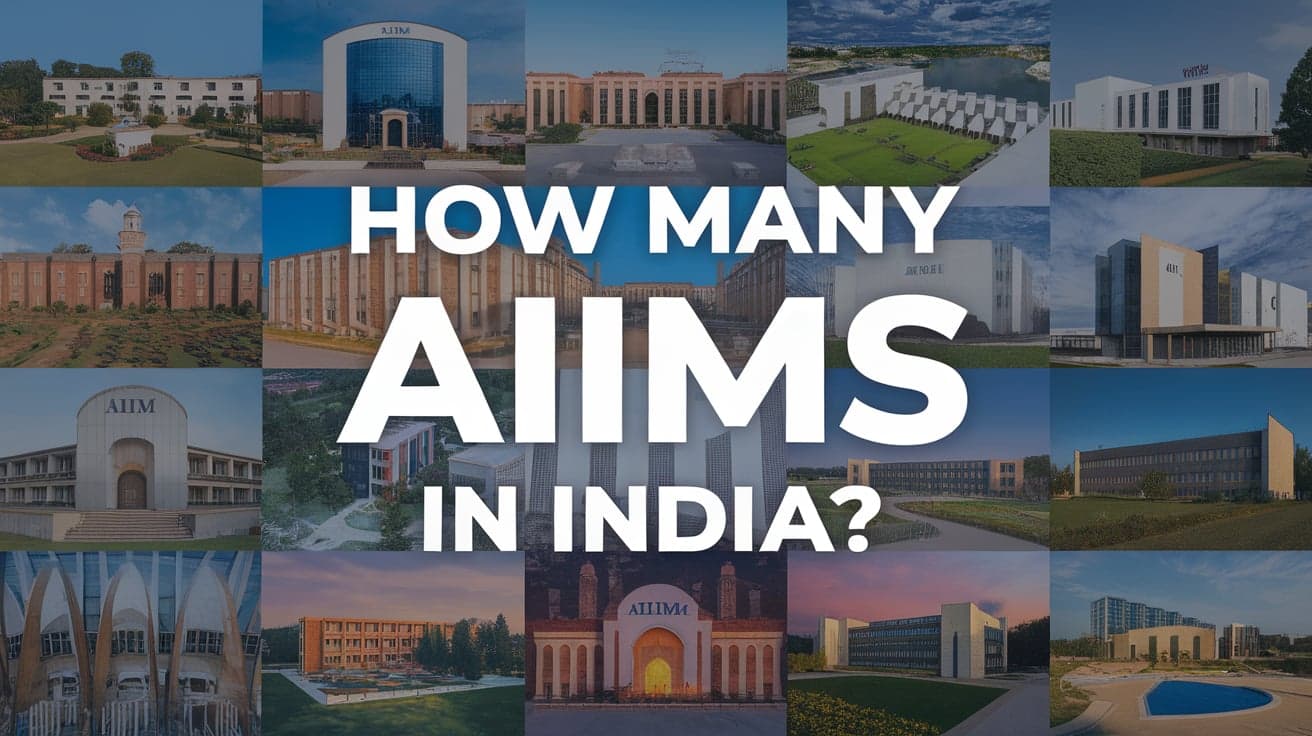
India’s healthcare and medical education system has seen a major transformation with the establishment of AIIMS institutions. These premier institutes, officially known as All India Institute of Medical Sciences (AIIMS), are autonomous government-run medical colleges and hospitals that offer top-quality education, research, and healthcare services.
Established to reduce regional disparities in medical access, AIIMS campuses are now spread across different parts of the country.
Let’s look at how many AIIMS are currently functional in India, their locations, and how they have evolved over time.
As of 2025, there are 23 AIIMS institutions in India, out of which 20 are fully functional and 3 are partially operational or under development.
AIIMS New Delhi was the first AIIMS, established in 1956, and has remained the benchmark for excellence in medical education, research, and healthcare. Since then, the government has established new AIIMS under various phases of the Pradhan Mantri Swasthya Suraksha Yojana (PMSSY) to improve access to advanced healthcare in different regions.
Here’s a list of the AIIMS institutions across India, along with their status:
| AIIMS Name | Location | Status |
| AIIMS New Delhi | Delhi | Fully Functional |
| AIIMS Bhopal | Madhya Pradesh | Fully Functional |
| AIIMS Bhubaneswar | Odisha | Fully Functional |
| AIIMS Jodhpur | Rajasthan | Fully Functional |
| AIIMS Patna | Bihar | Fully Functional |
| AIIMS Raipur | Chhattisgarh | Fully Functional |
| AIIMS Rishikesh | Uttarakhand | Fully Functional |
| AIIMS Nagpur | Maharashtra | Fully Functional |
| AIIMS Mangalagiri | Andhra Pradesh | Fully Functional |
| AIIMS Gorakhpur | Uttar Pradesh | Fully Functional |
| AIIMS Bathinda | Punjab | Fully Functional |
| AIIMS Deoghar | Jharkhand | Fully Functional |
| AIIMS Guwahati | Assam | Fully Functional |
| AIIMS Bilaspur | Himachal Pradesh | Fully Functional |
| AIIMS Kalyani | West Bengal | Fully Functional |
| AIIMS Raebareli | Uttar Pradesh | Fully Functional |
| AIIMS Rajkot | Gujarat | Functional (Partially) |
| AIIMS Madurai | Tamil Nadu | Under Development |
| AIIMS Vijaypur | Jammu | Under Development |
| AIIMS Awantipora | Kashmir | Under Development |
| AIIMS Darbhanga | Bihar | Approved |
| AIIMS Rewari | Haryana | Approved |
| AIIMS Manethi | Haryana | Proposed (Yet to Start) |
AIIMS institutes are developed in different phases under PMSSY (Pradhan Mantri Swasthya Suraksha Yojana). Each phase aims to establish AIIMS in regions where advanced medical facilities and education opportunities are limited.
Phase I (2003–2006): Six new AIIMS were approved – Bhopal, Bhubaneswar, Jodhpur, Patna, Raipur, and Rishikesh.
Phase II (2013–2015): AIIMS Rae Bareli and Raiganj were proposed (Raiganj later shifted to Kalyani).
Phase III onwards: AIIMS institutions were sanctioned in states like Assam, Himachal Pradesh, Punjab, Tamil Nadu, and Jammu & Kashmir.
Each AIIMS is established with full-fledged teaching, research, and hospital facilities, including advanced departments, super-specialty wings, and research labs.
AIIMS plays a critical role in India’s public healthcare ecosystem. It not only provides affordable, high-quality treatment but also acts as a hub for research and training.
Here are the major contributions:
Medical Education: Offers MBBS, MD, MS, and PhD programs with global recognition.
Healthcare Access: Provides free or low-cost treatment to millions of patients annually.
Research and Innovation: Conducts cutting-edge medical research and clinical trials.
Public Health Outreach: Trains medical professionals to serve in rural and underprivileged areas.
Specialized Care: Known for excellence in cardiology, neurology, oncology, orthopedics, and more.
AIIMS institutions serve as centres of excellence that bridge the healthcare gap between rural and urban India.
To further strengthen India’s healthcare infrastructure, the government has announced several new AIIMS projects in various states. Some are already under construction, while others are awaiting approval or land allocation.
Here are a few noteworthy upcoming AIIMS:
AIIMS Madurai (Tamil Nadu): Foundation laid in 2019, expected completion by 2026.
AIIMS Vijaypur (Jammu): Construction in progress, likely to be operational soon.
AIIMS Awantipora (Kashmir): Work in progress, with partial academic sessions expected to start soon.
AIIMS Rewari and Darbhanga: Approved under later PMSSY phases.
Once these are completed, India could have 25+ operational AIIMS campuses in the coming years.
AIIMS stands for trust, quality, and innovation. Unlike most medical colleges, AIIMS combines education, research, and treatment under one institution. This unique model allows students to learn through real-world cases while serving patients from all walks of life.
The following points explain its reputation:
Highly competitive admission (NEET-UG): Only top-ranking students qualify.
World-class facilities: AIIMS hospitals have advanced medical equipment and research labs.
Expert faculty: India’s best doctors and researchers teach and practice here.
Affordable treatment: Many procedures are free or offered at minimal costs.
Government funding: Ensures top quality without commercial bias.
Because of this blend of accessibility and excellence, AIIMS continues to be the dream destination for medical aspirants and a lifeline for millions of patients.
To sum up, India currently has 23 AIIMS, of which 20 are operational and the rest are in various stages of construction or approval. From the first AIIMS in New Delhi to the newly established institutes in Bilaspur and Guwahati, these institutions have transformed healthcare access across the nation.
AIIMS represents the best of India’s public health system — providing high-quality, affordable care and world-class education. As more AIIMS come up, India moves closer to its goal of equal and accessible healthcare for all.
As of 2025, there are 20 fully functional AIIMS institutions across India, while three others are under construction or development. These institutes operate under the Pradhan Mantri Swasthya Suraksha Yojana (PMSSY) to strengthen healthcare access.
AIIMS New Delhi is the first AIIMS in India, established in 1956 under the leadership of then Health Minister Rajkumari Amrit Kaur. It remains the most prestigious and advanced medical institute in the country.
Currently, three new AIIMS — Madurai (Tamil Nadu), Vijaypur (Jammu), and Awantipora (Kashmir) — are under construction. A few others like Darbhanga (Bihar) and Rewari (Haryana) have received approval and will start construction soon.
The main goal is to provide advanced healthcare, medical education, and research facilities in different regions, especially underserved areas. It also helps reduce the patient load on AIIMS Delhi and other major hospitals.
Admission to AIIMS is done through the NEET-UG exam conducted by the National Testing Agency (NTA). Candidates with top ranks can secure seats in AIIMS for MBBS courses, followed by postgraduate and doctoral programs.